
Electric Bike & Scooter Blog
5 Folding E-Bikes Compared: Price, Battery and Weight

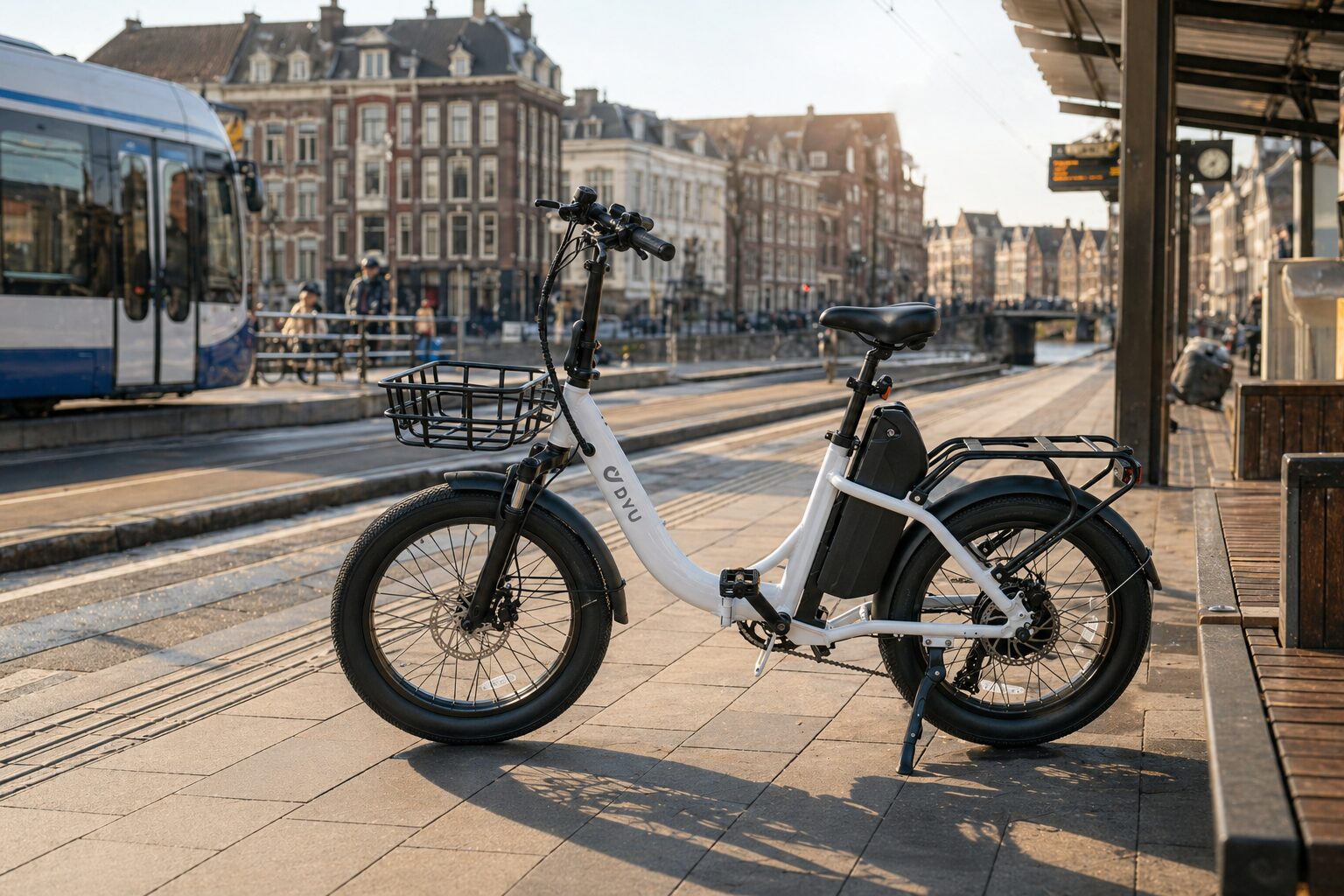
A folding electric bike can save floor space without being easy to carry. It can also look inexpensive while leaving important questions about the battery, delivered specification or permitted use unanswered. A useful comparison has to separate those issues instead of awarding the win to the smallest price or largest range claim.
This five-bike folding e-bike comparison puts the HITWAY BK6S L1, DYU C2, DYU T1, Terrosor T5 and UPlee GS5 alongside one another. They span checked prices from €304.12 to €899.99, with different wheel sizes, battery capacities and levels of specification detail. The aim is to identify which tradeoffs are worth investigating for your routine.
Our conclusions come from the available product specifications and prices checked on 13 October 2026. They are not laboratory scores or claims that these bikes have completed a shared road test. Missing information remains missing: a low price does not earn a recommendation when an essential requirement has not been confirmed.
The five bikes at a glance
| Model | Checked price | Listed motor | Nominal battery energy | Listed weight | Main comparison finding |
|---|---|---|---|---|---|
| HITWAY BK6S L1 | €899.99 | 250 W | Approximately 562 Wh | Not stated in reviewed specification | Largest stated battery among the three listed 250 W models; carrying suitability remains unconfirmed |
| DYU C2 | €559 | 250 W | 360 Wh | 29.6 kg | Lower price than the T1, but substantially heavier |
| DYU T1 | €749 | 250 W | 360 Wh | 22.5 kg | Lowest disclosed weight in this group; still a meaningful lift |
| Terrosor T5 | €304.12 | 560 W; rating basis not clarified | Not stated in reviewed specification | Not stated | Lowest price, with major details to resolve before purchase |
| UPlee GS5 | €311.79 | 740 W; rating basis not clarified | 720 Wh | Not stated | Largest stated battery overall, but category and transport questions remain |
Battery energy is calculated as nominal volts multiplied by amp-hours. It is not a measurement of usable energy at the wheel. Prices are snapshots rather than guaranteed offers; confirm the selected version, destination, taxes and shipping before comparing final totals.
What the comparison can establish
Five criteria matter here: initial price, disclosed weight, battery energy, storage suitability and confidence in the information needed to buy. We do not combine them into an arbitrary ten-point score. For someone with stairs, weight can eliminate a bike immediately; for someone with a garage, the same number may be less important than battery capacity.
The weight finding has an important limit. The T1 is the lightest of the two bikes with a weight stated in the reviewed specifications. That does not prove it is lighter than every model in the group. Treating undisclosed weights as zero, or assuming a small wheel means a light bike, would produce a false ranking.
Similarly, all five are sold as folding models, but the reviewed descriptions do not provide a complete set of folded dimensions. We cannot name a smallest-fold winner. Ask for the actual folded length, width and height, including projecting pedals or handlebars, before buying for a specific cupboard or car boot.
1. HITWAY BK6S L1: the battery-focused shortlist
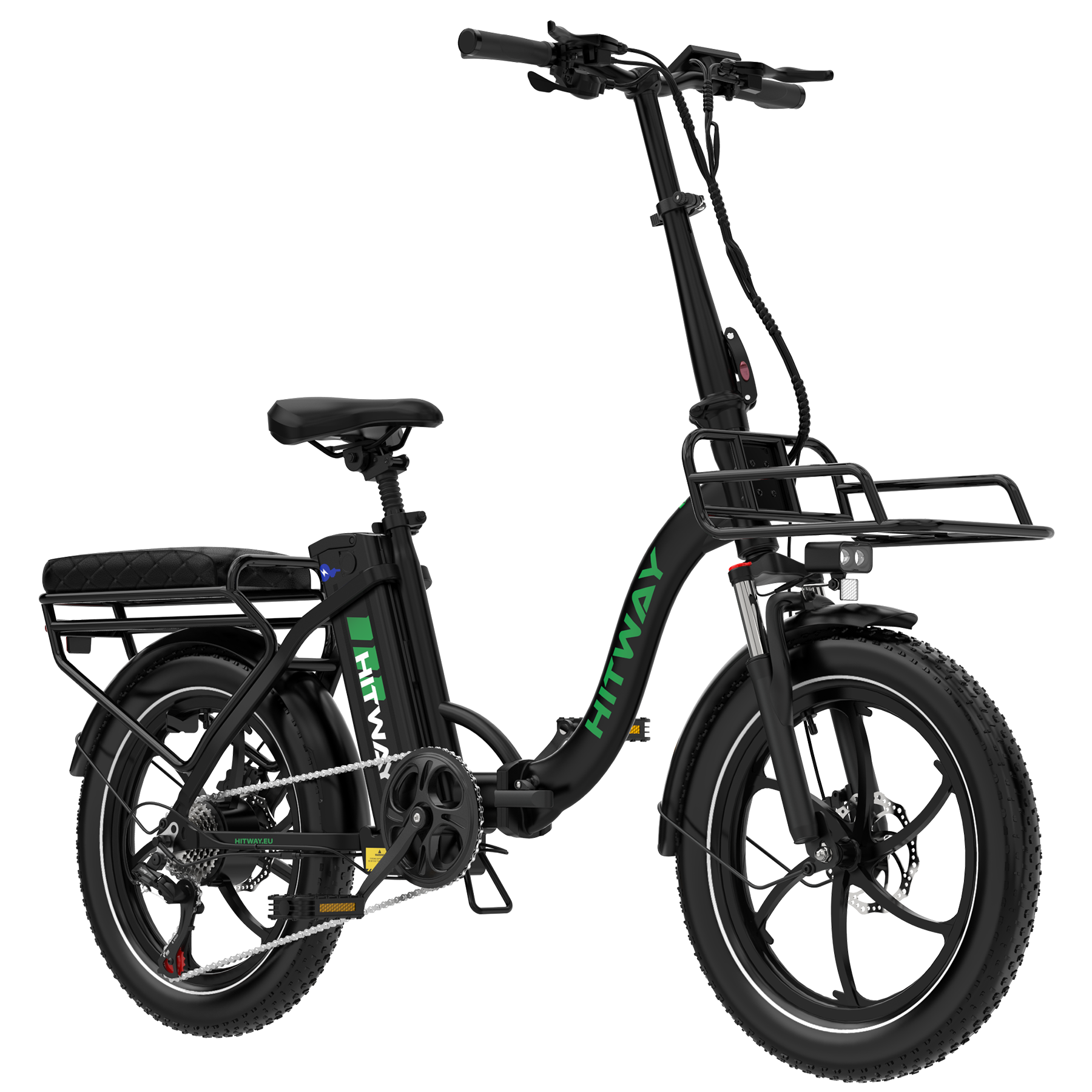
At €899.99, the HITWAY BK6S L1 is the most expensive bike in this group. Its 36 V, 15.6 Ah battery calculates to approximately 562 Wh, compared with 360 Wh for both the C2 and T1. That is about 56% more nominal energy. For an owner who can store the bike at ground level, it is a meaningful reason to investigate the HITWAY first.
The specification also lists a 250 W motor, 55 Nm torque and nominal 20 × 3.0 tyres. Its stated range spans 70–150 km, an unusually broad claim that should prompt questions about test conditions. Do not assume the upper end describes a cold, hilly commute or a rider using strong assistance.
Strength: the battery specification provides a concrete distinction from the other listed 250 W options. Tradeoff: the €150.99 premium over the T1 does not buy a confirmed carrying advantage, because the reviewed description does not state the bike’s weight.
Shortlist it when battery capacity matters more than frequent lifting, then obtain the complete weight and folded dimensions. Those two answers could change the decision for a flat with stairs. The strongest paper battery case is not automatically the best apartment bike.
2. DYU C2: lower purchase cost, heavier handling

The DYU C2 costs €559 and lists a 48 V, 7.5 Ah battery, giving 360 Wh. Its published weight is 29.6 kg, with a 120 kg load capacity and a claimed 40 km range. The smaller nominal 16-inch wheels may appeal to someone looking for a compact-looking machine, but wheel size alone does not establish its folded footprint.
The central tradeoff is price against handling. Compared with the T1, the C2 saves €190 while adding 7.1 kg of listed bike weight. That is a substantial difference for a regular lift. It may matter much less if the bike rolls directly into a ground-floor storage room.
Strength: a lower price than the other two listed 250 W models, with battery capacity and weight disclosed. Tradeoff: the heavy published weight makes it difficult to recommend automatically for stairs or repeated train transfers.
Consider the C2 for a short routine with easy storage and a budget that makes the €190 difference important. Before committing, try mounting and handling the bike, confirm its folding sequence and check whether your required daily distance leaves a sensible reserve under your conditions.
3. DYU T1: the clearest disclosed weight advantage
At €749, the DYU T1 sits between the C2 and HITWAY on price. Its 36 V, 10 Ah battery also calculates to 360 Wh. The published 22.5 kg weight is the main reason it earns attention in this comparison, especially when an occasional lift is unavoidable.
The T1 lists a 250 W motor, 25 km/h maximum speed, 120 kg load capacity and a claimed 55 km range. The range claim exceeds the C2’s even though their nominal battery energy is the same. That difference is not evidence of a measured efficiency win: the claims lack a shared test protocol.
Strength: a 7.1 kg stated weight reduction compared with the C2. Tradeoff: it costs €190 more without increasing nominal battery energy. If stairs are irrelevant, the buyer needs another reason to value that expenditure.
The T1 is the first of these five to investigate when a disclosed weight figure is essential. Still, 22.5 kg is not a trivial object to lift, particularly when folded awkwardly. Confirm handholds, balance and the actual loading task. “Lighter” and “easy to carry” are different conclusions.
4. Terrosor T5: the lowest price needs the most homework
The Terrosor T5 has the lowest checked price at €304.12. Its description lists a 560 W motor, nominal 14-inch tyres and a maximum speed claim equivalent to roughly 39 km/h. It does not provide the battery capacity or bike weight in the reviewed specification.
Those gaps stop it from earning a straightforward value recommendation. Without battery capacity, you cannot make even a basic energy comparison. Without weight and folded dimensions, you cannot know whether the small-looking bike solves a carrying or storage problem.
Strength: the entry price is substantially lower than the three listed 250 W models. Tradeoff: the motor rating basis, delivered configuration, battery, weight and destination suitability need confirmation. The advertised output and speed should not be treated as evidence of ordinary EU pedal-cycle eligibility.
Keep the T5 as a conditional option for a buyer willing to obtain those answers before ordering. A refusal or inability to supply essential specifications should move it off the shortlist. A price saving is useful only when you know what you are buying and where you can use it.
5. UPlee GS5: large stated battery, unresolved practical fit
The UPlee GS5 costs €311.79, just €7.67 above the T5. Its 48 V, 15 Ah battery calculates to 720 Wh, the largest stated nominal capacity in this group. The description lists 740 W and a range claim equivalent to about 56 km, with nominal 14-inch tyres.
That combination is striking on paper, but the comparison cannot end there. The motor’s rating basis is unclear, weight is not stated, and the reviewed specification does not establish its delivered EU configuration. Battery capacity is one component of a purchase decision, not proof of quality, certification or long-term parts support.
Strength: a large stated energy capacity at a very low checked price. Tradeoff: key information for carrying, road eligibility and ownership remains unresolved. Do not rank it above the HITWAY solely because the watt-hour number is larger.
Request a written specification, charger information, destination availability and support terms before treating the GS5 as a buy recommendation. It remains a conditional comparison entry. The right answer may be to spend more on a model whose essential details can be confirmed.
Head-to-head findings that actually change the choice
| Your priority | Best starting point from the available evidence | Why the conclusion is limited |
|---|---|---|
| More battery among the listed 250 W models | HITWAY BK6S L1 | Approximately 562 Wh, but no verified route-specific range or disclosed carrying weight |
| Lower disclosed bike weight | DYU T1 | 22.5 kg versus the C2’s 29.6 kg; three other weights are missing |
| Lower price with a stated 250 W motor | DYU C2 | €559, but heavy handling may outweigh the saving |
| Lowest initial price | Terrosor T5 | €304.12; essential specifications and use eligibility need resolution |
| Largest stated battery overall | UPlee GS5 | 720 Wh; does not establish suitability or product quality |
| Smallest folded package | No winner established | A complete, consistent set of folded dimensions is unavailable |
The most useful direct comparison is C2 versus T1: the extra €190 buys a published 7.1 kg weight reduction, not more nominal energy. HITWAY versus T1 asks a different question: is approximately 202 Wh of extra nominal battery capacity worth €150.99 to you, given the missing HITWAY weight? Those are concrete decisions that a headline ranking can obscure.
Storage, tyres and carrying: measure the complete task
Check the storage opening as well as the space beyond it. A bike can fit inside a cupboard but be difficult to turn through the doorway. Mark the required dimensions on the floor after obtaining them from the seller, and allow space for cables, pedals and your hands.
Tyre sizes in this article use familiar nominal wheel labels where that is how the model is identified; other dimensions and distances use metric units. For replacement parts, use the actual sidewall marking. Schwalbe explains how metric ETRTO dimensions identify tyre width and bead-seat diameter, which is more precise than relying on an approximate wheel-size name.
If the bike must go on public transport, check the operator’s current folding-bike and battery rules. If it must go in a car, consider the loading height, usable boot opening and remaining luggage room. No product’s “folding” label answers all of those practical questions.
Check vehicle category before calling any pick a commuter
For an EU-focused purchase, a power headline is insufficient evidence of road eligibility. The conventional pedal-cycle framework concerns maximum continuous rated power, the way assistance responds to pedalling and its speed cutoff. A 250 W label alone does not certify an entire bike, while an unexplained higher number should not be silently treated as a compliant continuous rating.
Ireland’s Department of Transport summarizes the relevant EU-based framework in its e-bike guidance. Use that as context, then check the rules and required documentation for your country and intended route. The T5 and GS5 need particular clarification here because their advertised motor figures and delivered configurations are not equivalent to the other three entries.
Ask the seller for the exact version, continuous rated output, assistance behavior and applicable conformity documents. Do this before choosing accessories or planning a daily route. A vehicle that cannot perform the required trip lawfully and practically is not a bargain, whatever its battery size.
Ownership support is part of the price
Before buying any of the five, identify the approved replacement charger and battery, common wear parts and a realistic repair route. Request warranty and return terms for your delivery country. A low entry price becomes less attractive if basic parts cannot be identified or a fault requires expensive transport.
For fitted components, use the exact model’s instructions rather than copying an unrelated adjustment video. Shimano’s technical-document library is one example of a manufacturer resource for identifying instructions when a Shimano component is actually fitted. It does not establish that every bike here uses the same drivetrain.
The practical shortlist is therefore conditional: investigate HITWAY for its stated battery capacity, T1 for its disclosed weight and C2 for a lower-priced 250 W specification. Keep the T5 and GS5 behind an information check until their missing details are resolved. The bike that meets your non-negotiable requirements is the stronger purchase than a universal winner selected from incomplete data.
Frequently asked questions
Q1. Which of the five has the largest battery?
The GS5 lists 720 Wh of nominal energy. Among the three models listed at 250 W, the HITWAY BK6S L1 leads at approximately 562 Wh. Neither finding proves the longest real-world range.
Q2. Which is easiest to carry?
No carrying test was performed. The T1 has the lowest disclosed weight at 22.5 kg, compared with 29.6 kg for the C2. The other three weights need confirmation.
Q3. Does the cheapest model win on value?
Not automatically. The T5 has the lowest checked price but lacks essential information in the reviewed specification. Value depends on confirmed suitability and ownership support.
Q4. Why do the C2 and T1 have different range claims with equal battery energy?
Range depends on consumption and test conditions as well as battery capacity. Without a shared test protocol, the claims do not establish an efficiency ranking.
Q5. Are all five suitable for ordinary EU cycle paths?
That has not been established. Confirm the delivered version, continuous motor rating, assistance behavior, documentation and local access rules before treating any model as a commuting solution.


