
Blog
5 Electric Dirt Bikes Under €1,800 Compared


Comparing electric dirt bikes under €1,800 quickly becomes confusing when one model leads with watts, another with battery amp-hours and another with an attractive price. The useful question is what each purchase actually gives you: stored energy, a particular vehicle format, identifiable components and an ownership plan that works where you intend to ride.
This five-bike comparison covers the Kickwey LD20, Bopzin M22, Varun X-Plorer Rapto, GT73 and EKX X21 Max. Their checked prices range from €581.95 to €1,641.84. They are candidates for permitted recreational use, not an automatic shortlist of road-legal European commuter bicycles.
The analysis uses published specifications and prices checked on 15 October 2026. It is not a hands-on group test. Where information is incomplete, the missing detail is part of the buying decision rather than a reason to invent a performance score.
Quick comparison: five very different budget choices
| Model | Checked price | Battery information | Listed motor figure | Main reason to investigate |
|---|---|---|---|---|
| Kickwey LD20 | €581.95 | 48 V / 20 Ah; calculated 960 Wh | 1,500 W | Lowest entry price in this group |
| Bopzin M22 | €662.72 | 48 V / 20 Ah; calculated 960 Wh | 1,500 W | A similarly specified alternative to assess for fit and support |
| Varun X-Plorer Rapto | €707.79 | 48 V / 20.8 Ah; calculated 998.4 Wh | 1,000 W | Near-1 kWh nominal battery with a lower listed output |
| GT73 | €1,498.30 | 36.4 Ah; confirm nominal voltage and pack configuration | 2,000 W | Hydraulic brakes explicitly identified |
| EKX X21 Max, 60 V / 30 Ah version | €1,641.84 | 60 V / 30 Ah; calculated 1,800 Wh | 3,000 W | Largest calculable nominal battery in this group |
Watt-hours above are calculated from nominal voltage multiplied by amp-hours. The motor labels do not consistently identify continuous versus peak output, so they are not a standardised power ranking. Prices can change, and the delivered total depends on destination and any applicable charges. Product images illustrate the models; check the current delivery terms instead of relying on promotional text within an image.
What matters more than a large headline number?
Start with access, physical fit and support. All three can eliminate a candidate before the specification table becomes useful. A recreational electric machine is not a bargain if you cannot legally use it at the intended location, cannot handle it at walking speed or cannot identify a replacement brake pad.
For European road use, the pedal-cycle exclusion in Regulation (EU) No 168/2013 has specific conditions, including a maximum continuous rated auxiliary power of 250 W and assistance that cuts out with stopped pedalling or before 25 km/h. Do not infer compliance from the presence of pedals or a selectable low-speed mode. These listings do not establish the approval needed for a particular public-road use.
In the UK, the government’s electric-bike rules similarly distinguish qualifying assisted cycles from vehicles treated as mopeds or motorcycles. Registration, approval and other requirements are separate questions from advertised performance. Ask the seller for the exact documentation and confirm the local rules for your intended vehicle and location.
After those checks, compare energy, total cost and named components. A fair shortlist rewards information you can verify. It does not give an automatic win to the biggest motor label or the most optimistic speed claim.
1. Kickwey LD20: the lowest upfront price
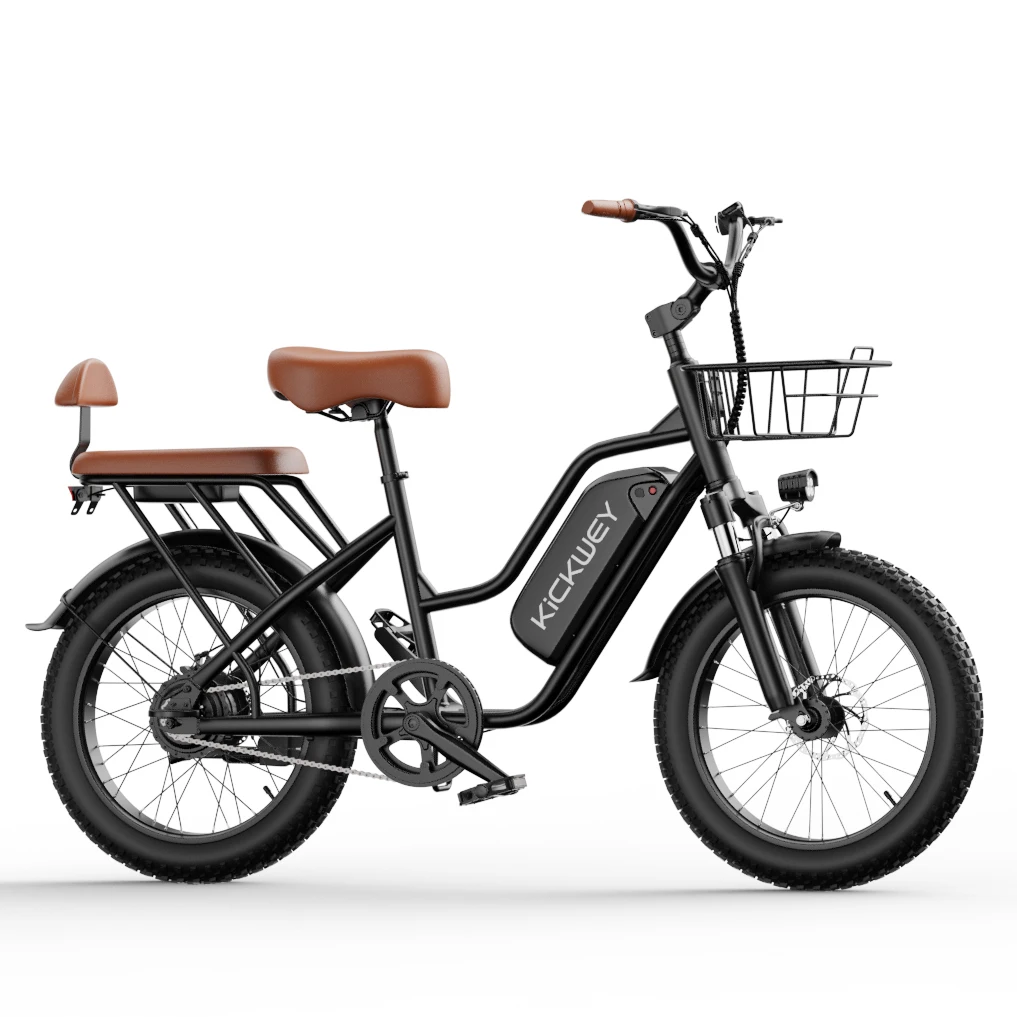
The Kickwey LD20 is €581.95 at the checked price, making it the lowest-cost entry in this five-bike group. Its stated 48 V / 20 Ah pack works out to 960 Wh nominally, alongside a 1,500 W motor label and 20-inch wheels.
Its main appeal is straightforward: a buyer can investigate a sizeable nominal battery without committing to the higher prices of the last two models. That matters when the complete budget also needs to cover suitable protective equipment, secure storage and transport to a permitted riding location.
The limitation is equally important. The published essentials do not establish brake performance, suspension control, real riding weight or long-term parts availability. Those are not small details for a recreational powered bike. Ask for specific components and service information before treating the initial price as the total ownership cost.
Best reason to shortlist: keeping the purchase cost down while comparing a 960 Wh configuration. Reason to pause: you need a well-documented chassis, verified vehicle approval or a local service arrangement that has not yet been confirmed.
It is not automatically the slowest or easiest model to control simply because it is cheapest. Use a fit and control demonstration to judge starting behaviour, lever reach and low-speed handling. Price cannot answer those questions.
2. Bopzin M22: similar headline hardware, a different fit check
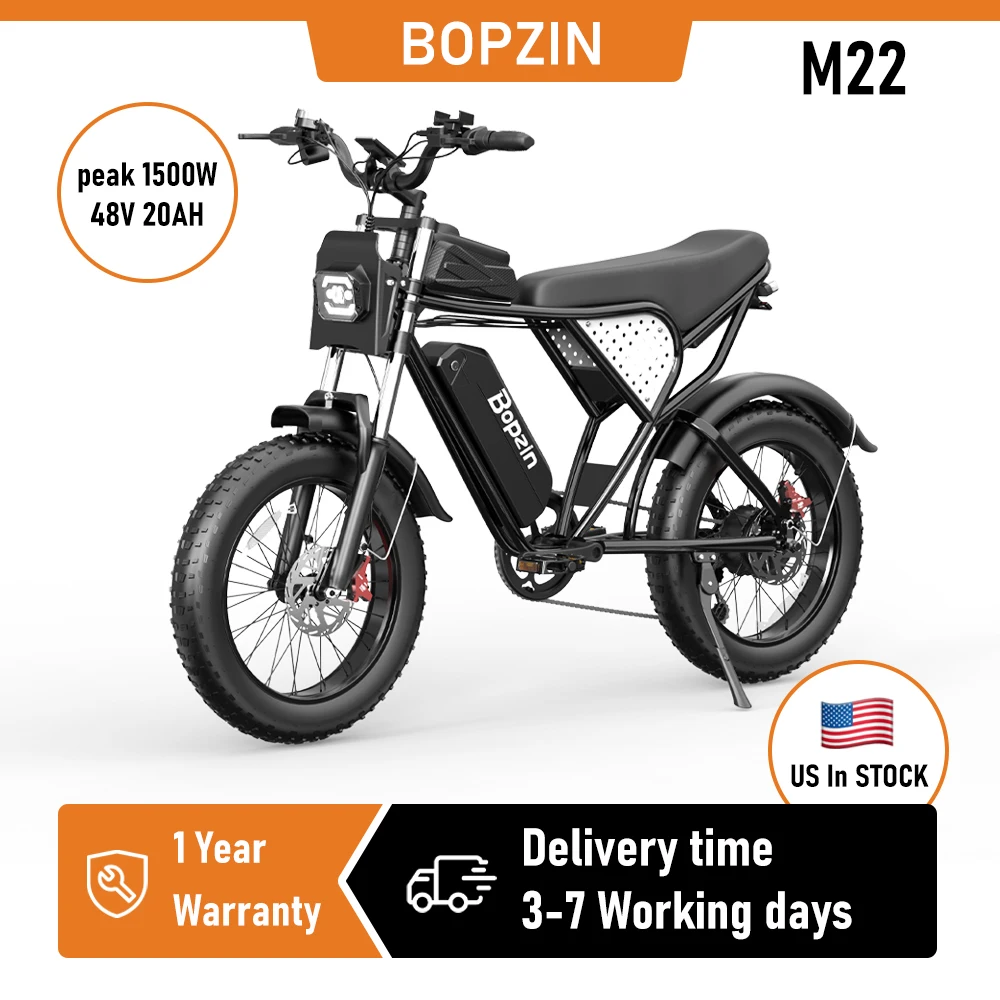
The Bopzin M22 is listed at €662.72. Its battery and motor labels match the LD20’s headline figures: 48 V / 20 Ah and 1,500 W, with 20-inch wheels. On those numbers alone, paying more does not buy additional nominal battery energy.
The price difference is €80.77. Whether that is worthwhile depends on details outside the basic electrical labels: your seating position, the dimensions of the delivered model, identifiable brake and suspension parts, and the support you can actually obtain. Ask the same questions of both sellers so the comparison remains useful.
This is a good example of why similar electrical specifications do not establish equivalent bikes. A different frame layout or control position can matter during every stop, even when the battery arithmetic is identical. Conversely, a more striking appearance does not prove improved durability or handling.
Best reason to shortlist: you want to evaluate another 960 Wh, 20-inch format before settling on the lowest-price option. Reason to pause: the extra cost is being justified only by styling or an unverified performance promise.
Request the ready-to-ride weight and maximum supported load in writing. Include the rider’s equipment and carried items when discussing that load. Avoid assuming a long seat means a second passenger is permitted; seating appearance and passenger approval are different things.
3. Varun X-Plorer Rapto: almost 1 kWh without chasing the largest motor label
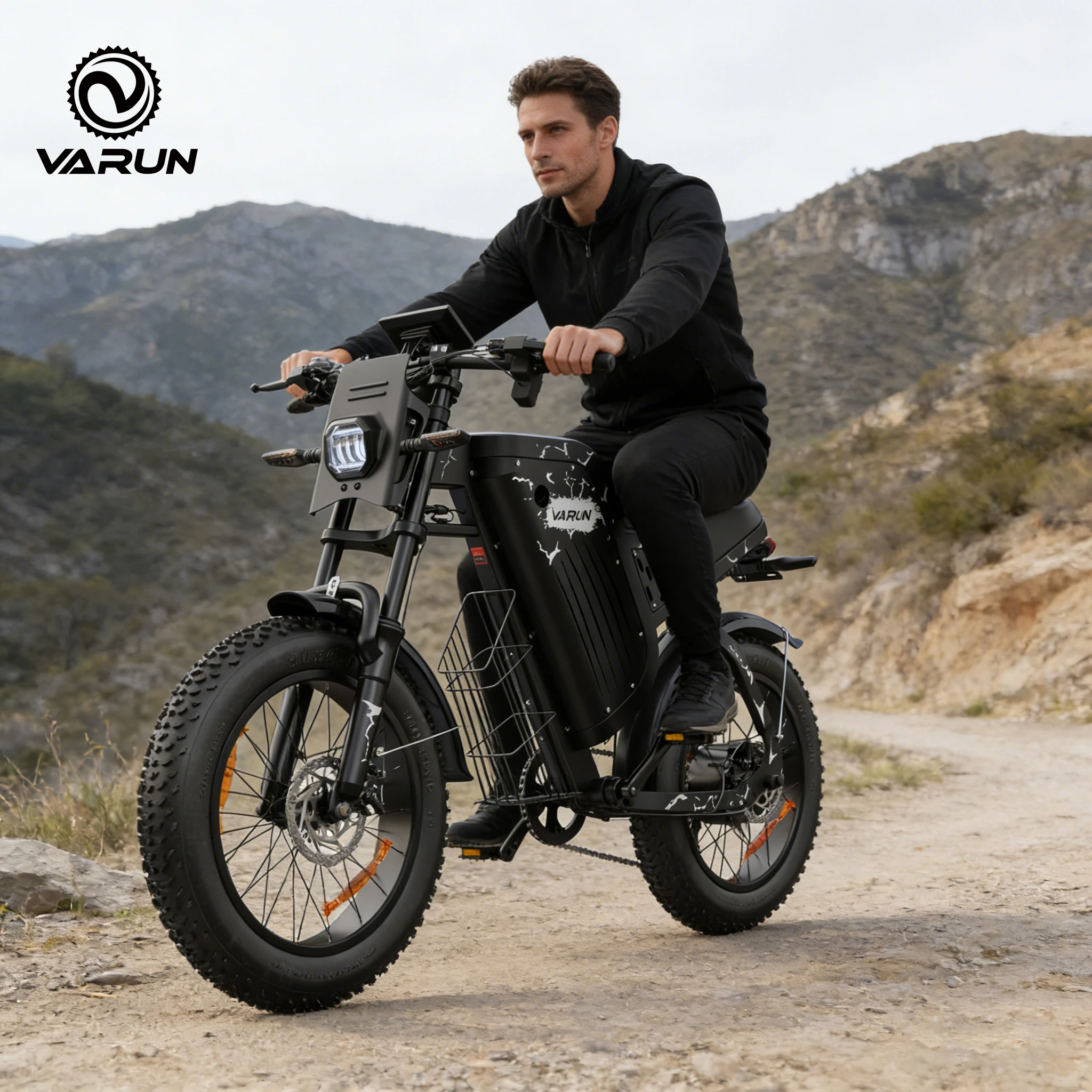
The Varun X-Plorer Rapto costs €707.79 and pairs a stated 1,000 W motor with a 48 V / 20.8 Ah battery. That calculation gives 998.4 Wh, only 38.4 Wh more than the nominal energy in the two preceding models.
That difference is four percent, which is far smaller than the visual impression created by different amp-hour labels can suggest. It does not establish a useful range advantage on its own. Rider input, surface, speed, load, wind and control settings could matter more on a particular outing.
The Rapto is worth examining if its physical layout suits you and the lower advertised motor figure aligns with the kind of riding you intend to do. But “1,000 W” is not evidence of gentle throttle response, and it does not establish ordinary pedelec status. Ask how the power figure is defined and what settings the delivered bike actually offers.
Best reason to shortlist: a near-1 kWh specification in a model whose fit or support suits your needs. Reason to pause: the purchase depends on assuming a dramatically longer range or automatically easier handling than the 1,500 W-labelled options.
Check the available riding position while wearing your normal gear. A specification that looks balanced on paper becomes less useful if your knees feel crowded or the controls require awkward wrist positions. A brief, appropriate demonstration can answer more than another power comparison.
4. GT73: a higher-priced option with hydraulic brakes stated
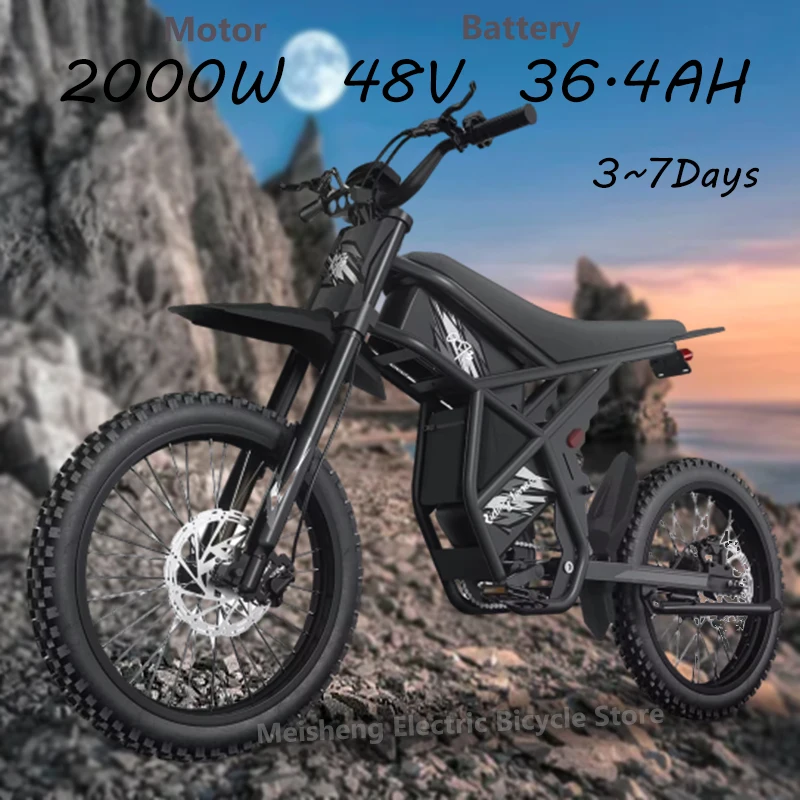
The GT73 steps up to €1,498.30. Its listing identifies a 2,000 W motor, hydraulic brakes and 36.4 Ah battery capacity. That makes braking hardware a more concrete part of the buying discussion, though “hydraulic” still does not identify a complete brake system or prove a stopping result.
The battery figure needs clarification before it enters a watt-hour comparison. Amp-hours alone are insufficient: you need the nominal voltage, and you need to know whether the number describes one pack or a combined configuration. Ask for the battery labels and exact supplied arrangement rather than assuming the largest Ah number means the most stored energy.
At more than twice the checked price of each of the first three candidates, the GT73 needs to justify itself through the whole package. Useful evidence includes identifiable brakes, clear adjustment instructions, suitable geometry, support and a complete specification for the delivered bike.
Best reason to shortlist: hydraulic braking hardware is a priority and the remaining equipment and service answers support the premium. Reason to pause: the price is being explained mainly by a battery capacity that has not yet been converted on a consistent basis.
During a demonstration, check control reach and whether the brakes behave consistently at sensible speeds. Do not try to establish emergency stopping limits on an unfamiliar bike. The aim is to identify fit and setup issues, leaving detailed performance testing to a controlled environment.
5. EKX X21 Max: the largest calculable battery, with version checks
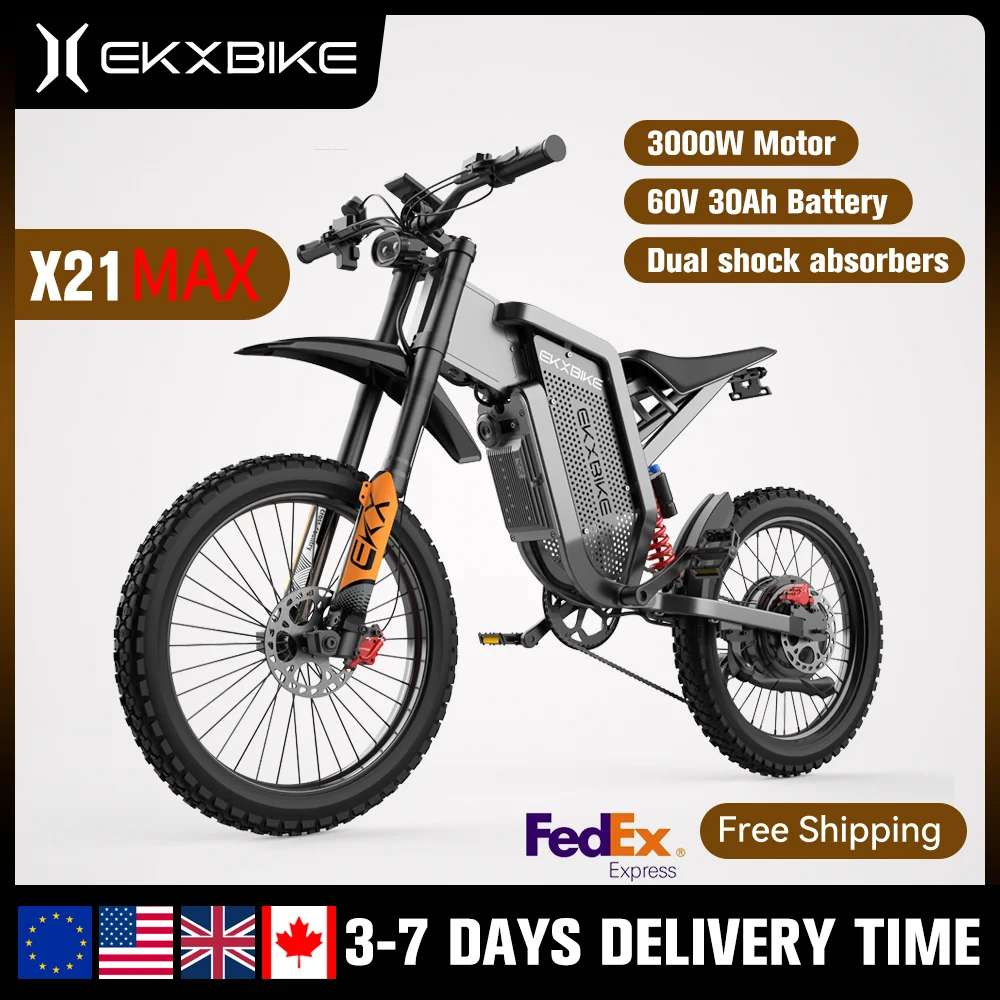
The EKX X21 Max version linked here costs €1,641.84 and is specified with a 60 V / 30 Ah battery and a 3,000 W motor label. Its calculated 1,800 Wh nominal capacity is the largest that can be established from the voltage-and-capacity information in this group.
That is 840 Wh more than either 960 Wh candidate. For a rider whose permitted use genuinely demands more stored energy, the difference is substantial. It is still not an 87.5 percent guarantee of extra distance: a more demanding riding style can use the additional energy quickly.
Version identification is essential. Similar model names can appear with different batteries, motor claims or prices. Keep the exact 60 V / 30 Ah configuration on the order and ask the seller to confirm it on the supplied battery label. A comparison loses its meaning if the bike delivered is a different variant.
Best reason to shortlist: the larger documented nominal battery is a genuine requirement and you can support the vehicle’s physical size, performance and maintenance. Reason to pause: you are buying the highest number without a permitted riding location, suitable experience or a clear transport plan.
This is the most expensive candidate here, at €1,059.89 above the LD20. Spend that difference only after confirming what it buys for your actual sessions. A smaller budget plus a reliable support arrangement may be more useful than a larger specification you cannot comfortably own.
Battery value and performance: what can be ranked fairly?
The LD20 wins the simple purchase-price comparison. The EKX wins the comparison of calculable nominal battery energy. The GT73 explicitly identifies hydraulic brakes. None of those statements establishes an overall winner, because they describe different properties.
Motor power remains the least standardised column. Without consistent definitions and comparable conditions, the figures cannot fairly produce a handling, climbing or acceleration score. Treat them as prompts for further questions. Ask for continuous rated output, the conditions behind any peak claim and the available control settings.
Likewise, this comparison does not assign range positions. A useful range estimate needs a route, load, surface and riding style. Begin with a short outing near a convenient return point, observe battery use and build a personal reserve policy before attempting longer trips.
Charging is part of the ownership comparison. UL Solutions recommends using the battery and charger supplied with the device and following the manufacturer’s instructions. That recommendation is not a certification claim for any of these models. Ask for documentation if an electrical-system certification is important to your purchase.
Before you order: five answers worth getting
- Exact configuration: battery voltage and capacity, model variant, motor rating definition and included equipment.
- Physical fit: ready-to-ride weight, complete dimensions, seat height, rider load limits and control reach.
- Service: brake-pad references, tyre and tube sizes, replacement battery availability and the process for diagnosing a fault.
- Delivered cost: destination eligibility, shipping, taxes, assembly and current delivery terms.
- Permitted use: the documentation and local permissions needed for the exact vehicle and riding location.
Keep the complete budget visible. A vehicle can fit beneath €1,800 while the overall setup does not. Protective equipment, storage, loading equipment and replacement consumables should be planned before spending the last available euro on the bike.
Be specific about transport. Measure the loading opening and usable floor space, and check the ratings and instructions for any carrier or ramp. If you need help to lift or secure the bike, confirm that help will actually be available for normal rides and an early return.
Which deserves a closer look?
Begin with the Kickwey LD20 if lowest upfront cost is the main constraint, then compare the Bopzin M22 on fit, equipment and support rather than expecting more battery from its higher price. The Varun X-Plorer Rapto is a separate physical and ownership option; its modest nominal capacity increase is not a reason by itself to pay more.
Move toward the GT73 when its explicitly stated hydraulic brakes and the rest of the confirmed package match your priorities. Consider the EKX X21 Max when the larger calculable battery solves a real need and the exact variant is documented. None should be selected as a European road commuter merely because it has pedals.
The strongest purchase is the one whose fit, use permission and support are settled before payment. Electrical numbers then become useful decision tools, rather than substitutes for the information that determines whether the bike works in your life.
Cover photograph: Annie Spratt on Unsplash. The woodland setting is contextual and does not indicate permission for motorised riding at that location.
Frequently asked questions
Q1. Which bike has the lowest checked price?
The Kickwey LD20 at €581.95 on 15 October 2026. Confirm current pricing and destination-specific charges before ordering.
Q2. Which has the largest battery?
The linked EKX X21 Max has the largest calculable nominal energy at 1,800 Wh. The GT73’s 36.4 Ah figure needs confirmed voltage and configuration before it can be ranked on the same basis.
Q3. Does the highest wattage guarantee the best bike?
No. Motor rating definitions, fit, controls, brakes, support and your riding requirements matter. The listed wattages are not a standardised performance test.
Q4. Are these ordinary road-legal EU electric bicycles?
The specifications do not establish that. Verify the exact vehicle’s approval, configuration and local requirements. Pedals or a selectable speed limit alone do not prove compliance.
Q5. Were these five bikes tested together?
No. This is a specification and buying comparison using the identified configurations and checked prices. It makes no measured claims for range, braking, acceleration or durability.


