
Blog
E-Bike Test Ride Checklist: Fit, Control and Comfort

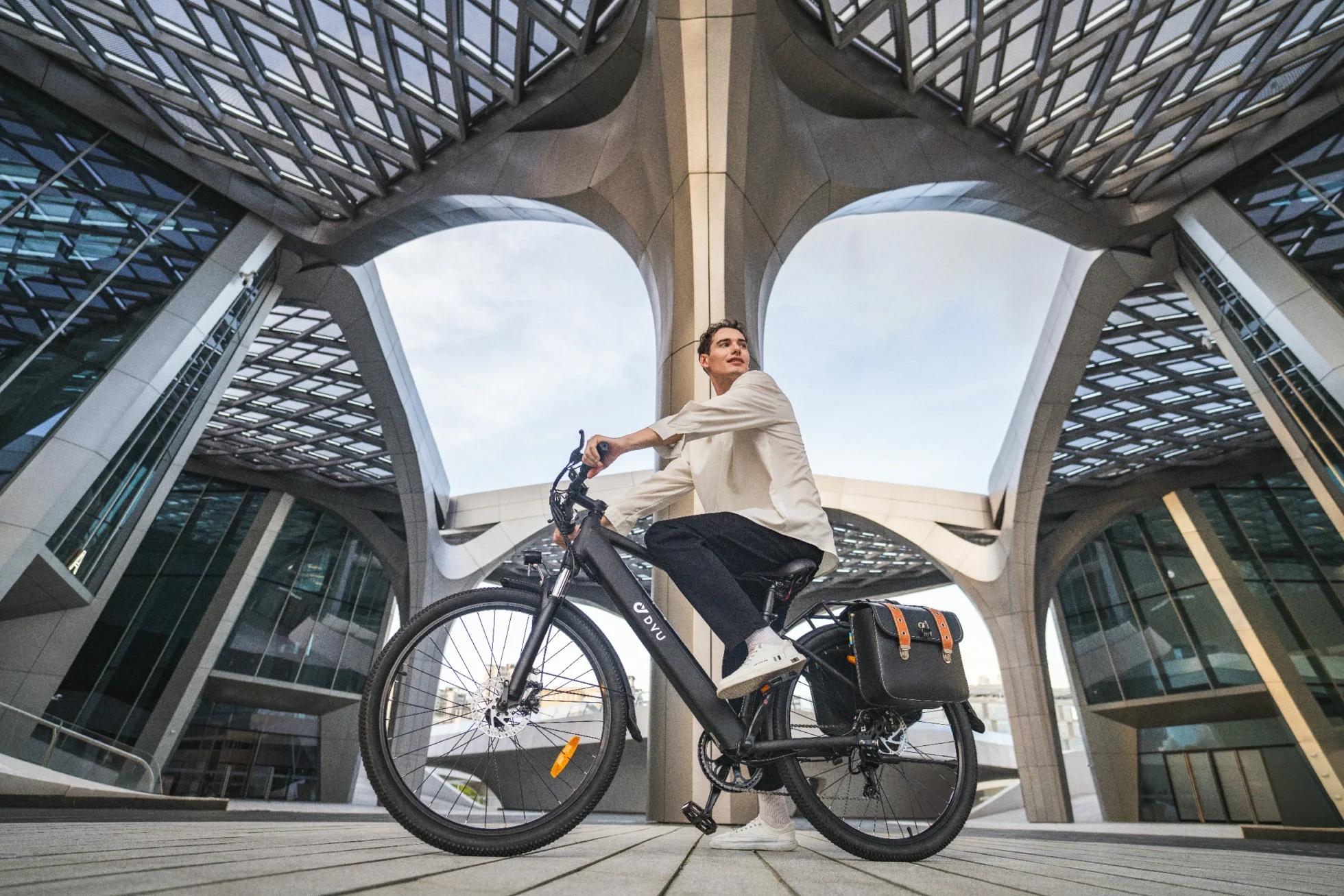
An e-bike test ride checklist helps turn a pleasant spin into a useful buying decision. A motor can make almost any short ride feel exciting. The harder questions appear when you stop at a junction, turn in a narrow space or try to move the bike through the doorway you use every day.
Bring the route and storage problems you need the bike to solve. This guide gives you a repeatable sequence for checking fit, controls, assistance, comfort and handling, plus a way to record what a short demonstration cannot establish. The aim is to choose a bike you can use comfortably, rather than the one that delivers the strongest first acceleration.
E-Bike Test Ride Checklist: Prepare Before You Arrive
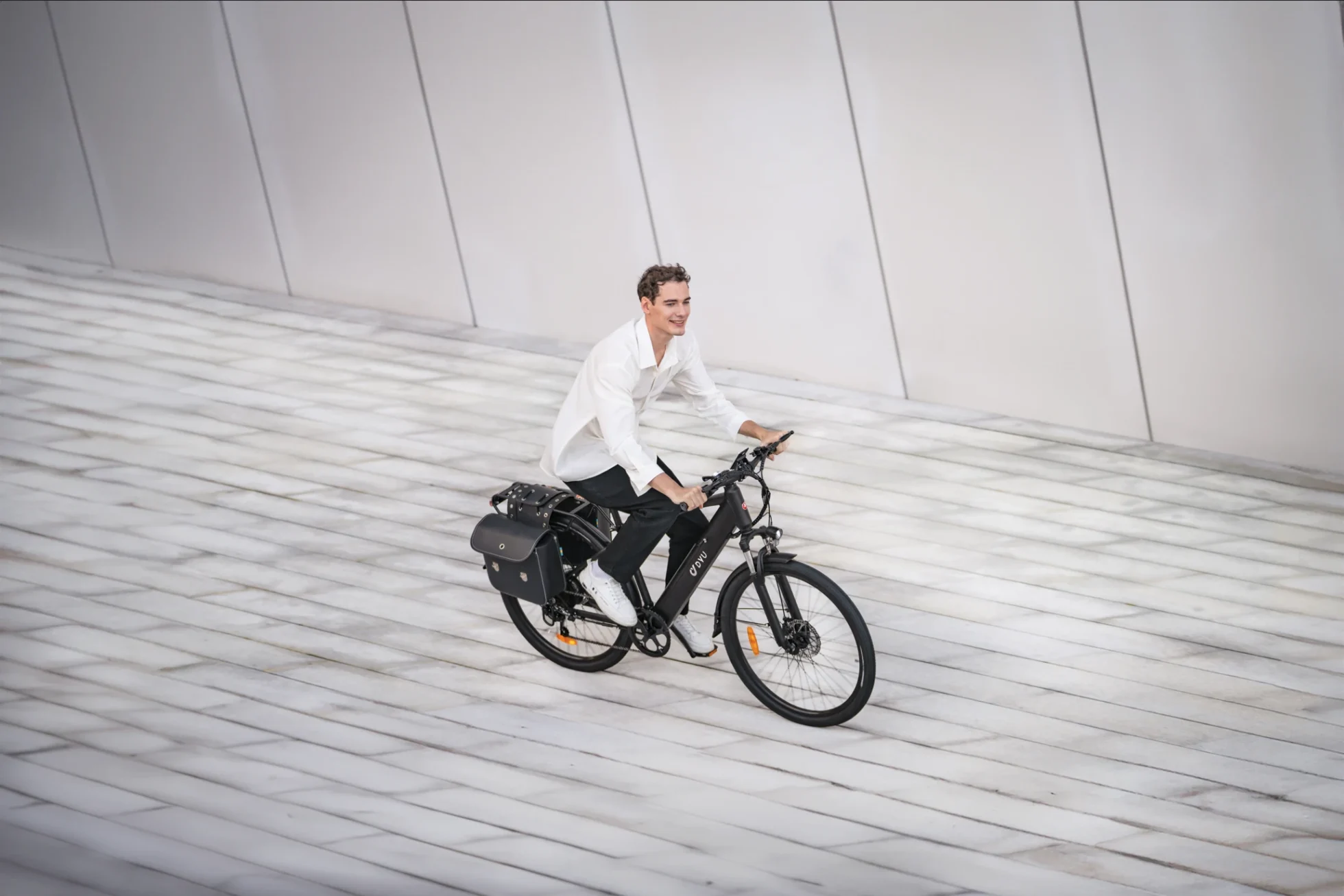
Ask whether the exact model, size and version are available to try. A demonstration bike with a different frame or control system may not answer your questions about the one you intend to buy. Confirm the appointment, permitted route and any identification or deposit requirements directly with the provider.
Bring your usual riding shoes, suitable clothing and a properly fitting helmet. Tell the staff about your experience level, typical journey and any difficulty handling a heavier bike. Ask for the controls and stopping procedure to be explained before the power is switched on.
Write down three daily requirements. These might be a 12 km return commute, a tight hallway and a short hill near home. Add the dimensions of your storage space in centimetres if access is a concern. A list based on your own routine is more useful than comparing every specification equally.
| Stage | Question to answer | Evidence to keep |
|---|---|---|
| Stationary fit | Can I mount, reach the controls and stop comfortably? | Size, saddle setting and remaining concerns |
| Starting and slowing | Is assistance predictable and braking accessible? | Mode used and any adjustment needed |
| Turning | Can I steer through ordinary confined spaces? | Control at a comfortable low speed |
| Representative route | Does it suit my usual surface and gradient? | Route, duration and conditions |
| Off-bike handling | Can I park and move it where I need to? | Measured access and a supervised demonstration |
| Unanswered questions | What could this short ride not establish? | Written questions before purchase |
Set the Fit Before Judging the Ride
Have the saddle adjusted within the permitted limits, then check how naturally you reach the handlebar and brake levers. You should not need to grip unusually hard or stretch awkwardly just to operate a control. Ask for a suitable adjustment before deciding the entire bike is uncomfortable.
Practise getting on and off with assistance from the staff if needed. Check the movement you actually use, particularly with a rear rack or bag behind the saddle. A frame that looks easy to mount in a photograph may still interfere with your preferred movement.
Electra’s test-ride guide describes staff helping riders with saddle position and control familiarisation before a demonstration. Use the same principle wherever you try a bike: setup comes before the verdict. Confirm which adjustments the purchase bike will allow.
Do not assume a softer saddle or higher handlebar will solve every fit problem. Some changes require different components and may affect handling or warranty terms. If the basic reach or frame clearance feels wrong, ask about the correct size instead of building a purchase around an unproven modification.
Check Starts, Stops and Assistance in a Clear Area
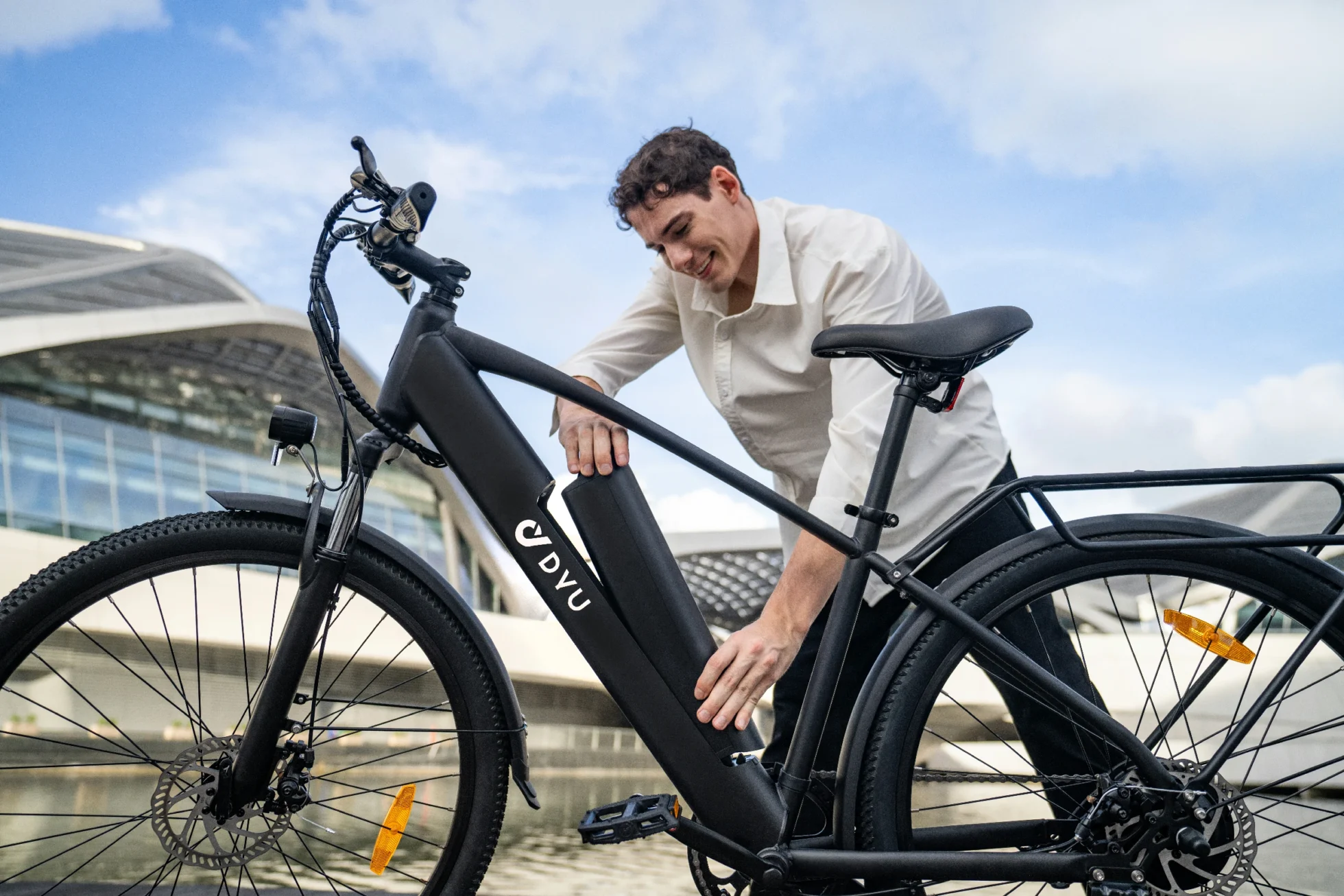
Begin in the lowest suitable assistance setting on an approved clear surface. Learn which lever operates which brake on that particular bike. Check that you can slow and stop smoothly before using more assistance or leaving the demonstration area.
Pay attention to when support begins as you pedal, how it changes when you ease off and how confidently you can repeat a gentle start. These observations matter when approaching a gate or moving away after a stop. More immediate assistance is not automatically better if it feels difficult for you to control.
Try changes of assistance and gears separately once you are comfortable. Avoid pressing unfamiliar buttons while negotiating a turn. Ask staff to explain any unexpected response rather than repeatedly experimenting with controls in a busy area.
A pre-ride condition check is also part of a useful demonstration. Trek’s pre-ride inspection guide provides a structured approach to the bike’s main contact and fixing points. Have a loose control, questionable tyre or brake problem resolved before continuing; a fault is not a handling characteristic to score.
Use a Route That Represents Your Actual Journey
A smooth, flat loop tells you little about a rough lane or the incline outside your home. Ask the provider for a permitted route containing the features you need to assess. Stay within your skill level and the bike’s intended use rather than seeking the steepest hill available.
On a suitable incline, notice whether you can find a comfortable gear and maintain control without feeling rushed. On uneven ground, distinguish normal tyre movement from harsh impacts or rattling that needs investigation. Note the tyre pressure and setup if staff provide them, because those can influence impressions.
Try ordinary turns in both directions and a controlled stop followed by another start. Leave enough space and avoid a full-lock manoeuvre beyond your ability. You are checking confidence in everyday use, not attempting a skills test for its own sake.
Give comfort a little time, but acknowledge the limit of the appointment. A short demonstration can reveal obvious pressure or awkward reach; it cannot guarantee comfort throughout a full commuting week. If a concern remains, ask whether a longer permitted trial or another fitting appointment is available.
Test the Parts of Ownership That Happen Off the Bike
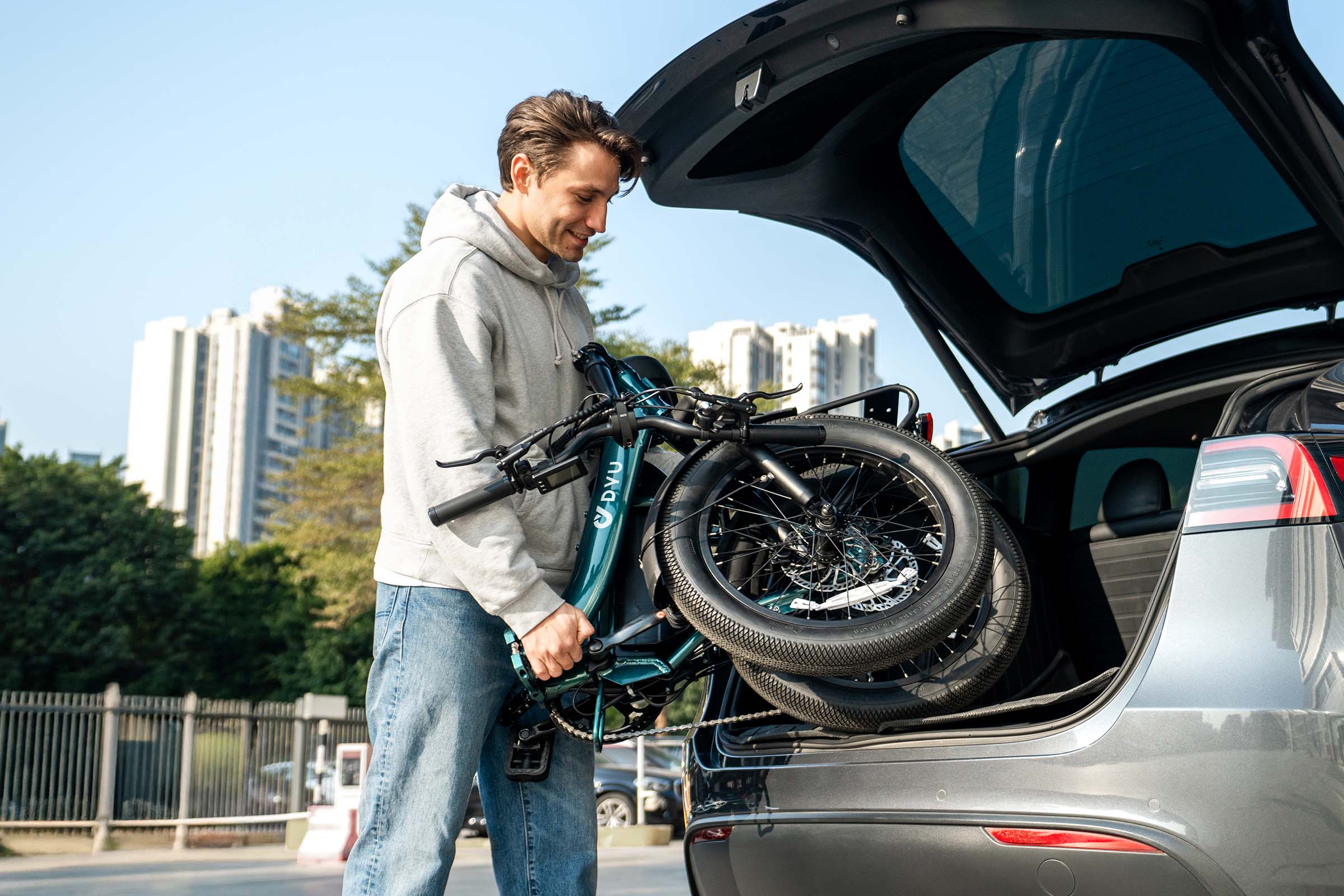
Switch the system off as instructed before practising parking or moving the bike in a confined space. Walk it through a turn, bring it upright from its stand and check where you can hold it securely. Do not discover a carrying problem by attempting an unsupported lift on stairs.
For a folding bike, ask for the complete folding and locking procedure, then repeat it under supervision if permitted. Check the resulting dimensions, exposed parts and whether the folded bike stays manageable. A hinge alone does not establish that a bike is easy to carry or allowed on your particular train service.
If battery removal matters, ask to see the correct method and the actual battery weight. Confirm access to the lock and charging socket in your planned parking position. A battery that is theoretically removable may still be inconvenient when a wall blocks the side it exits.
Bring your normal bag only if the provider permits a safe, compatible fitting demonstration. Check heel clearance, steering space and the published carrying limits. An unloaded ride cannot show you exactly how a bike will handle with all your usual equipment.
Turn Product Specifications into Test-Ride Questions
Specifications help identify questions worth asking, but they do not predict your personal fit. The following current examples show how to connect a feature to a practical demonstration. Prices are those listed at the time of writing; confirm the exact version and any demonstration availability before travelling.
| Model | Current price | Feature to investigate | Question for the demonstration |
|---|---|---|---|
| HITWAY BK18 Pro | €1,149.99 | Listed torque sensor, belt drive and hydraulic disc brakes | Does assistance respond comfortably to your pedalling, and can you modulate the brakes easily? |
| HITWAY BK6S L1 | €899.99 | Folding format and 36 V 15.6 Ah battery | Can you complete the folding routine and manage the bike through your actual storage entrance? |
| HITWAY BK15 Plus | €949.99 | Larger-wheel format and 48 V 15.6 Ah battery | Does the frame fit, and can you turn and park comfortably in the space available? |
A belt drivetrain does not guarantee the right riding position. A folding frame does not guarantee easy lifting. A larger battery does not guarantee that the complete bike suits a small hallway. Treat each feature as one part of a decision, with at least one practical tradeoff to investigate.
Record What Passed and What Remains Unknown
Immediately after the ride, mark each daily requirement as comfortable, needs adjustment or unresolved. Write down the exact model, size and assistance setting. If you try another bike, use the same route and questions where possible so your impressions have a fair basis.
Do not calculate a promised full-charge range from a few kilometres and a dashboard change. Trek’s range guidance explains that riding conditions and use affect results. A demonstration is particularly weak evidence for long-term battery capacity, wet-weather performance or parts availability.
Ask for service arrangements, compatible replacement parts and applicable return terms in writing. Keep those answers separate from ride feel. A comfortable bike still needs realistic support, while a generous sales promise cannot fix an unsuitable frame.
Use the e-bike test ride checklist to resolve the most consequential uncertainty first. If you cannot comfortably start, stop, steer or manage the bike where you live, pause the purchase. If those essentials work, use the remaining questions to choose a specification and price you can justify.
FAQs
Q1. What should I check on an e-bike test ride?
Check fit, control access, assistance response, braking, turning, comfort and off-bike handling. Use a permitted route similar to your real journey. Record any adjustment or question that remains unresolved.
Q2. How long should an e-bike test ride be?
Long enough to cover the agreed checks without rushing, within the provider’s appointment rules. A short ride can expose obvious fit problems but cannot establish long-term comfort or range. Ask about a longer trial if needed.
Q3. Can I test ride an e-bike without motor assistance?
Ask staff to explain the correct setting and try it only where appropriate. It can help you understand pedalling and handling with reduced support. Do not deliberately exhaust the battery as part of the test.
Q4. What if the exact model is unavailable to try?
A similar bike may help clarify broad preferences, but it cannot verify the fit or response of the exact purchase model. Obtain dimensions, version details and return terms. Keep the remaining uncertainty explicit.
Q5. Should I bring luggage to a test ride?
Ask the provider first. A safe demonstration with compatible bags can reveal clearance and handling issues that an unloaded ride misses. Respect the bike’s carrying limits and the provider’s conditions.


