
Electric Bike & Scooter Blog
10 E-Bikes Compared for European Riders in 2026

Ten e-bikes compared for European riders in 2026 can look like one shopping list, but the models below solve very different problems. A 14-inch folder for a small flat is not a substitute for a 29-inch bike on broken cycle lanes, while a high-powered trail model should not be treated like an ordinary city pedelec. The useful comparison is therefore not simply which bike has the largest motor or the longest advertised range. It is which design fits the route, storage space, maintenance tolerance and legal category that matter to you.
This group spans compact folders, full-size city bikes, a step-through mid-drive, a belt-drive commuter, a fat-tire model and off-road-focused machines. Prices run from entry level to premium, so value also depends on what is included and what still needs checking before checkout. Every price shown is the current listed price at the time of writing and can change.
European road-use note: the familiar starting point for ordinary public-road pedelec treatment in much of Europe is a continuous-rated motor of up to 250W, with assistance cutting out at 25 km/h. That is not a universal permission. Throttles, higher assistance speeds, more powerful motors, speed-pedelec rules, insurance, registration, helmets and access to cycle paths vary by country. Models above 250W in this comparison should be treated as private-land, off-road or specially classified options unless the buyer confirms that the exact version is legal for the intended route.
Quick Comparison: Ten E-Bikes for Different European Rides
| Model | Current price | Best fit | Key published specification | Main caution |
|---|---|---|---|---|
| DYU D3S | €489 | Compact city storage | 250W, 14-inch wheels, 50 km listed range | Small wheels and 19 kg weight |
| DYU Stroll 1 | €999 | Full-size urban commuting | 250W, 700x38C tyres, 100 km listed range | Range claim needs route-based expectations |
| HITWAY BK7S Plus | €1,049.99 | Large-wheel daily comfort | 250W, 29-inch wheels, hydraulic discs | Less convenient in small homes |
| HITWAY BK32 | €1,249.99 | Step-through mid-drive riding | Ananda mid-drive, 80 Nm, 374.4Wh battery | Confirm exact road classification |
| HITWAY BK19 Pro | €1,149.99 | Low-maintenance road commuting | Belt drive, torque sensor, 700x42C tyres | Published motor rating is not listed |
| Cybervelo EK2 | €612.91 | High-power long-distance use | 1000W, 14Ah battery, 80-mile range claim | Not a standard 250W road pedelec |
| UPlee GS5 | €311.79 | Compact high-power folding | 740W, 48V 15Ah, 14-inch wheels | Legal category and folded size need checking |
| VIPDRIVE Defier 1.1 | €286.42 | Budget trail-style riding | 750W, 48V 7.8Ah, 26-inch wheels | Private-land or classified use may apply |
| Terrosor 350W Fat Tire | €326.51 | Mixed surfaces and extra tyre volume | 350W, 26-inch wheels, 19.9 mph claim | Battery and range are not publicly specified |
| LANKELEISI GT800 | €2,913.15 | Premium off-road routes | 500W, 48V 20Ah, 29-inch wheels | High price and dirt-bike classification |
What Matters Most for European Buyers
Start with classification, not peak-looking numbers. A bike that fits the normal pedelec framework is usually simpler to use on public roads and cycle infrastructure. A 500W, 750W or 1000W model may be attractive for hills or private trails, but power can bring registration, insurance or access restrictions. The exact version matters because manufacturers sometimes sell different configurations under similar model names.
Match wheel size to the route and the building. Fourteen-inch wheels make a bike shorter and easier to position in a lift, hallway or camper, yet they react more sharply to potholes and kerbs. Large 700C and 29-inch wheels feel calmer over distance and rough tarmac, but they occupy more floor and wall space. Folding hinges help only when the folded dimensions and carrying weight suit the actual storage routine.
Treat range claims as comparison points, not promises. Rider mass, temperature, tyre pressure, hills, stop-start traffic and assistance level can change the result substantially. Battery energy in watt-hours is more useful than a headline distance when both figures are available. Even then, two bikes with similar batteries can return different results because of tyres, gearing, motor tuning and riding position.
Maintenance can outweigh the purchase-price gap. Hydraulic brakes, torque sensors, mid-drive motors and belt drives can improve control or reduce routine cleaning, but specialist parts may also narrow the choice of local workshops. Before buying, check who can supply brake pads, tyres, a replacement display, a battery and model-specific electronics in your country.
1. DYU D3S: Best for Very Compact City Storage
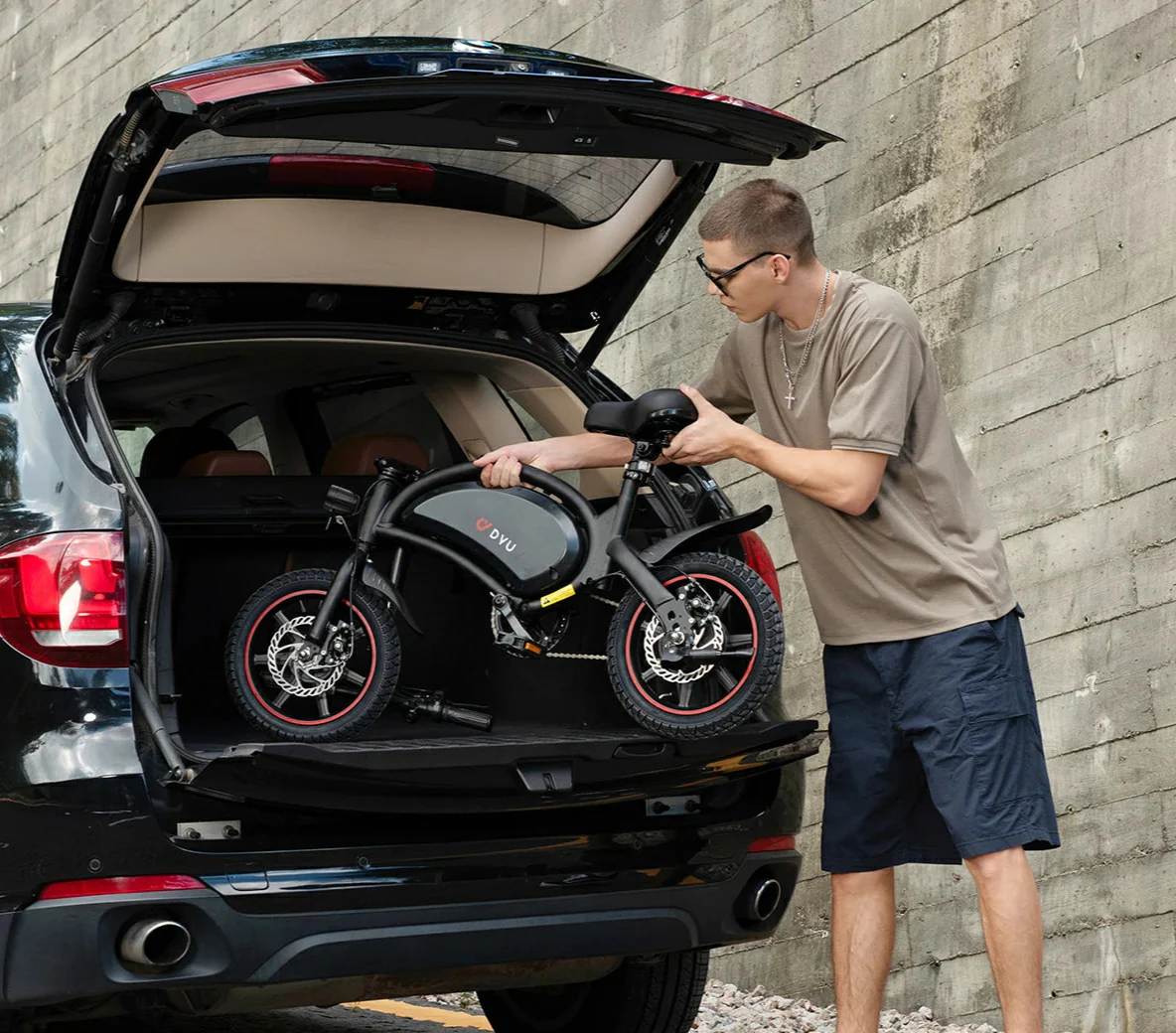
The DYU D3S is the smallest conventional road-oriented option here. Its published setup combines a 250W motor, 36V 10Ah battery, 25 km/h assistance speed, 50 km range claim and 14-inch wheels. At 19 kg, it is compact rather than truly effortless to carry, but its short footprint can make a meaningful difference in a studio flat, narrow hallway or small motorhome. The current listed price is €489.
Best for: short city trips, last-mile travel and riders whose main constraint is storage space.
Pros
- The 250W and 25 km/h published figures start from a familiar European pedelec profile.
- A 36V 10Ah battery and 120 kg load rating are useful specifications for such a compact frame.
Limitations
- Fourteen-inch wheels demand more care on potholes, tram tracks and broken road edges.
- Nineteen kilograms can still feel heavy on stairs, especially when the bike must be lifted daily.
2. DYU Stroll 1: Best for Familiar Full-Size City Handling
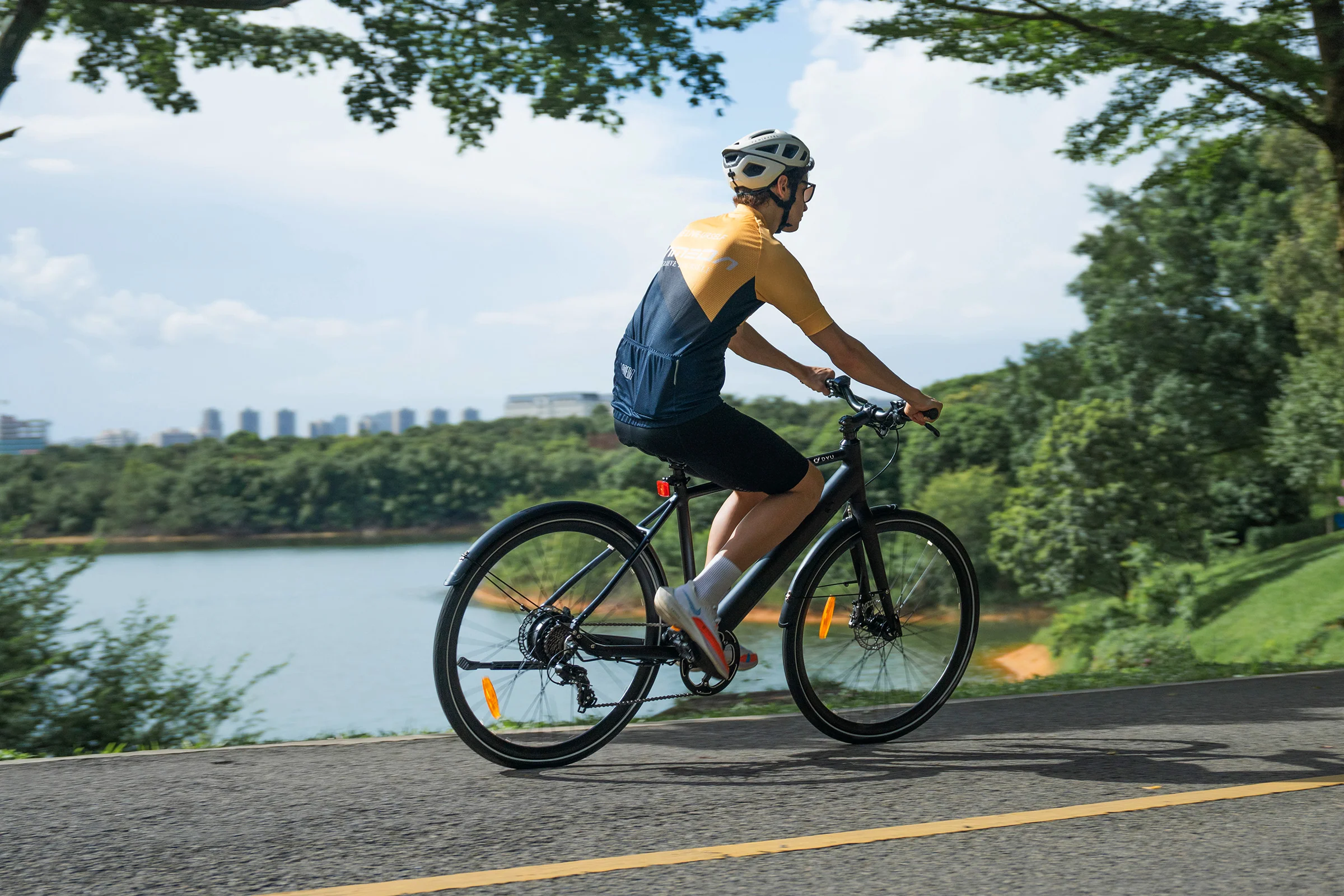
The DYU Stroll 1 takes the opposite approach. It uses 700x38C tyres, a 250W motor, 36V 9Ah battery and oil-operated disc brakes in a 19.5 kg city-bike format. The published 100 km range is ambitious enough that buyers should regard it as a best-case reference rather than a daily guarantee. At €999, its appeal is the familiar rolling feel of a full-size bicycle, not compact folding.
Best for: longer urban routes, paved cycleways and riders who have secure ground-level storage.
Pros
- Full-size tyres should roll more calmly over patched tarmac than a mini-wheel folder.
- The published 250W, 25 km/h configuration is easier to assess for ordinary road use.
Limitations
- It is a poor fit for shoppers who need to fold a bike into a cupboard or small car boot.
- The 100 km figure will vary substantially with temperature, hills, rider weight and assistance level.
3. HITWAY BK7S Plus: Best for 29-Inch Everyday Comfort
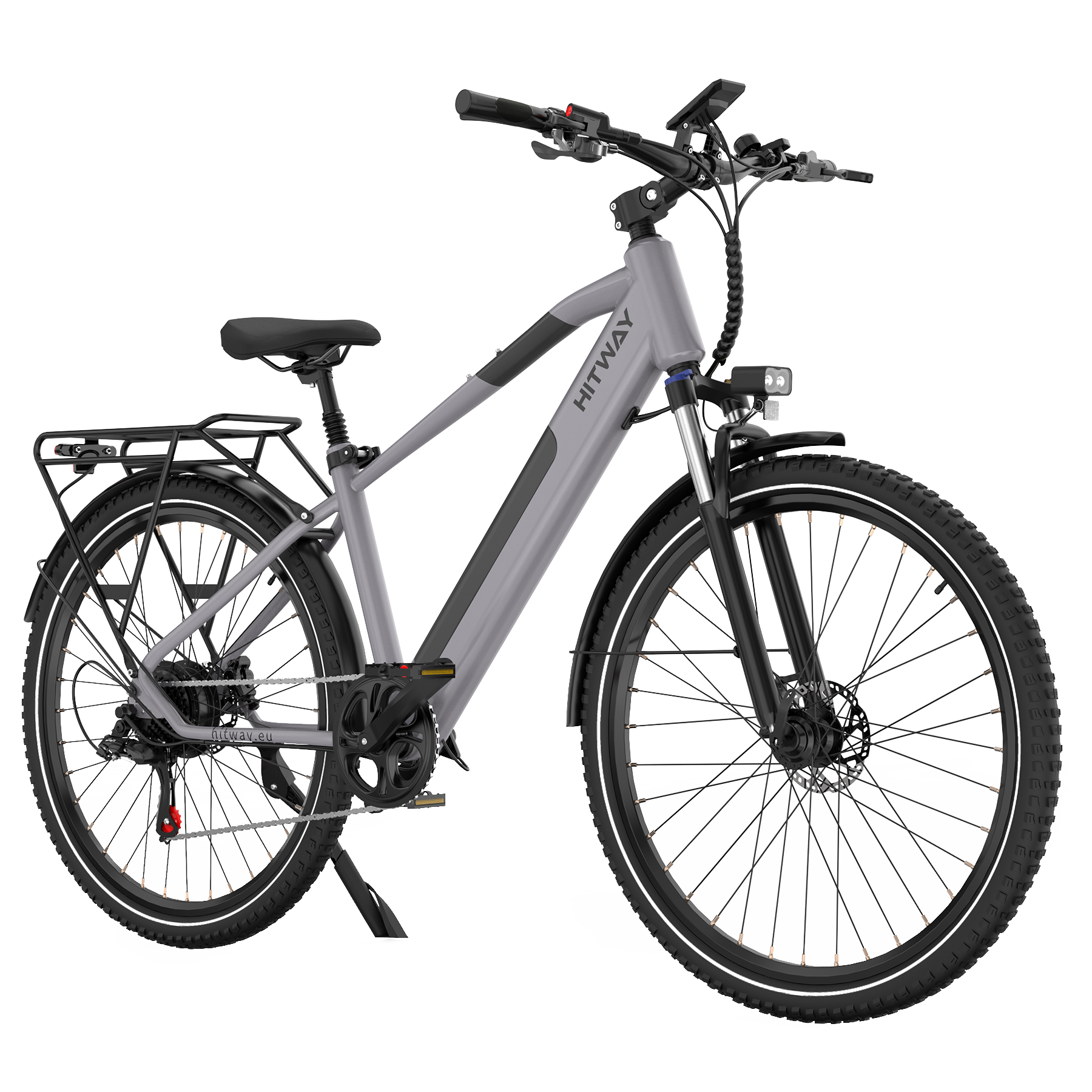
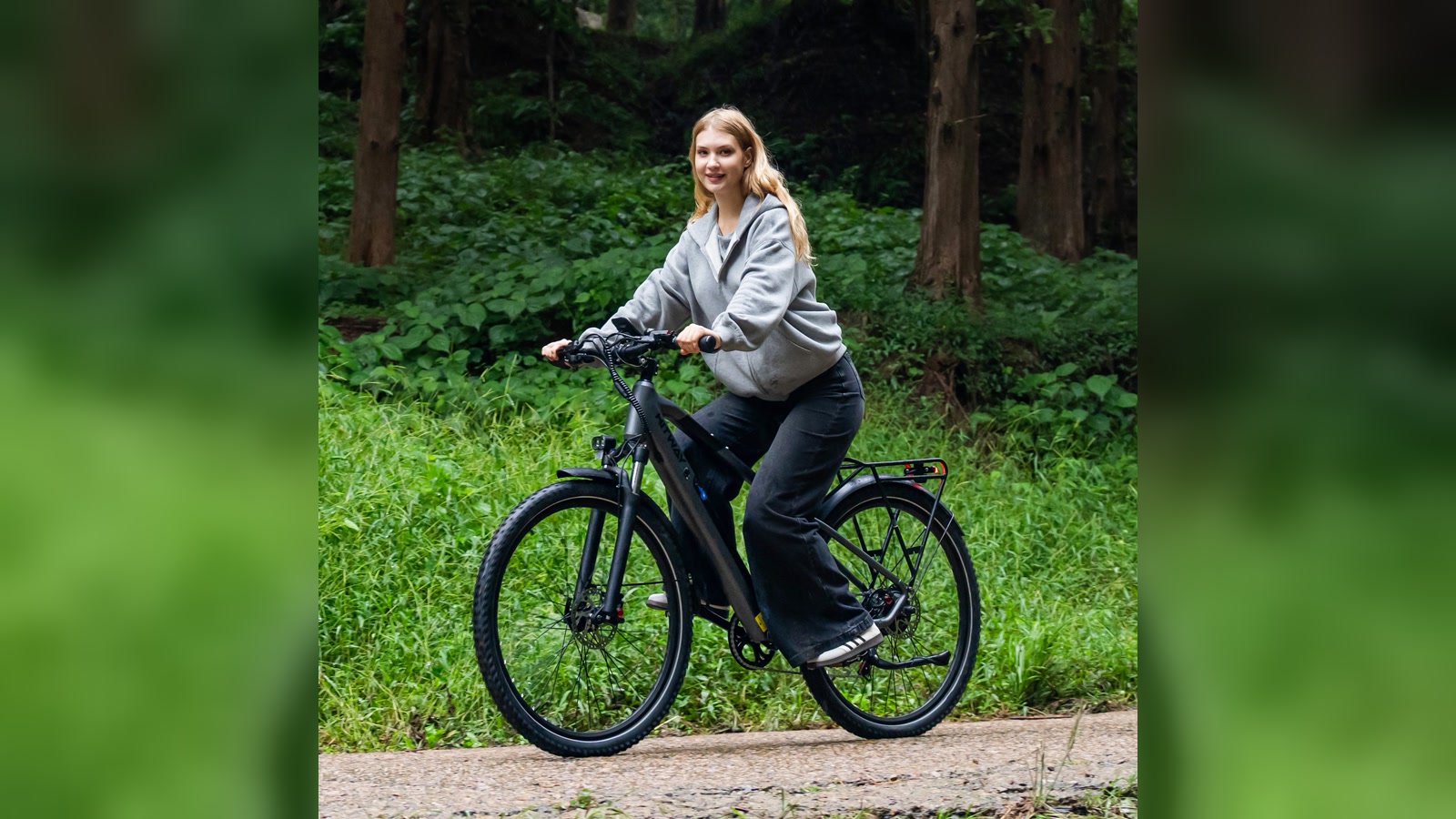
The HITWAY BK7S Plus combines a 250W motor, 36V 12.8Ah battery, hydraulic disc brakes and 29-inch wheels. Its listed 50-80 km range is more restrained than several triple-digit claims in this group, while the larger wheels suit uneven city edges and leisure paths. The current price of €1,049.99 puts it above basic hub-drive commuters, so brake feel and wheel comfort need to justify the difference for the intended route.
Best for: riders who value stable large-wheel handling over folding convenience.
Pros
- Hydraulic disc brakes are a useful control feature for wet commutes and heavier riders.
- The 250W motor and 29-inch format create a practical road-and-path specification.
Limitations
- Large wheels make storage, train carriage and car transport less convenient.
- It costs more than some similarly powered city bikes, so fit and local support deserve scrutiny.
4. HITWAY BK32: Best for Step-Through Mid-Drive Assistance
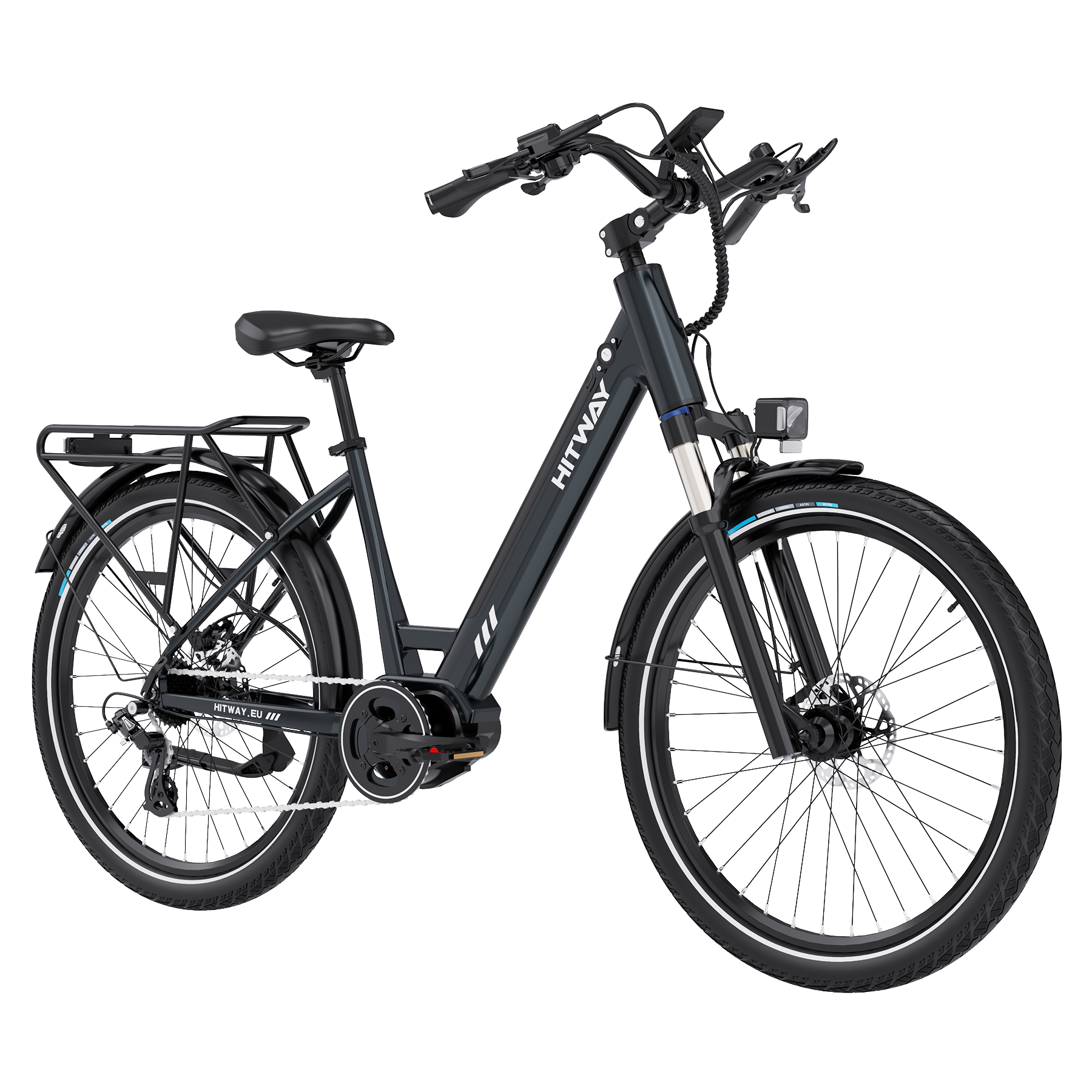
The HITWAY BK32 is the most distinctive road-oriented design in the comparison. Its step-through frame, Ananda mid-drive, 80 Nm torque figure and 374.4Wh battery aim at balanced climbing and easy mounting. A mid-drive can use the bike’s gears more effectively than a hub motor, but it also places more load on the drivetrain. The 80-120 km listed range and €1,249.99 price should be weighed against the relatively modest published battery energy.
Best for: frequent stops, moderate hills and riders who prefer a low-access frame.
Pros
- The step-through frame makes mounting easier when carrying bags or managing limited hip mobility.
- An 80 Nm mid-drive specification should feel more responsive on climbs than a basic low-torque hub setup.
Limitations
- The public specification does not state a motor wattage, so the exact road classification needs confirmation.
- Mid-drive chains, cassettes and chainrings can wear faster when shifted poorly under motor load.
5. HITWAY BK19 Pro: Best for Cleaner, Lower-Maintenance Commuting
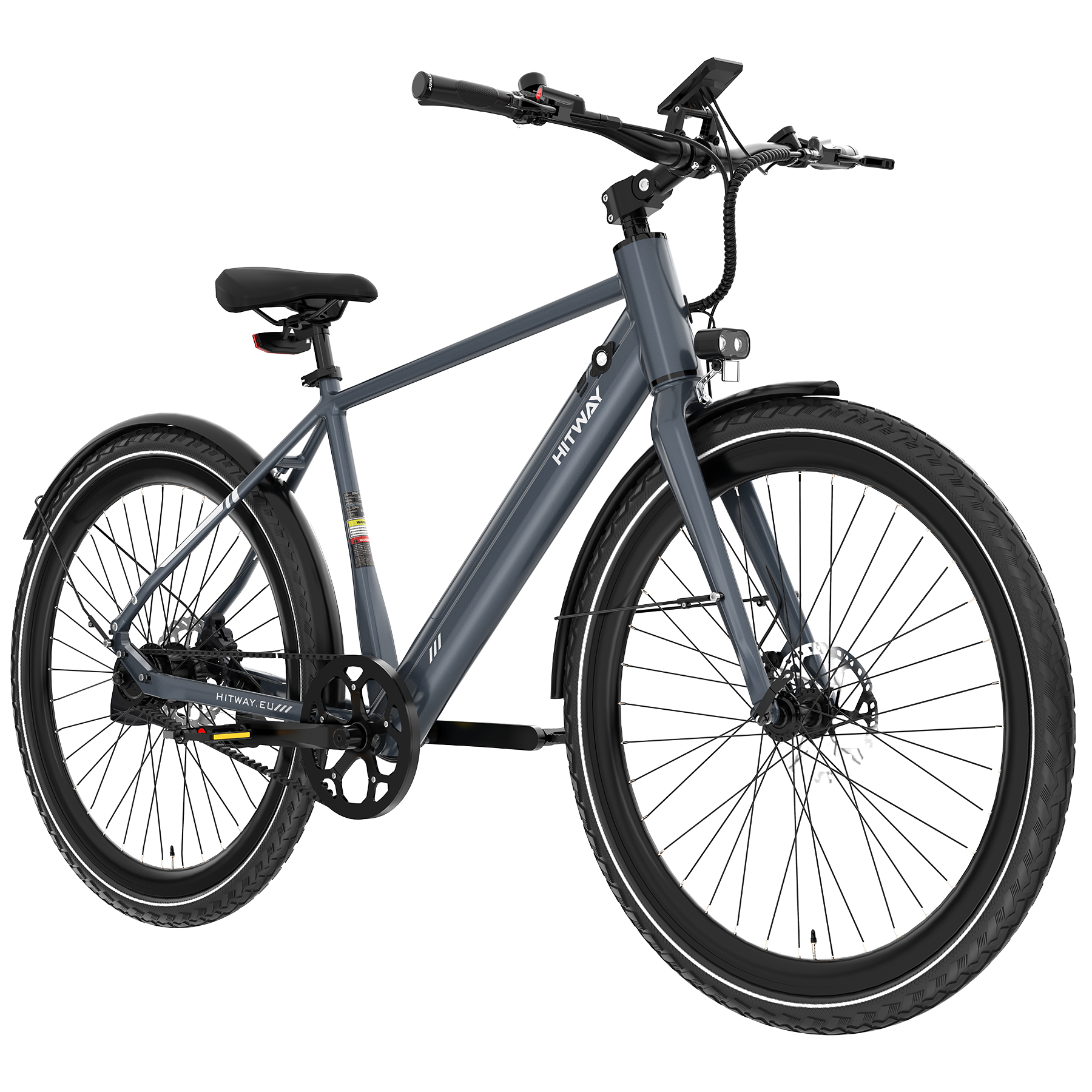
The HITWAY BK19 Pro pairs a belt drive with a torque sensor, 700x42C tyres and a 36V 10.4Ah battery. A belt avoids chain oil on clothing and normally needs less routine cleaning, while a torque sensor can make assistance respond more naturally to pedalling effort. The published range is 40-80 km and the listed price is €1,149.99. This is a feature-led commuter rather than a maximum-range bargain.
Best for: regular road commuters who prioritise clean trousers, smooth assistance and reduced drivetrain care.
Pros
- The belt drive removes chain lubrication from the normal maintenance routine.
- A torque sensor and wider road tyres should support controlled, natural-feeling urban riding.
Limitations
- The public listing does not provide the motor’s continuous-rated wattage or assistance cut-off.
- Belt-compatible frame and drivetrain parts can be less universal than ordinary chain components.
6. Cybervelo EK2: Best for High-Power, Long-Distance Private Use
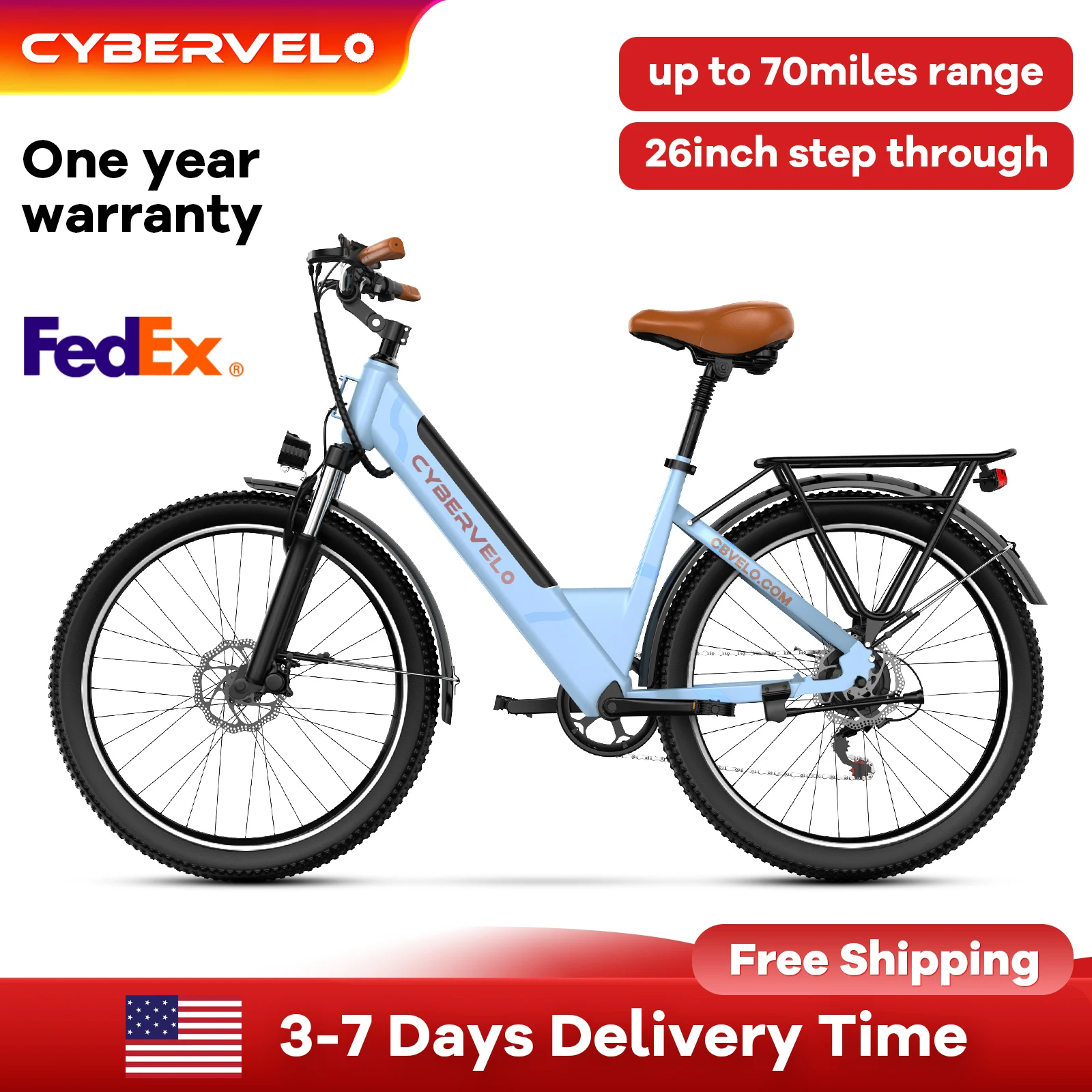
The Cybervelo EK2 advertises a 1000W motor, 14Ah battery, 26-inch wheels and an 80-mile range. Those numbers make it look attractive for long routes, but they also move it well away from the ordinary 250W public-road category. At €612.91, the specification is inexpensive for the claimed performance, which makes warranty coverage, charger compatibility, battery documentation and replacement-part access especially important.
Best for: private land or routes where the exact high-power configuration is expressly permitted.
Pros
- The 1000W rating and large claimed range target riders who prioritise strong assistance and distance.
- Twenty-six-inch wheels are a familiar size with broad tyre availability.
Limitations
- It should not be presented as a standard road-legal pedelec without country-specific approval.
- The 80-mile claim cannot be judged well because voltage, watt-hours and test conditions are not fully stated.
7. UPlee GS5: Best for Compact High-Power Folding
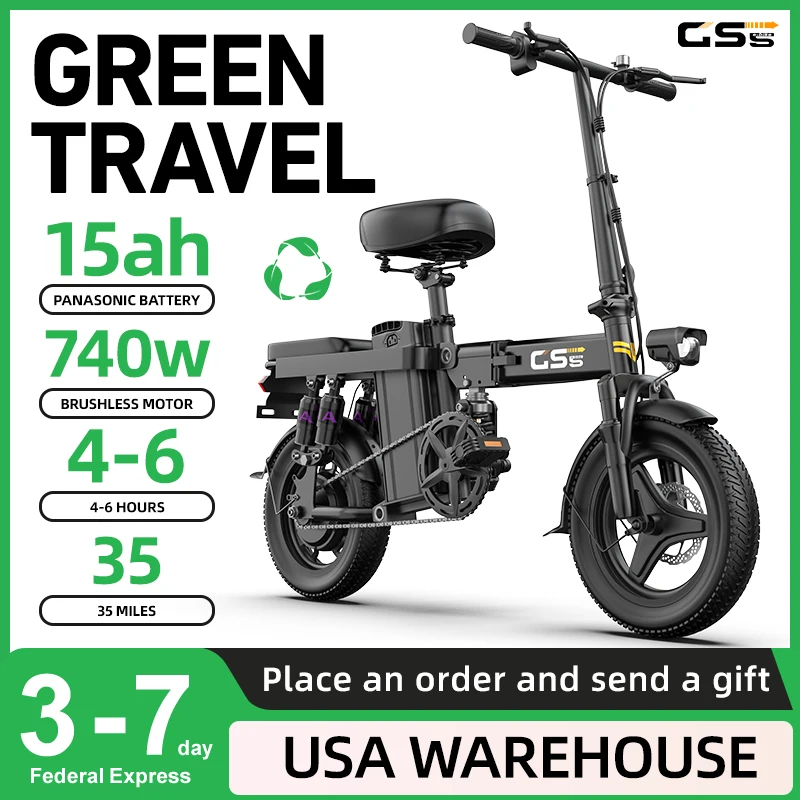
The UPlee GS5 places a 740W motor and 48V 15Ah battery on 14-inch wheels, with a 35-mile range claim. Its €311.79 price is low, but compact appearance alone does not prove easy portability. The public information does not state total weight or folded dimensions, and those figures matter more than wheel diameter when carrying a folder into a train, lift or upstairs home.
Best for: space-limited private-site transport where stronger assistance is permitted and carrying is infrequent.
Pros
- The 48V 15Ah specification offers substantial listed battery capacity for a small-wheel format.
- Fourteen-inch wheels keep the overall platform compact for storage.
Limitations
- A 740W motor requires a careful legal check before any public-road use in Europe.
- Missing folded dimensions and weight make its real multimodal usefulness difficult to assess.
8. VIPDRIVE Defier 1.1: Best for Budget Trail-Style Riding
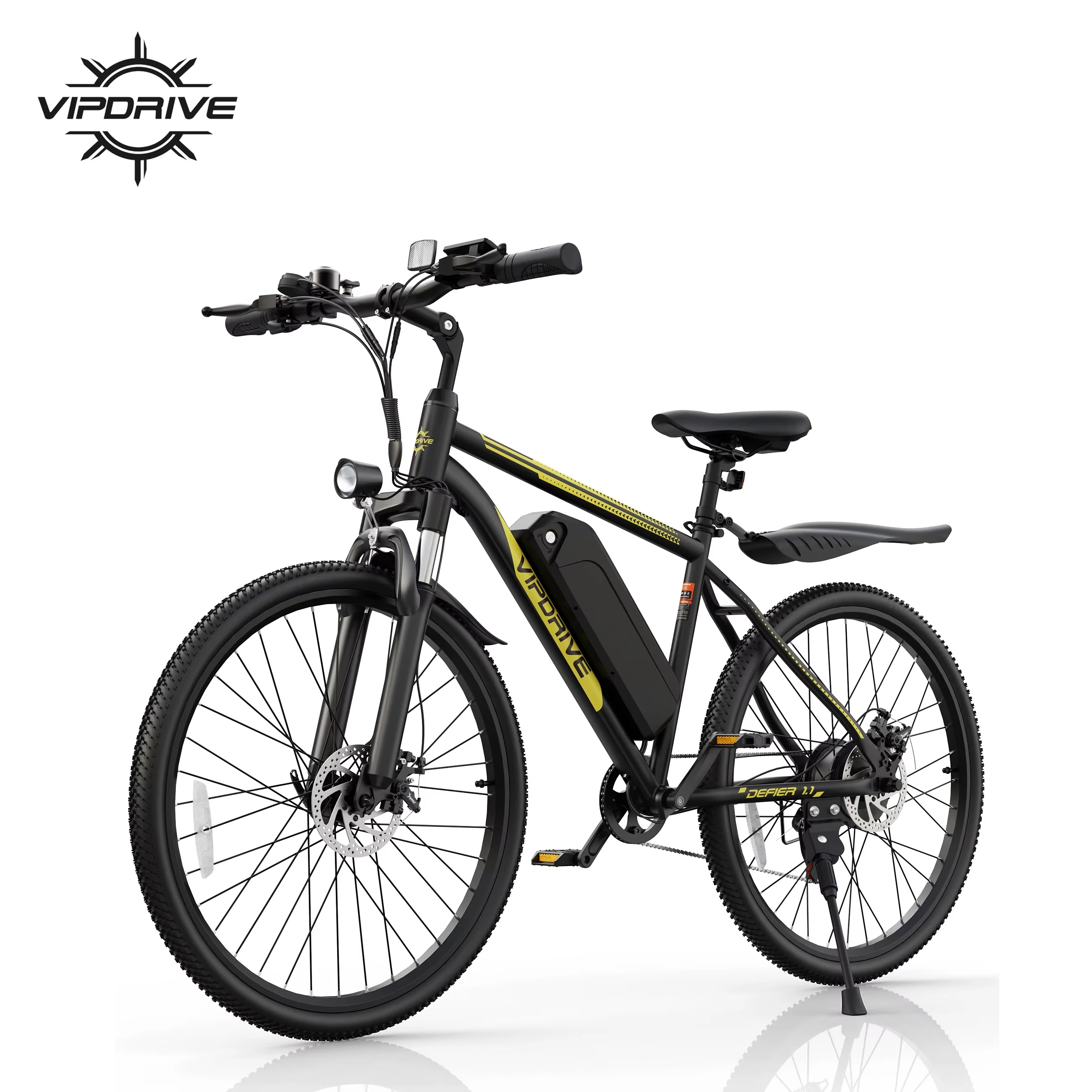
The VIPDRIVE Defier 1.1 is a 26-inch electric mountain bike with a 750W motor, 48V 7.8Ah battery and a listed speed of up to 20 mph. Its current €286.42 price is the lowest in the comparison, but the relatively small battery capacity is an important counterweight to the motor figure. Buyers should also confirm brakes, suspension travel, total weight and component serviceability before treating it as a demanding-trail machine.
Best for: low-cost leisure riding on private land and gentler unpaved routes.
Pros
- The low entry price makes electric mountain-bike geometry accessible to a tight budget.
- Twenty-six-inch tyres are widely available and keep the bike more compact than a 29er.
Limitations
- The 750W rating and 20 mph claim do not fit the normal public-road pedelec baseline.
- Battery energy is limited for the stated motor power, and several important trail components are unspecified.
9. Terrosor 350W Fat Tire: Best for Low-Cost Mixed Surfaces
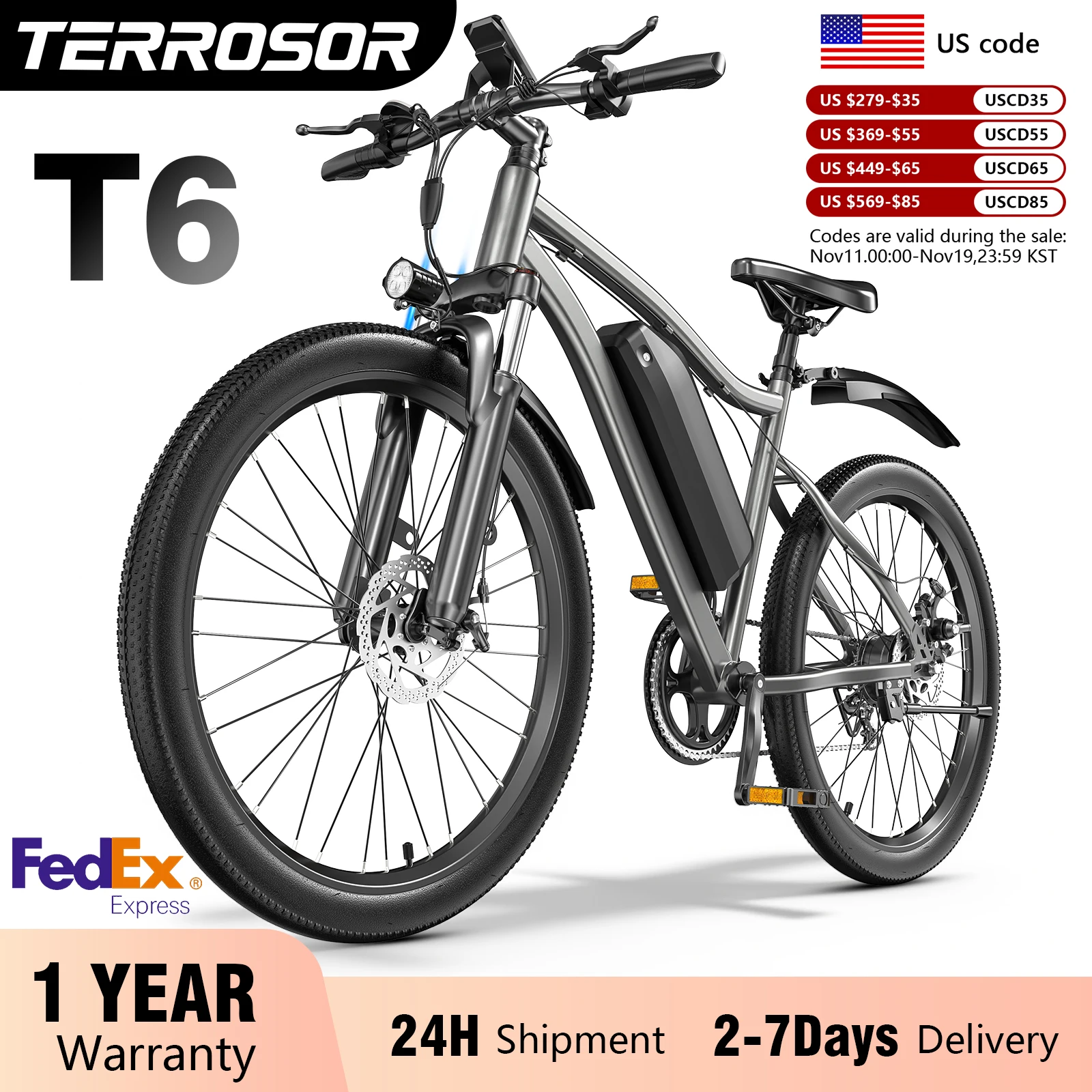
The Terrosor 350W Fat Tire model uses 26-inch wheels, a 350W motor and a listed speed of up to 19.9 mph. Fat tyres can add grip and cushioning on gravel, sand or badly surfaced paths, but they also increase rolling resistance and can make puncture repairs more cumbersome. The price is €326.51, yet the public listing does not disclose battery capacity or range, so meaningful distance planning is not possible from the available specifications.
Best for: short mixed-surface leisure rides where fat-tyre stability matters more than efficiency.
Pros
- High-volume tyres can improve comfort and confidence on loose or broken surfaces.
- The purchase price is modest for a full-size fat-tyre format.
Limitations
- The 350W and 19.9 mph figures require a legal-use check for the buyer’s country and route.
- No published battery or range figure means it is difficult to compare with the other nine bikes.
10. LANKELEISI GT800: Best for Premium Off-Road Intent
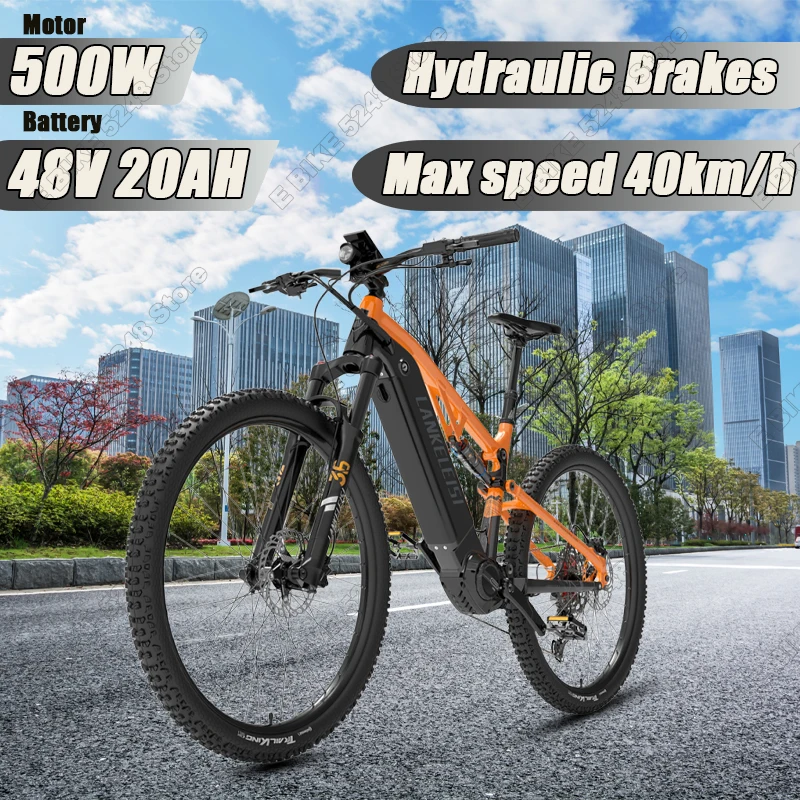
The LANKELEISI GT800 is listed as an electric dirt bike with a 500W motor, 48V 20Ah battery, 29-inch wheels and a suspension-equipped frame. At €2,913.15, it is by far the most expensive model here. That premium cannot be assessed from headline specifications alone because range, weight, brake hardware and suspension details are not fully published. A serious buyer should request those facts, plus warranty and battery-service terms, before committing.
Best for: permitted off-road routes where large wheels, battery capacity and trail intent matter more than city practicality.
Pros
- The 48V 20Ah battery specification is the clearest high-capacity figure among the off-road-focused options.
- Twenty-nine-inch wheels can improve rollover on rough tracks and root-strewn paths.
Limitations
- Its 500W rating and dirt-bike positioning demand route-specific legal checks.
- The high price is difficult to justify without fuller component, range, weight and support information.
Which Type Should You Choose?
For a conventional city route, begin with the DYU D3S, DYU Stroll 1 and HITWAY BK7S Plus. They publish 250W motor figures and address three clear needs: minimum storage footprint, familiar full-size road handling and large-wheel comfort. The D3S suits the smallest spaces, the Stroll 1 suits paved distance, and the BK7S Plus adds hydraulic braking and 29-inch rollover.
The HITWAY BK32 and BK19 Pro appeal for features rather than simple motor numbers. Choose the BK32 if low-step access, mid-drive climbing response and 80 Nm matter, but confirm the exact continuous rating. Choose the BK19 Pro if clean, low-maintenance commuting is the priority, while asking the same classification question because its public motor rating is absent.
The remaining five models require a different mindset. Cybervelo EK2, UPlee GS5, VIPDRIVE Defier 1.1, Terrosor 350W and LANKELEISI GT800 should be shortlisted only when their power, speed and intended environment fit local rules. In that group, missing specifications are not small details. Battery energy, brakes, total weight, charger certification, warranty handling and replacement electronics can determine whether a low headline price remains good value after the first year.
Final Recommendation
There is no credible single winner across this range. Apartment riders should compare the D3S and GS5 on real folded dimensions and legal status. Conventional commuters should compare the Stroll 1, BK7S Plus, BK32 and BK19 Pro around fit, hills and local servicing. Mixed-surface and trail riders can consider the VIPDRIVE, Terrosor and GT800, but should separate public-road access from private or permitted off-road use before buying. The Cybervelo EK2 belongs in the same high-power conversation despite its commuter label.
The safest buying sequence is simple: confirm classification, measure storage, check rider fit, estimate range from battery information rather than marketing distance alone, and identify a local repair path. A model that meets those five tests will usually be a better European purchase than the bike with the biggest headline number.
FAQs
Are all ten e-bikes road legal across Europe?
No. Rules vary by country, and several models publish motor ratings above 250W or assistance speeds above the familiar 25 km/h pedelec threshold. Treat those as private-land, off-road or specially classified machines unless the exact version is confirmed legal, registered and insured where required. The model name alone is not proof because regional configurations can differ.
Is a 250W e-bike powerful enough for European commuting?
For many riders, yes. Gearing, torque, motor position, total weight and control tuning matter as much as the wattage label. A well-geared 250W mid-drive can climb efficiently, while a basic hub motor may feel less responsive on steep starts. Rider input remains part of normal pedelec performance.
How should I compare the different range claims?
Use battery watt-hours when available, then adjust expectations for hills, cold weather, tyre drag, rider weight and assistance level. Claims in miles and kilometres can be converted, but conversion does not make the test conditions equal. Plan a reserve rather than choosing a bike whose headline range only just covers the route.
Should I choose a folding e-bike or a full-size model?
Choose a folder when storage or transport genuinely requires it, and verify folded dimensions plus carrying weight first. Choose a full-size 700C, 26-inch or 29-inch bike when rolling comfort, stability and longer rides matter more. A folding hinge adds convenience, but it does not automatically make a heavy bike easy to carry.
Which model should need the least routine drivetrain maintenance?
The HITWAY BK19 Pro has the clearest low-maintenance advantage because it uses a belt drive instead of an oil-lubricated chain. Tyres, brakes, bearings and electronics still need inspection, and belt-specific parts may require a suitable workshop. Local parts access should be confirmed before purchase.


