
Electric Bike & Scooter Blog
E-Bike Battery Mount Guide: Rails, Locks and Rattle


An e-bike battery mount guide is really a guide to three things: secure retention, clean electrical contact and sensible service access. A removable battery should slide or rotate into place without force, lock securely and stay quiet over normal road vibration. An integrated battery should sit flush, show no movement and remain accessible through the manufacturer’s service process.
The mount rarely gets the same attention as battery capacity or range. That is a mistake. A large battery is not useful if its rail is damaged, its latch does not engage, or its contacts are contaminated. Buyers should inspect the mounting design before purchase and owners should include it in routine care.
E-Bike Battery Mount Guide: What to Compare
| Feature | Why it matters | Question to ask |
|---|---|---|
| Battery position | Affects access, weight distribution and weather exposure | Can I remove or inspect it without turning the bike awkwardly? |
| Rail or cradle | Supports the pack and aligns electrical contacts | Does the battery engage smoothly with no side play? |
| Lock and latch | Prevents accidental release and casual removal | Is there a clear locked position and a replaceable key? |
| Contacts and cover | Carry power and need protection from dirt and moisture | Are terminals recessed, clean and covered when the pack is removed? |
| Replacement support | Determines whether the bike can stay useful for years | Can the seller identify a compatible battery and mount? |
Battery construction and mounting are related but separate. Electric Bike Report’s buying overview is a useful reminder to judge the whole bike rather than one headline number. Capacity, motor, brakes, fit, support and battery serviceability all affect the ownership experience.
Removable, Semi-Integrated and Fully Integrated Mounts
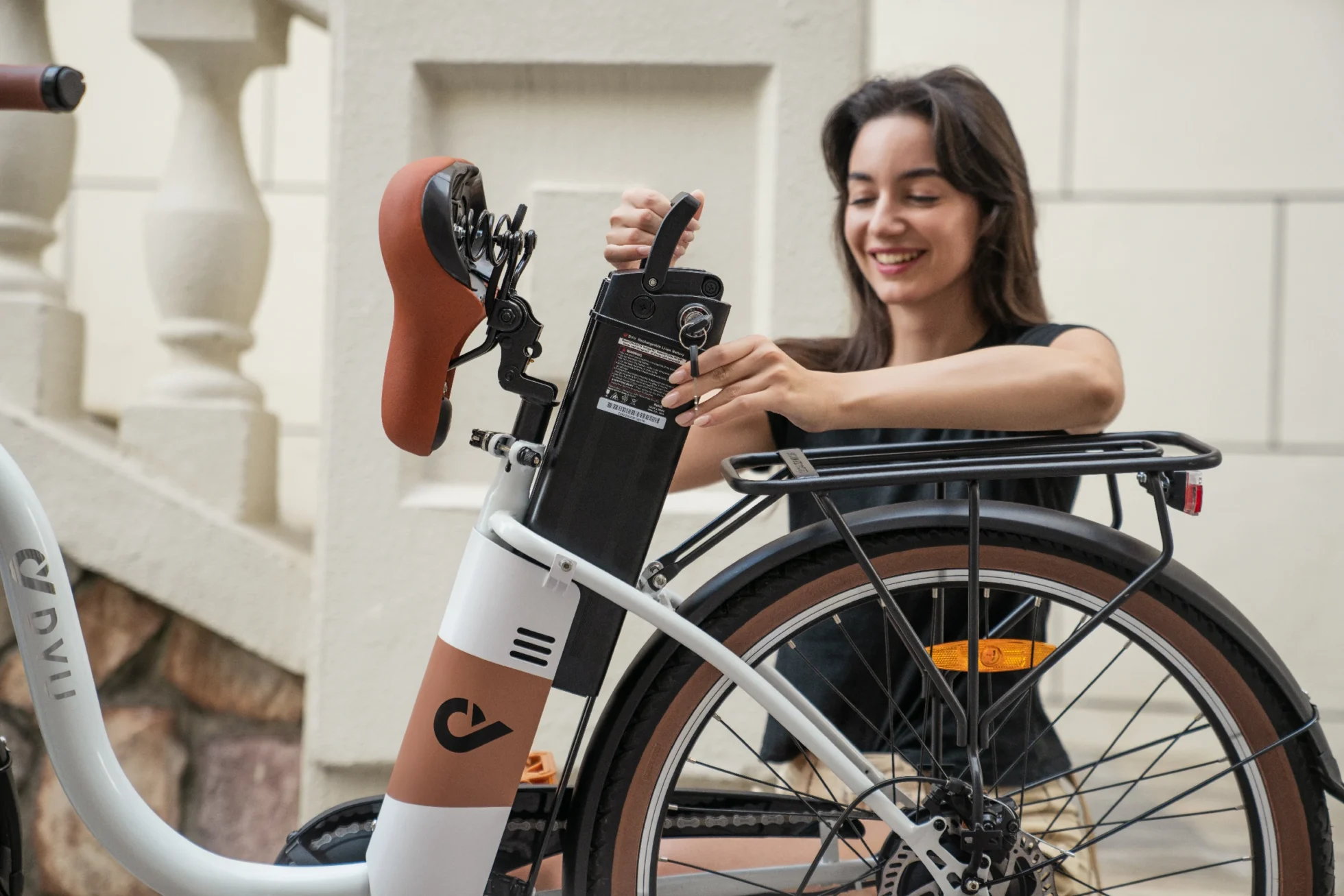
A removable external battery usually sits on a rail attached to the down tube, seat tube or rear rack. It is easy to see and often simple to carry indoors. The tradeoff is greater exposure to weather, dirt and impact, plus a look that some buyers find less tidy.
Semi-integrated batteries sit partly inside the frame. They can balance cleaner styling with practical removal, but the release direction matters. A pack that drops downward may need support from one hand while the other works the key. A side-release design needs enough space beside the bike.
Fully integrated batteries may offer a clean frame shape and good protection. Some are still removable through a cover; others require workshop access. Neither approach is automatically better. The right choice depends on charging location, stairs, storage, theft risk and long-term service plans.
The existing removable versus integrated battery guide covers that broader decision. Here, the focus is the mechanical interface that holds either format in place.

How a Battery Rail and Latch Should Behave
A battery mount usually guides the pack toward a stop, aligns the electrical connector and lets a latch or lock retain it. Those steps should happen in a clear sequence. If the pack needs a hard shove, repeated wiggling or pressure on the key, something may be misaligned.
Look for positive engagement
A well-designed mount gives the user a positive end point. That may be a click, a visible latch position or a lock cylinder that turns easily only when the pack is fully seated. The exact action varies, so the owner’s manual matters more than habit learned on another bike.
Once locked, apply only the gentle movement check described by the manufacturer. A tiny amount of compliance can be normal in some housings, but knocking, visible gap changes or a pack that lifts away from the rail needs attention.
Do not use the key as a lever
Keys release locks; they are not handles. Supporting the pack’s weight before turning the key reduces stress on the cylinder. A heavy battery can drop suddenly when the latch opens, especially on a downward-release design.
Ask whether replacement keys can be ordered from a code and whether the lock cylinder is serviceable. Losing the only key can turn routine battery removal into a costly workshop job.

Contacts, Covers and Weather Protection
Electrical contacts should be clean, dry and undamaged. They may be spring-loaded pins, flat blades or a multi-pin connector. The battery housing and frame mount should guide those parts together without the user touching or bending them.
When the battery is removed, a cover can keep rain and grit out of the frame-side connector. Not every bike includes one. If it does, check that it fits securely and does not trap water. Never bridge terminals with metal tools or spray general-purpose lubricant into the connector.
Water-resistance claims need careful reading. The IEC overview of IP ratings explains that protection depends on the tested enclosure and conditions. It does not mean every interface can be pressure-washed or left open in rain.
Signs that need professional inspection
- Green or white corrosion around contacts.
- Darkened plastic, heat marks or a burnt smell.
- Bent, recessed or loose connector pins.
- A cracked rail, broken latch or missing mounting fastener.
- Power cutting out when the battery or frame moves.
- Water inside a connector area after normal use.
Do not keep reseating a battery that shows these signs. Repeated connection can worsen arcing or mechanical damage. Switch the system off and use an approved service route.

Battery Rattle: Mount, Frame or Something Else?
A rattle over rough paving is annoying, but it is also difficult to locate while riding. Park the bike and check obvious accessories first: lock, kickstand, mudguard, rack, bottle cage and loose keys. Then inspect the battery only according to the manual.
If the pack moves visibly in its cradle, do not wedge cardboard, foam or tape into the mount. Added material can block drainage, prevent the latch from engaging or press against the battery case. Some manufacturers provide approved pads or adjusters; use only the specified parts.
A clean mounting surface matters. Small stones, dried mud or a folded rubber seal can hold the battery away from its stop. Wipe accessible non-electrical surfaces with a dry cloth, check the seal and try the normal fitting sequence again. Persistent movement needs service.
Think About Charging and Daily Access
Apartment riders often need to remove the battery for every charge. That makes weight, grip shape, release direction and key access important. A garage user may charge on the bike more often, but still needs removal for inspection, transport or replacement.
Before buying, ask to see the complete removal and refitting sequence. Imagine doing it in winter gloves, beside a wall or under a rack. Measure the space above, below or beside the frame. A mount can be mechanically sound yet inconvenient in your actual storage area.
For European route planning, record your regular distance in kilometres (km) and compare it with a conservative share of the listed battery range. Mount security does not increase capacity, but an intermittent connection can make otherwise sensible range planning unreliable.
The e-bike delivery checklist includes first-ride checks that are a good time to confirm the battery is properly seated. The e-bike maintenance schedule then helps turn that first inspection into a repeatable routine.
Current E-Bike Formats and Battery-Mount Questions
These current examples are not a ranking. They show how frame layout and battery position change the questions a buyer should ask. Prices reflect the listings at the time of writing.
| Model | Current price | Mount question to verify |
|---|---|---|
| HITWAY BK19 Pro Belt Drive Electric Bike | €1,149.99 | How easily can the battery be removed for indoor charging, and what supports it during release? |
| HITWAY BK7S Plus 29 Inch Electric Bike | €1,049.99 | Does the large-wheel frame leave clear access to the battery lock and connector cover? |
| HITWAY BK32 Mid-Drive Step-Through Electric Bike | €1,249.99 | How does the step-through frame package the battery, wiring and service access around the mid-drive system? |
Product pages can tell you capacity and claimed range, but a retailer or manual should also explain removal, lock operation, charging, storage and replacement. If those details are vague, ask before ordering.
A Practical Battery-Mount Inspection Routine
- Switch the bike off and park it on stable ground.
- Check the battery case, rail, latch and key area for impact damage.
- Confirm the pack is fully seated and locked using the manual’s sequence.
- Look for gaps, movement, rattles and contact with cables or accessories.
- Remove the pack only if the design and surroundings make that safe.
- Inspect accessible contacts for dirt, moisture, corrosion or heat damage.
- Refit the pack without force and run a short powered function check.
BikeRadar’s maintenance guidance supports the wider habit of regular inspection and professional help for electrical faults. The mount is a good owner check; internal battery or controller repair is not.
Final Buying Advice
A battery mount should disappear into daily use. The pack goes in cleanly, locks positively, stays quiet and comes out without drama when charging or service requires it. Buyers should favour a design they can operate safely in their own storage space, backed by clear instructions and replacement support.
Do not judge the mount by appearance alone. Test access, retention, connector protection and key operation. Then check whether the seller can supply the correct battery years later. That is what makes an e-bike battery mount part of long-term value rather than a small frame detail.
FAQs
Q1. Should an e-bike battery move in its mount?
A battery should be securely retained and should not knock or visibly shift during normal use. Some designs may have slight engineered compliance, so compare the movement with the manual and ask for service if it is new or worsening.
Q2. Why is my e-bike battery difficult to remove?
The pack may still be carrying weight on the latch, the key may not be fully turned, or dirt and misalignment may be affecting the rail. Do not force the key or pry the case; support the battery and follow the manufacturer’s sequence.
Q3. Can I ride with a rattling e-bike battery?
Identify the noise before riding. If the battery moves in the mount, the latch is uncertain or power cuts out, keep the bike parked until the mount is inspected.
Q4. How do I clean e-bike battery contacts?
Use only the method approved by the bike or battery manufacturer. Keep the system off, avoid metal tools and liquids, and seek professional help for corrosion, heat marks or damaged pins.
Q5. Is a removable e-bike battery better than an integrated battery?
It depends on charging access, storage, weight, weather exposure and service needs. A removable pack is convenient for indoor charging, while an integrated design can offer cleaner packaging and protection.


