
Electric Bike & Scooter Blog
Folding E-Bike vs Seated Electric Scooter for Mixed Commutes

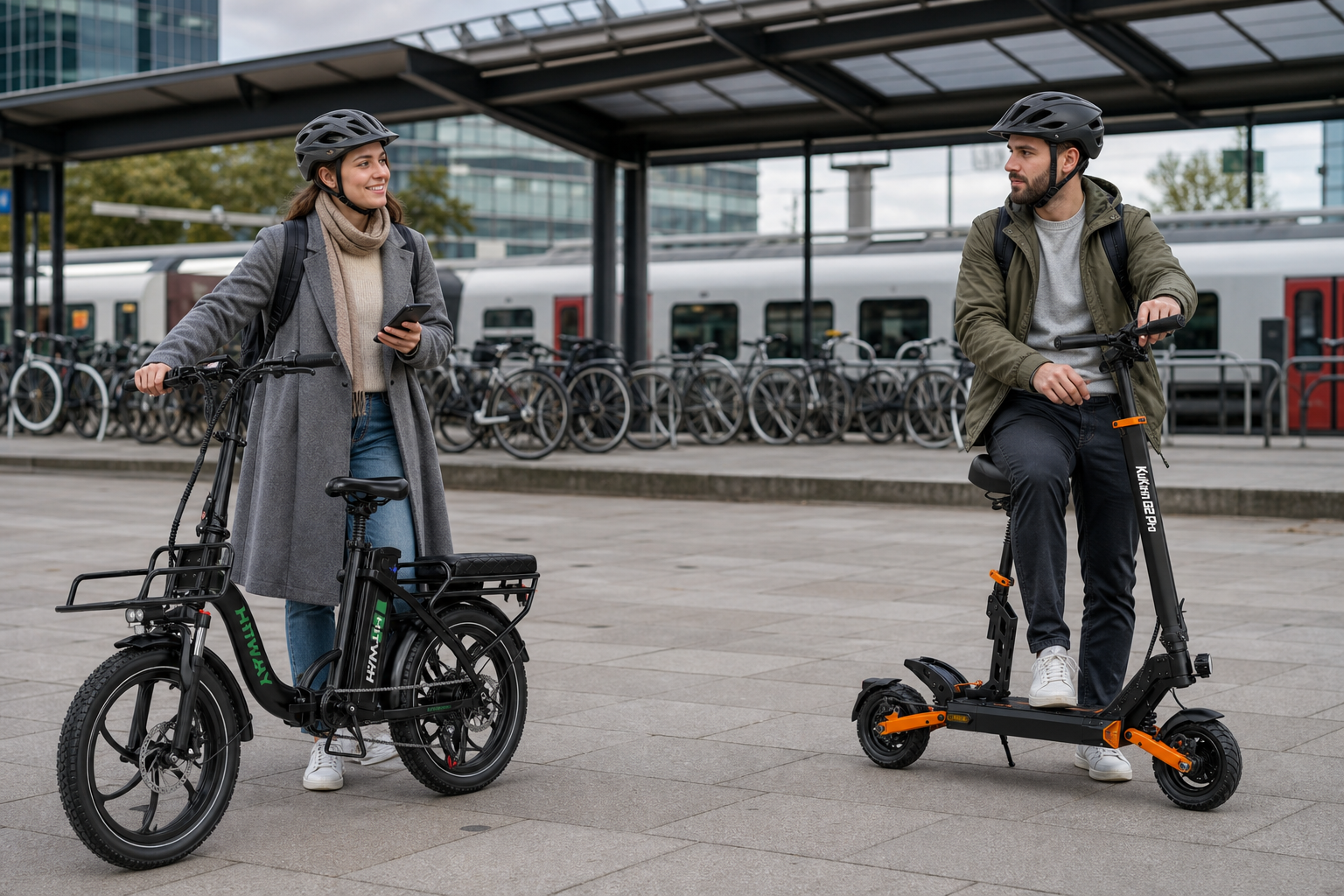
A train connection can turn a short urban journey into a choice between two very different machines. A folding e-bike offers pedals, larger wheels and familiar bicycle controls. A seated electric scooter can be shorter, simpler to park and comfortable at low speed. This folding e-bike vs seated electric scooter guide compares the decisions that matter before buying: route legality, carrying, storage, wheel size, range evidence, comfort, maintenance and current price.
The useful answer is not that one format wins everywhere. It depends on whether the vehicle must be lifted onto a train, stored in a flat, ridden across rough streets or used where local rules restrict powered scooters. Start with the complete journey rather than the motor number.
Quick Comparison: Folding E-Bike vs Seated Electric Scooter
| Decision point | Folding e-bike | Seated electric scooter |
|---|---|---|
| Human power | Can still be pedalled and ridden with rider effort | Usually depends on motor power once moving |
| Wheel format | Larger bicycle wheels generally handle broken surfaces more calmly | Smaller wheels keep the package compact but react more sharply to holes and edges |
| Storage | Frame and handlebar may fold; final package can still be heavy and bulky | Stem often folds, while a seat may add bulk unless removed |
| Route rules | Bicycle rules may apply only when the configuration meets local pedelec requirements | Private- and public-road rules vary widely by country and city |
| Maintenance | Tyres, brakes, drivetrain, folding joints and electrical system | Tyres, brakes, steering stem, suspension, fasteners and electrical system |
| Best fit | Longer mixed routes, rougher streets and riders who want pedal backup | Shorter compact trips where storage and seated low-speed comfort lead |
Start With the Route and Local Rules
Map the journey door to door. Note hills, cobbles, kerbs, cycle lanes, station stairs, lifts, platform changes, wet surfaces and the distance that must be covered without public transport. A vehicle that looks compact in a product photo may be awkward when a lift is closed or the only route to the platform uses two flights of stairs.
Legal classification comes before convenience. Across Europe, bicycle and powered-mobility rules are not identical. A bicycle with electric assistance may need to meet power, speed, pedal and control requirements to be treated as a normal cycle. A seated scooter can fall into a different category depending on its construction and location.
The European Road Safety Observatory’s report on personal mobility devices shows why national treatment differs. Buyers should check the current rules for every road, path and transport operator they plan to use. A product being sold does not automatically make every public-road use legal.
Compare Folded Size, Weight and Carrying Reality
Folding is not the same as portable. Ask for the folded length, width and height, complete weight with battery, whether the package locks together and whether it can roll while folded. A bike that folds in half may still occupy more floor space than a narrow scooter, while a scooter with a fixed seat can be harder to fit under a desk than expected.
Cycling UK’s folding e-bike test highlights practical differences between a compact package and one that is technically foldable but awkward to carry. That distinction matters at stations: a 20-inch e-bike can ride confidently on the street yet remain a heavy lift.
Try the complete sequence before buying if possible:
- Power the vehicle down and make it safe to handle.
- Fold it without placing fingers near hinges or cables.
- Lift it to the height of a train step or car boot.
- Carry it five to ten metres and turn through a narrow doorway.
- Stand it securely without blocking a route.
- Unfold it and confirm every latch before riding.
Wheel Size Changes More Than Comfort
Larger wheels generally roll over shallow holes, rail edges and broken paving with less abrupt steering input. They also create a longer vehicle and larger folded package. Smaller scooter wheels help storage but require more careful line choice and lower speed on rough surfaces.
Tyre width, pressure and construction matter alongside diameter. A 20 x 3.0-inch bicycle tyre can soften rough urban surfaces, but it adds rolling mass and may make the folded bike wider. A scooter tyre can feel agile on smooth paths yet punish careless riding over a pothole.
Do not use suspension as permission to ignore surface hazards. Both formats need a clear line, correctly inflated tyres and enough stopping distance. In wet conditions, paint, metal covers and leaves can reduce grip for either vehicle.
Pedal Backup Versus Compact Motor-Only Travel
A folding e-bike can continue as a bicycle when assistance is low or unavailable, although pedalling a heavy model with a flat battery may be demanding. Gears and a suitable riding position make that backup more useful. The rider also contributes energy, which can extend practical distance when conditions allow.
A seated scooter asks less of the rider’s legs during normal use. That can suit short journeys or riders who value a seat, but it increases dependence on the electrical system. If the battery, controller or throttle stops working, the vehicle may be difficult to move under human power.
Motor wattage alone does not settle the choice. Controller limits, total mass, wheel diameter, gearing, battery condition, gradient and local restrictions all change the experience. A higher number can also move a vehicle outside the rules that apply to ordinary bicycles.
Braking, Stability and Visibility Need Separate Checks
A bicycle’s larger wheels and longer wheelbase usually give it a familiar, stable feel, but a heavy rear rack or high battery can affect balance. A scooter places the rider differently, with smaller wheels and a narrower platform. Adding a seat changes how the rider shifts weight and steps off.
Check both brakes from walking pace before every ride. Look at lever feel, rotor or drum condition, tyre damage, lights and steering play. Our e-bike maintenance schedule provides a useful bicycle baseline, while the scooter’s own manual should define its stem, suspension and fastener checks.
BikeRadar’s commuter-bike guide is a helpful reminder that comfort, luggage, route and reliability matter more than a single headline specification. The same buyer-first approach works when a scooter is the alternative.
Battery and Charging Questions Are Similar, Not Identical
Both formats need an approved charger, a dry and ventilated charging place, undamaged cables and a battery that is not hot from use. Capacity should be compared in watt-hours when available, not only in volts or amp-hours. A range headline without test conditions is not a promise.
Ask whether the battery is removable, how much it weighs, where replacement parts come from and what happens when capacity falls. An integrated battery can make the frame cleaner but force the entire vehicle to be carried near an outlet. A removable battery can simplify charging but introduces a lock, rail and connector that need care.
The replacement charger guide explains why plug shape is not enough to prove compatibility. The water-resistance guide also shows why an IP code should not be treated as permission to charge wet equipment.
Current Catalog Example: HITWAY BK6S L1 Folding E-Bike
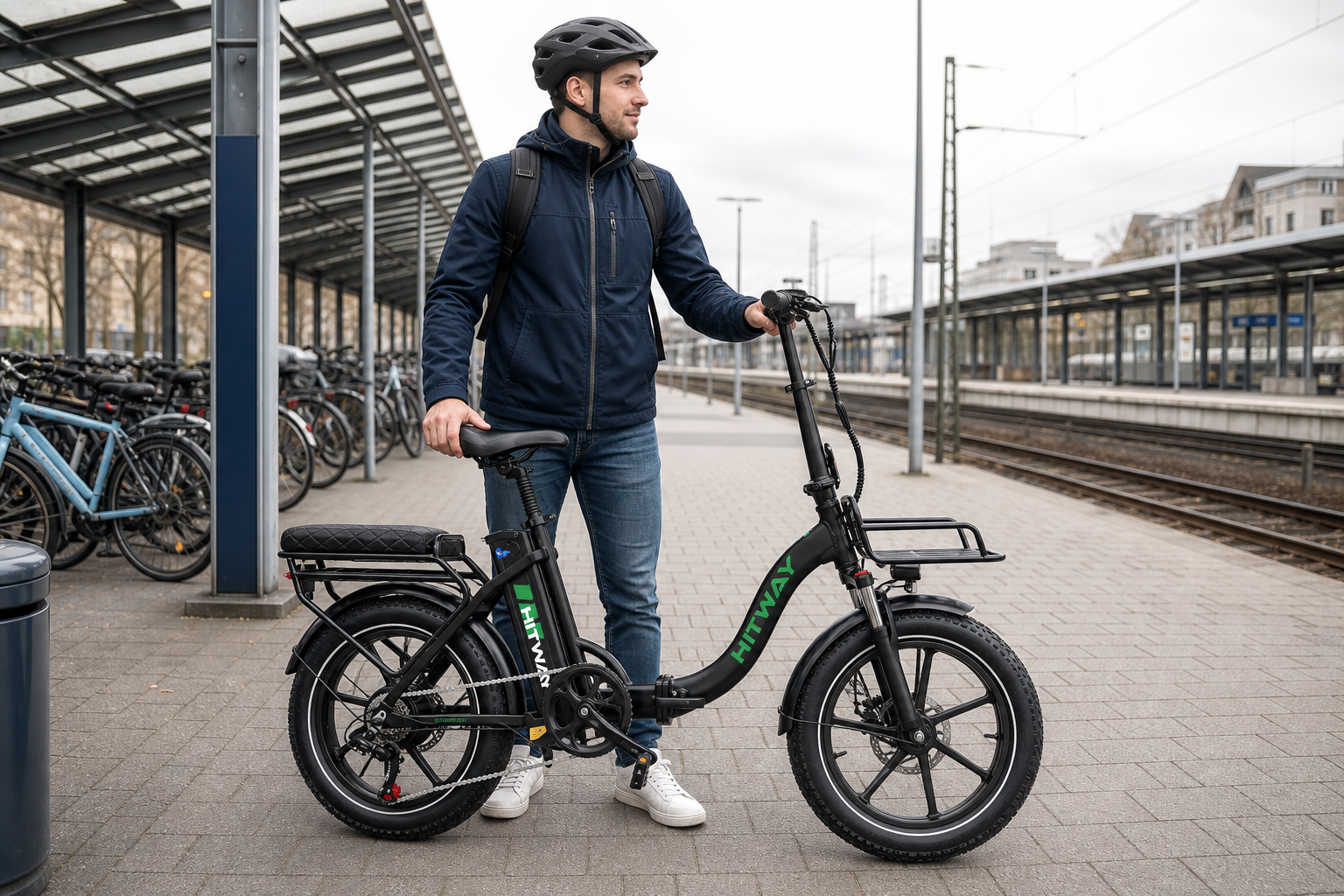
The HITWAY BK6S L1 Folding Electric Bike represents the larger-wheeled bicycle side of this decision. Its current listing shows a 250 W motor, 36 V 15.6 Ah battery, 20 x 3.0-inch tyres, 55 Nm of listed torque and a claimed 70 to 150 km range.
It is currently priced at €899.99. The range spread is wide, so buyers should ask for test conditions and plan conservatively. Rider mass, hills, wind, temperature, tyre pressure, assist level and luggage can all reduce distance.
Best for: a rider who values pedal backup, larger wheels, luggage capacity and longer mixed routes. Skip it if: the folded dimensions or complete lifting weight do not fit the station, flat or vehicle where it must be stored.
Current Catalog Example: KuKirin G2 Pro Seated Scooter
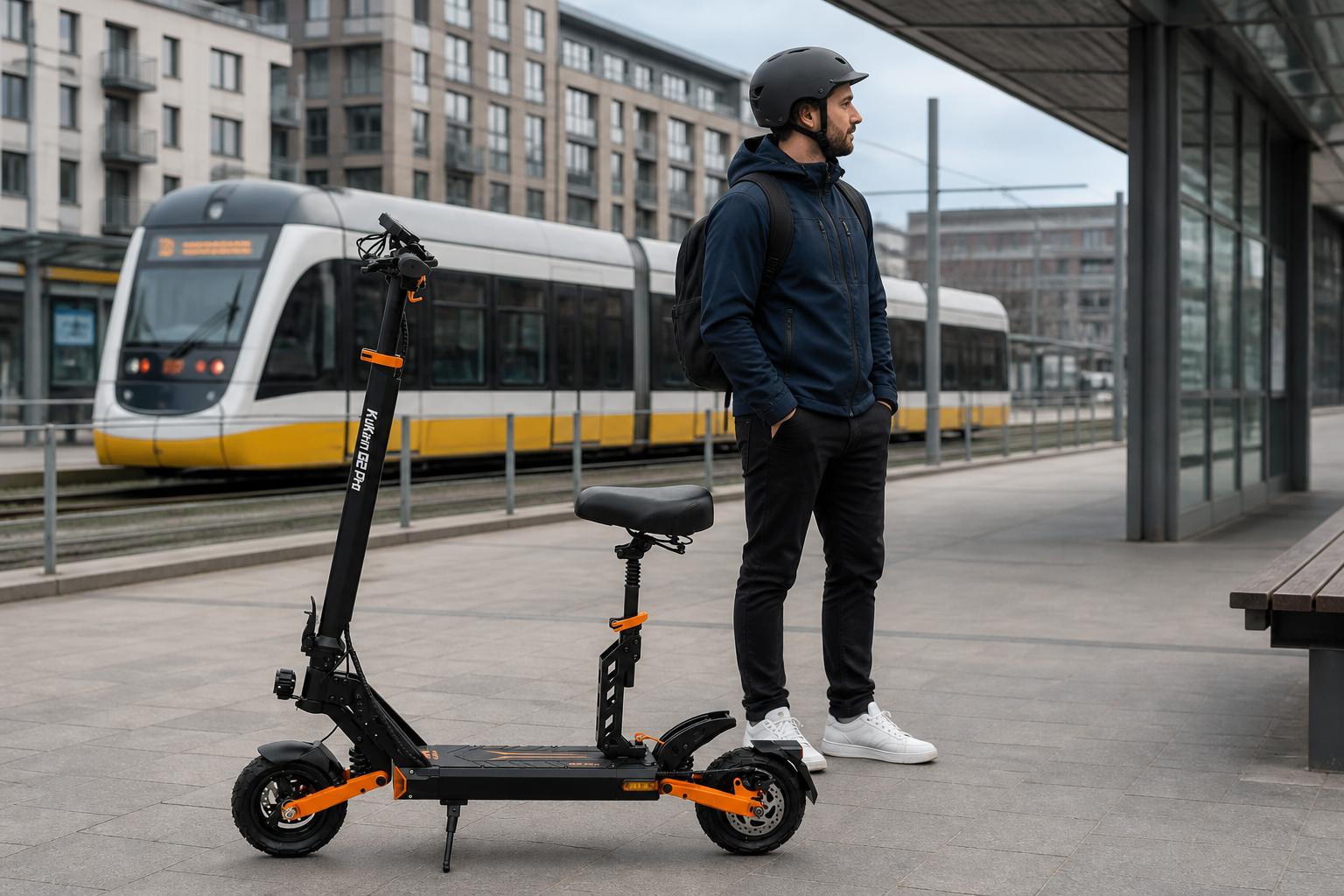
The KuKirin G2 Pro Seated Commuter Electric Scooter represents the compact powered-mobility side. Its current listing shows a 600 W motor, detachable seat, adjustable handlebar pole and six-light system.
It is currently priced at €499. The detachable seat may help storage, but buyers still need the folded dimensions, complete weight, battery details and current local-use rules. The 600 W listing also means it should not be assumed to share the legal treatment of a 250 W pedal-assist bicycle.
Best for: short urban trips where seated comfort and a narrow stored footprint matter. Skip it if: the route has rough surfaces, frequent kerbs, restrictive transport rules or no practical option when electrical power is unavailable.
Price Is Only the First-Year Number
The current price difference between these two examples is substantial, but ownership costs include tyres, brake parts, batteries, chargers, locks, protective equipment and service. A cheaper vehicle that cannot be used on the intended route has poor value. So does an expensive folding bike that is too heavy to carry into the building.
Before buying, ask for:
- complete and folded dimensions;
- weight with battery and accessories;
- battery watt-hours and replacement availability;
- brake type and common replacement parts;
- tyre size and local stock;
- warranty and service route;
- weather and storage guidance;
- current public-road and transport-operator rules.
Which Format Fits Which Commuter?
Choose a folding e-bike when the route is long enough to benefit from pedalling, includes broken surfaces or requires luggage capacity. It also makes sense when bicycle infrastructure is central to the journey and the selected configuration meets local bicycle rules.
Choose a seated scooter format when the trip is short, storage is narrow and the local rules clearly permit the intended use. Confirm that the seat, stem and folded package work in the real storage location rather than assuming “compact” means effortless to carry.
For a train-heavy commute, the decisive test is often physical: can the rider fold, lift, position and secure the vehicle alone during a rushed transfer? Marketing range and motor figures matter less if the machine cannot get through the station.
Final Recommendation
The folding e-bike is the more versatile format for mixed routes because it combines pedal backup, larger wheels and bicycle-style luggage options. The seated scooter can be the more compact and lower-priced answer for short, smooth journeys where local rules and transport policies allow it.
Do not choose from the headline power number. Verify the route, classification, folded package, lifting weight, charging setup and replacement parts. The right vehicle is the one that works through every stage of the commute, including the awkward five minutes between the street and the train.
FAQs
Q1. Is a folding e-bike better than an electric scooter for commuting?
A folding e-bike usually suits longer mixed routes, rougher streets and riders who want pedal backup. A scooter can suit shorter smooth trips and narrow storage. Local rules and carrying needs can reverse the decision.
Q2. Can I take a folding e-bike or electric scooter on a train?
Policies vary by operator, route and battery type. Check the current written policy before buying, including peak-time restrictions, covers, reservations and whether powered scooters are accepted.
Q3. Which is easier to carry, a folding e-bike or seated scooter?
The scooter may be narrower, but a seat and large battery can add weight and bulk. Folding e-bikes vary widely. Compare complete weight and folded dimensions, then perform a real lift-and-carry test.
Q4. Do folding e-bikes have better range than electric scooters?
Not automatically. Battery energy, rider effort, speed, hills, temperature, tyre pressure and vehicle efficiency all matter. Pedalling gives an e-bike a human-power contribution that a scooter usually lacks.
Q5. Are seated electric scooters legal on public roads in Europe?
Rules differ by country and sometimes by city, vehicle power, speed and construction. Check the current local classification, insurance, registration, equipment and route rules before using one on public roads.


