
Electric Bike & Scooter Blog
E-Bike Gearing for Hills: Ratios Before Motor Power

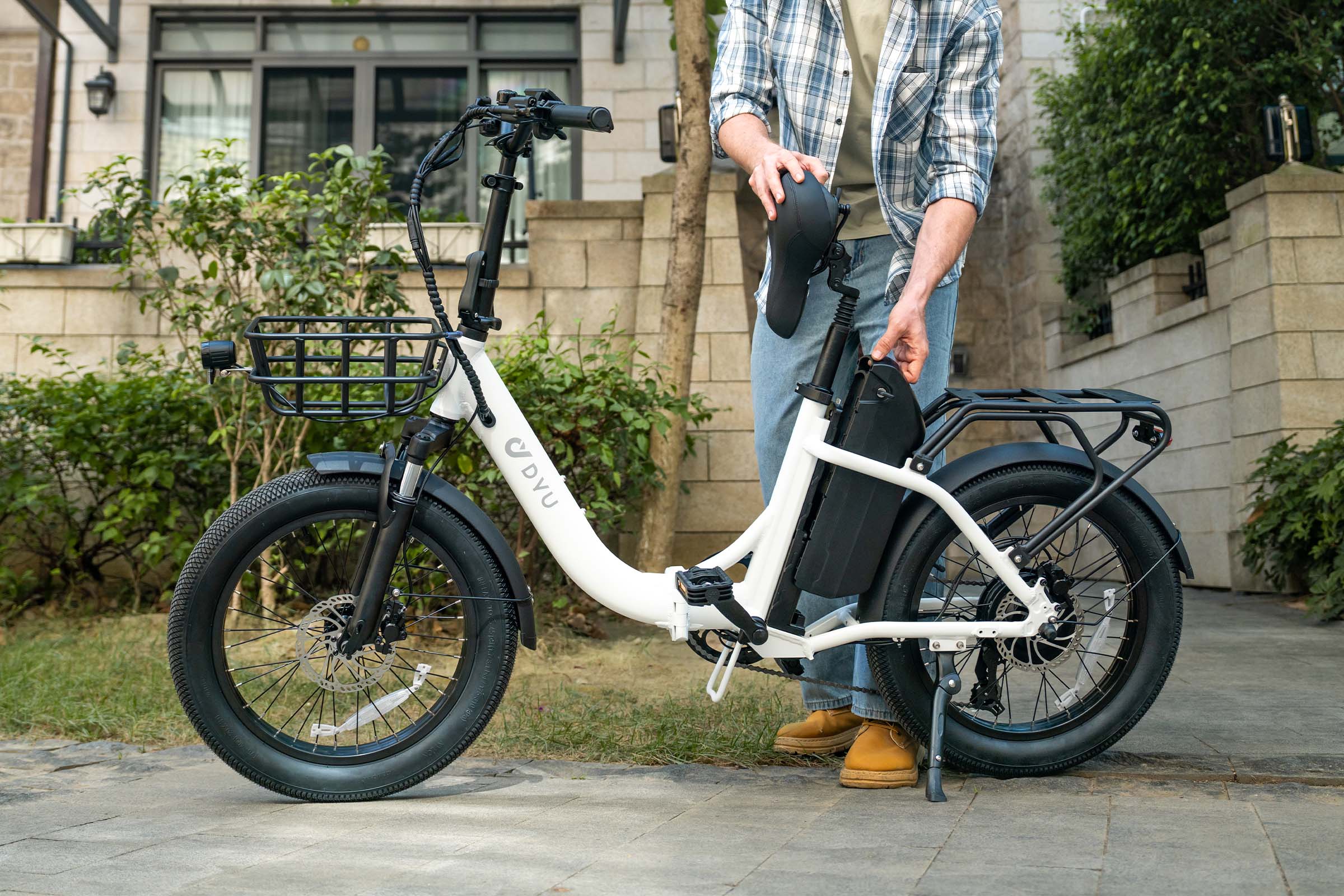
E-bike gearing for hills deserves a closer look than the number of speeds printed beside the motor specification. A bike can have plenty of assistance yet leave you pushing slowly against an awkwardly high pedal gear. Another may offer fewer gears but a more useful low ratio for the climb outside your home.
The buying question is not simply whether seven, nine or twelve speeds sounds better. It is whether the easiest gear, wheel size and motor arrangement let you pedal comfortably on your actual route. This guide explains what to compare, what can be calculated and what still needs a test ride or a clear answer from the seller.
E-Bike Gearing for Hills: What Assistance Cannot Replace
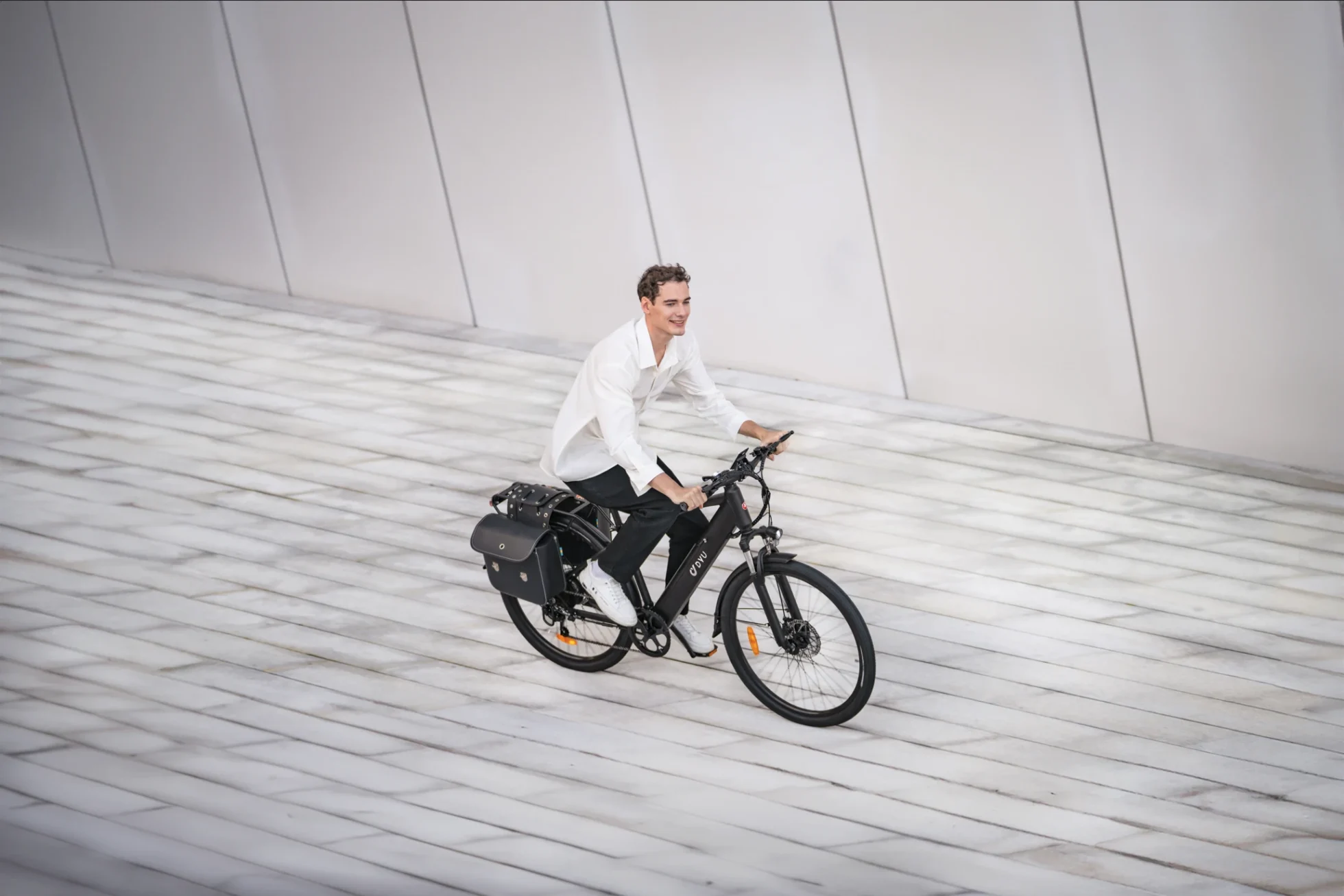
Assistance and pedal gearing do different jobs. The motor adds power; the selected gear changes the relationship between pedal rotation and wheel rotation. A high assistance setting does not turn a tall pedal gear into a low one, even if it makes the same hill easier to ride.
That distinction is easy to miss during a short flat demonstration. A bike may accelerate pleasantly outside the shop, then feel awkward when you restart halfway up a ramp. Ask to assess the kind of start and sustained slope that matters to your route, within the conditions allowed for the demonstration.
The details also depend on the drive arrangement. A typical mid-drive sends assistance through the bicycle drivetrain, so gear selection affects how the motor works as well as the rider. A hub motor drives at the wheel; changing the bicycle’s pedal gear does not create the same motor reduction through the cassette.
Neither description alone identifies a winner. Motor tuning, total load, traction, gearing and the climb all interact. Treat watts and torque as part of the picture rather than shortcuts around checking the pedal transmission.
Calculate the Lowest Ratio Before Counting Speeds
For a conventional chain-and-derailleur setup, divide the front chainring’s tooth count by the selected rear sprocket’s tooth count. A 42-tooth chainring paired with a 28-tooth sprocket gives 42 ÷ 28 = 1.50. A 38-tooth chainring with a 38-tooth sprocket gives 1.00.
With the same wheel circumference, the smaller ratio moves the bike a shorter distance per pedal revolution. That gives the rider more mechanical advantage at the wheel, while requiring a faster pedal rhythm for the same road speed. It does not create extra energy or guarantee that every rider can climb every slope.
| Illustrative combination | Calculated ratio | Meaning with the same wheel size |
|---|---|---|
| 42-tooth front / 28-tooth rear | 1.50 | Longest rollout of these examples |
| 42-tooth front / 34-tooth rear | 1.24, rounded | Shorter rollout than 42/28 |
| 38-tooth front / 38-tooth rear | 1.00 | Shortest rollout of these examples |
These are arithmetic examples, not specifications for the products mentioned later and not upgrade recommendations. Compatibility must be checked separately. A larger rear sprocket may exceed a derailleur’s capacity or require other changes that cannot be inferred from the ratio alone.
SRAM’s X-Range gearing explanation is useful for understanding the distinction between total range and the steps between gears. You can have a broad span without every step feeling equally natural for your preferred cadence.
Wheel Size Changes What the Ratio Feels Like
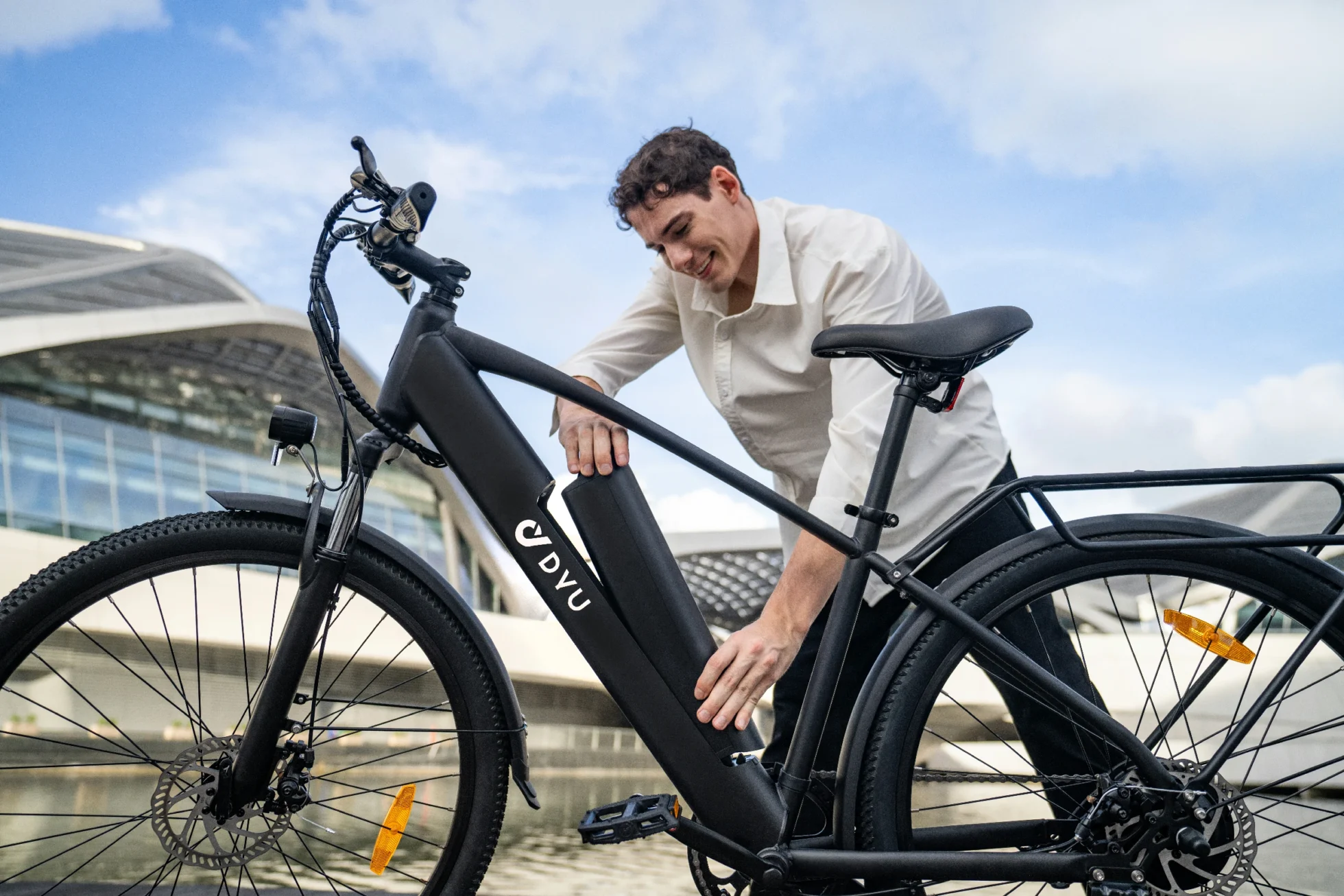
A ratio is only part of the comparison. Multiply the ratio by the wheel’s rolling circumference to estimate the distance travelled per crank revolution, often called rollout or development. This lets you compare unlike wheel formats more sensibly than tooth counts alone.
For a deliberately simplified example, take two wheels with measured rolling circumferences of 1.6 m and 2.2 m. At a 1.50 ratio, their calculated rollouts are 2.4 m and 3.3 m. The larger wheel moves 0.9 m farther for each full turn of the pedals.
Those circumferences are illustrative inputs, not conversions from a nominal tyre label. Tyre width, actual construction and load affect the rolling size. Use an appropriate measured circumference when precision matters, and do not assume every tyre marked with the same inch size is identical.
At 60 pedal revolutions per minute, a 2.4 m rollout corresponds mathematically to 8.64 km/h. That calculation describes the relationship between speed and cadence; it does not predict whether the rider and motor have enough power to hold that speed up a particular hill.
This is where a small-wheel bike can surprise shoppers. It may use a relatively large front chainring yet still deliver manageable rollout. Equally, a larger-wheel bike can compensate with lower gearing. Compare the complete combination before drawing conclusions from the wheel alone.
Gear Range, Gear Steps and the Missing Specifications
On a single-chainring derailleur setup, dividing the largest rear sprocket by the smallest gives the cassette’s range multiplier. An 11–34 cassette has roughly 309% range. That figure tells you how widely the available gears spread, but not the absolute lowest ratio unless the front chainring is also known.
A nine-speed label tells you the number of rear sprockets, not their sizes. Two nine-speed bikes can therefore have different climbing gears. Likewise, a seven-speed bike is not automatically unsuitable for hills; the actual low ratio and the rest of the system matter.
Shimano’s explanation of driving and climbing ranges shows how gear spacing can help a rider maintain a preferred rhythm. The practical takeaway is to check both the easiest gear and the transitions you will use most often, rather than shopping by the largest number.
Belt drive adds another reason to ask questions. A belt is a method of transmitting power, not a declaration of the number of gears. It can appear with a single ratio or an appropriate geared transmission. The Rohloff transmission tables show how an internal hub combines primary gearing with internal ratios. They explain the principle, but do not establish which transmission a particular bike uses.
For an internal gear hub, you also need the hub’s internal ratios. Counting the front and rear sprocket teeth alone is incomplete. Ask for the exact hub model and lowest overall ratio rather than assuming that a clean-looking belt setup includes a climbing gear.
Three Buying Examples and the Questions to Ask

The models below illustrate different questions to resolve before buying. They are available at the time of writing, but the information checked for this guide does not establish a complete lowest-gear calculation for any of them. There is no justified hill-climbing ranking from those missing figures.
| Model and current price | Confirmed buying detail | Gearing question to resolve |
|---|---|---|
| HITWAY BK18 Pro — €1,149.99 | Belt drive and torque sensing | What is the fitted transmission and its lowest overall ratio? |
| HITWAY BK6S L1 — €899.99 | Folding format and a listed 250 W motor | What are the front and rear tooth counts and usable low-gear rollout? |
| HITWAY BK15 Plus — €949.99 | 29-inch format and a listed 250 W motor | How does its lowest gearing suit the larger rolling wheel? |
The BK18 Pro merits a closer look if a belt drivetrain appeals for everyday ownership. Skip an immediate purchase decision if the seller cannot explain the transmission and demonstrate suitable climbing behaviour for your route. A torque sensor describes how assistance responds, not how low the pedal gearing goes.
The BK6S L1 is relevant when folding is a real storage requirement. Its format does not establish the effort needed on a hill, and a lower price does not answer the gearing question. Confirm the actual ratios before assuming that compact wheels make every climb easy.
The BK15 Plus offers a different wheel format, but the same care applies. Ask for the drivetrain specification and compare rollout rather than deciding that bigger wheels are automatically better or worse. The useful choice is the one that combines route suitability with the storage, fit and handling you need.
A Test Ride That Answers the Hill Question
Choose a permitted route that resembles the important part of your regular journey. A long steady incline and a short steep restart test different things. If you carry luggage, explain the expected load and ask how it can be represented safely during a demonstration.
- Find the lowest gear before the slope becomes demanding.
- Assess whether you can maintain a comfortable pedal rhythm without fighting the controls.
- Notice whether changes between useful gears feel manageable.
- Ask the seller to demonstrate the correct shifting technique for the fitted transmission.
- Include an appropriate controlled restart if the demonstration conditions permit it.
- Record which assistance setting you needed, without turning one short ride into a range prediction.
A useful note might read: comfortable on the steady climb, awkward restart near the top, easier after selecting the low gear sooner. That gives you something concrete to compare. Much less useful is simply recording that the motor felt powerful.
Do not demand a high-load test that exceeds the bike’s stated use or your confidence. If the route cannot be replicated, ask for written drivetrain details and a clear explanation of the limits of the demonstration. Uncertainty should remain visible in the decision.
Choose the Complete Setup Before Planning Upgrades
A cassette swap can sound like an easy remedy for tall gearing, but the derailleur, chain length, mounting, freehub or freewheel arrangement and manufacturer guidance all matter. Belt and internally geared systems introduce their own compatibility requirements. A theoretical low ratio is not evidence that the proposed parts fit.
For a new purchase, obtaining a suitable setup from the start is often simpler than buying first and investigating conversion later. Ask for an itemised proposal if a dealer recommends a change, including parts, labour and whether it affects support or the approved configuration.
E-bike gearing for hills comes down to a few useful answers: the lowest overall ratio, the rolling wheel size, the transmission type and how the bike behaves on a representative climb. Motor specifications still matter, but they work best alongside those answers. Buy the combination you can understand and use comfortably.
FAQs
Q1. Are more gears always better on a hilly route?
No. More gears may offer smaller steps or a wider range, but the lowest ratio depends on the actual tooth counts and transmission. Compare the low gear and wheel rollout before counting speeds.
Q2. What is a good e-bike gear ratio for climbing?
There is no universal number. Wheel circumference, rider effort, total load, gradient and the assistance system all affect suitability. Use the ratio to compare setups, then assess a representative climb.
Q3. Does a belt-drive e-bike have only one gear?
Not necessarily. A belt can work with different transmission arrangements. Confirm the exact setup and its internal ratios where relevant; belt drive alone does not tell you the available gear range.
Q4. Does selecting a lower gear help a hub motor?
It helps the rider pedal at a different mechanical ratio. On a typical hub-motor bicycle, the pedal gears do not change the motor’s reduction through the wheel in the same way that drivetrain gears affect a mid-drive.
Q5. Can I fit a larger rear sprocket after buying?
Only if the complete system supports it. Have a qualified mechanic confirm drivetrain compatibility and manufacturer requirements before ordering parts. A lower calculated ratio alone is not a fit check.


