
Electric Bike & Scooter Blog
5 E-Bikes Under €1,000 Compared: Price, Battery and Purpose

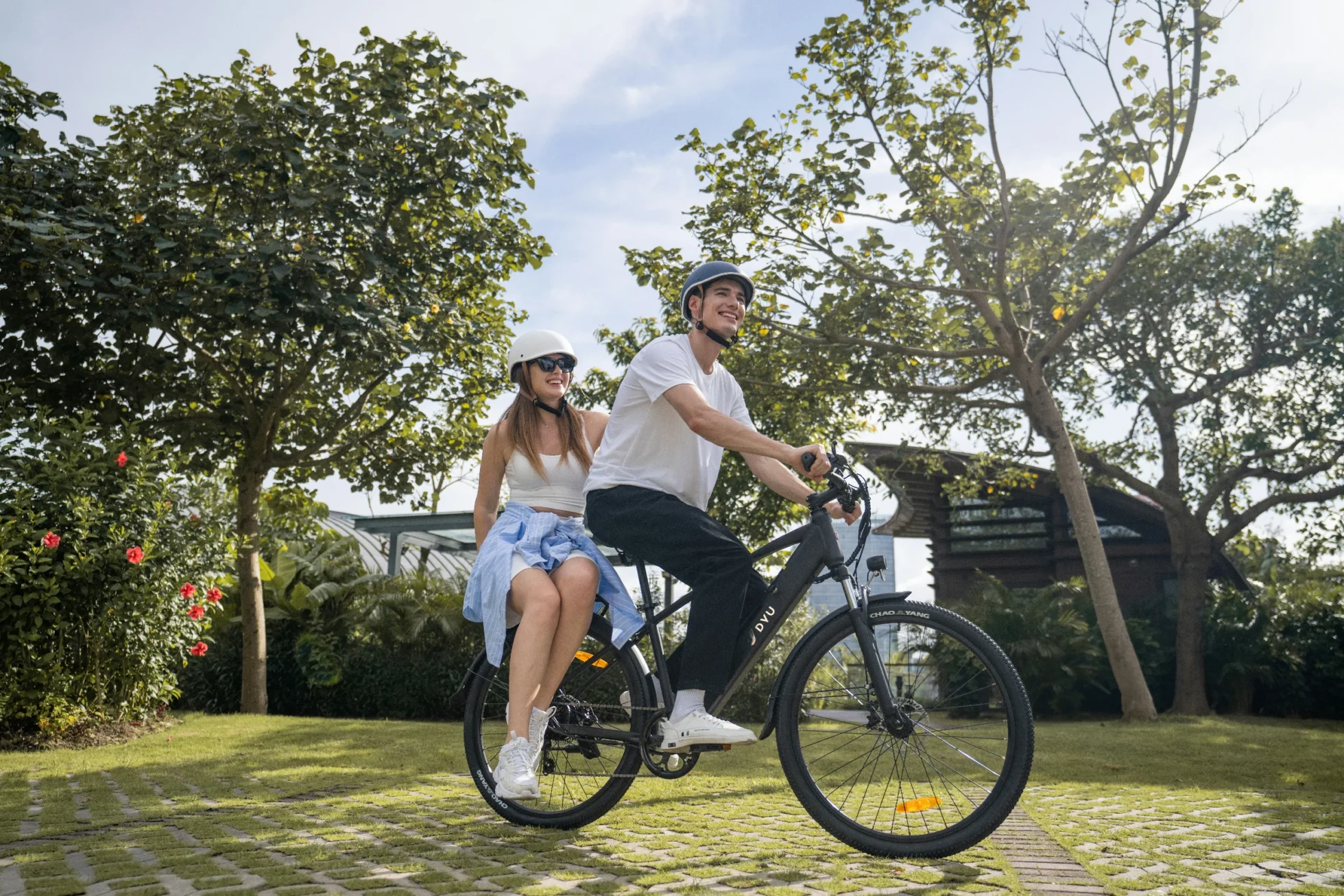
A budget of €1,000 can buy very different electric bikes: a conventional commuter, a folding machine or something aimed at powered off-road leisure. Putting them in one price bracket is useful. Treating them as equally suitable for the same journey is not.
These five models from HITWAY, DYU, AMYET and Moveloop were available at the prices checked on 24 September 2026. The comparison is based on current specifications, not a group road test. The practical starting point is an ordinary journey: where you ride, where you store the bike and how much of the €1,000 budget must remain for equipment and setup.
For everyday assisted cycling, the HITWAY BK15 Pro is the first model I would shortlist in this group. The BK6S L1 is the folding candidate, while the C5 offers another full-size option with a stated weight and load limit. The AMYET and Moveloop require a different conversation about intended use and access before their larger power figures become useful.
Five e-bikes under €1,000: price and purpose
| Model | Checked price | Battery information | Strongest reason to consider it | Main limitation |
|---|---|---|---|---|
| HITWAY BK15 Pro | €749.99 | 36 V, 13 Ah; 468 Wh | Full-size assisted cycling with 7-speed gearing | No verified weight figure here; storage needs checking |
| DYU C5 | €799 | 48 V, 10 Ah; 480 Wh | Full-size city format with a listed 120 kg load capacity | Listed 27 kg weight complicates carrying |
| HITWAY BK6S L1 | €899.99 | 36 V, 15.6 Ah; about 562 Wh | Folding format with a larger pack than the two full-size city options | Folded dimensions and lifting weight need confirmation |
| AMYET EB26 | €502.84 | 48 V, 15 Ah; 720 Wh | Lowest purchase price and a broad-tire leisure format | 1,500 W listing needs configuration and permitted-use checks |
| Moveloop S800 | €812.80 | 22.4 Ah; voltage not stated in the checked specification | Dedicated interest for shoppers seeking an off-road-style machine | 3,000 W rating basis and battery energy need clarification |
Prices are a dated snapshot, not a guarantee of shipping cost or availability for every address. Watt-hours are calculated from the listed nominal voltage and capacity. The order groups the models by practical use; it is not a measured performance ranking.
1. HITWAY BK15 Pro: the everyday cycling starting point
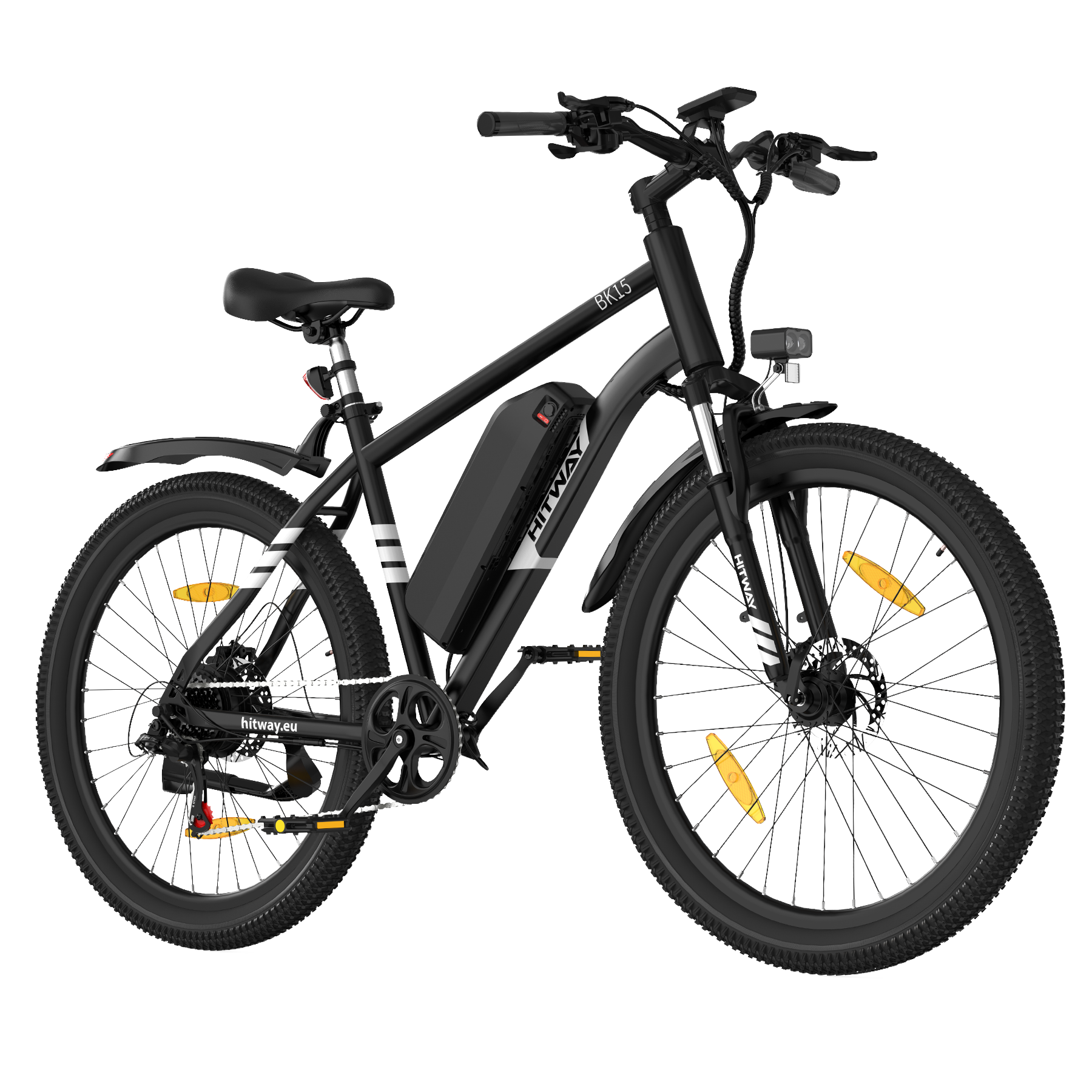
The BK15 Pro combines a listed 250 W motor, 36 V 13 Ah battery, 27.5 × 2.35-inch tyres and Shimano 7-speed gearing. At €749.99, it leaves more room below the budget ceiling than either the C5 or BK6S L1. That makes it a sensible first shortlist entry for someone who wants to pedal through an ordinary daily journey.
The useful feature here is the complete riding format, not a dramatic power number. Gearing gives a rider choices about cadence, while the conventional bicycle shape makes it worth examining for regular pedalling. Check the actual lowest gear if steep climbs are central to the route; the number of gears alone does not establish climbing suitability.
The listed 60–100 km distance is a claim with a broad span, not evidence that every rider can cover 100 km. Battery energy is a clearer starting point for this comparison. For a repeat commute, leave a reserve and establish your own consumption under familiar conditions.
Best fit: a shopper prioritising everyday assisted cycling and budget room for equipment. Tradeoff: a full-size bicycle still needs full-size storage, and the checked information does not provide the weight needed for a carrying recommendation. Ask about frame fit, complete weight and local service before ordering.
2. DYU C5: a city option with a clear carrying compromise
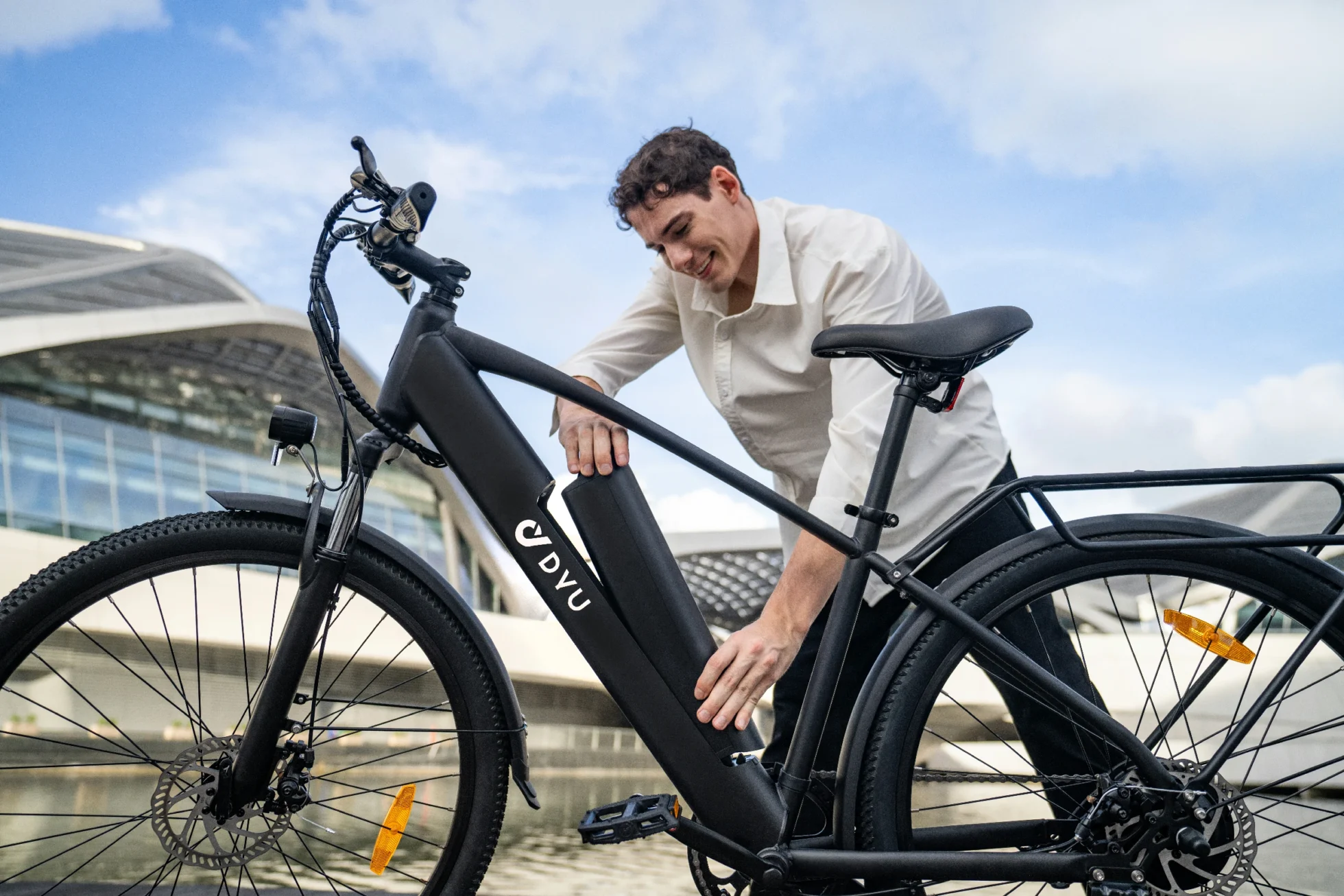
The C5 is €799, with a listed 250 W motor, 48 V 10 Ah battery and 27.5-inch wheels. Its nominal 480 Wh battery is only 12 Wh larger than the BK15 Pro’s calculated capacity. That small difference is not a convincing reason to predict noticeably better range.
The more useful details are its stated 27 kg weight and 120 kg load capacity. A buyer can use those figures to begin checking a storage or load plan, while confirming what the capacity includes. Someone with ground-floor parking may find the weight acceptable; someone carrying the bike up several flights should treat it as a major drawback.
The product information describes disc brakes and front-fork/seat shock absorption. It does not justify a claim that braking or comfort is superior to another bike without a comparable test. Check lever reach and riding position, and ask about the exact brake components if maintenance is an important part of the decision.
Best fit: a rider seeking a full-size city bicycle who can roll it into storage and wants to check a stated load limit. Tradeoff: the weight and conventional frame size make it a weak answer to a portability problem. Its advertised 65 km distance remains a claim rather than a result from this comparison.
3. HITWAY BK6S L1: pay more for folding and battery capacity
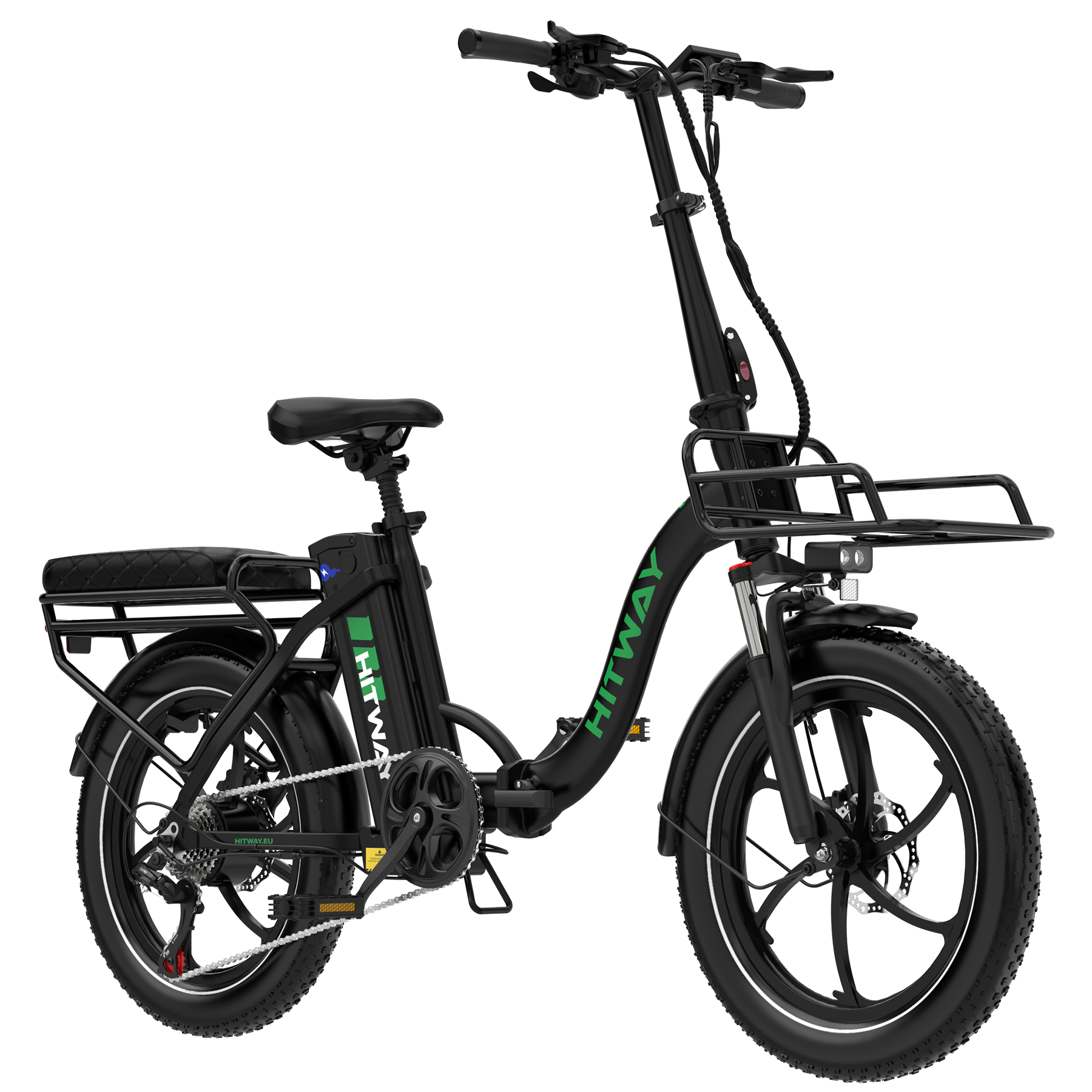
The BK6S L1 costs €899.99 and lists a 250 W motor, 36 V 15.6 Ah battery, 20 × 3.0-inch tyres and 55 Nm torque. Its calculated battery energy is about 562 Wh. Compared with the BK15 Pro, the extra purchase cost is €150 and the nominal energy increase is about 20%.
The reason to consider paying that premium is the folding format combined with the larger battery, not the headline 70–150 km range claim alone. A folding frame can solve a cupboard or car-boot problem. It cannot prove that the folded bike will fit through your doorway or that you can carry it comfortably.
Before buying, ask for folded length, width and height in the supplied configuration, plus weight with the battery installed. Check whether you need to lower the saddle or turn the bars to achieve those measurements. Measure the narrowest opening on the way to storage, not only the space where the bike will finish.
Best fit: a rider whose storage genuinely benefits from a folding bike and who values a larger pack. Tradeoff: only €100.01 remains under a €1,000 total budget before delivery, equipment or setup. If the bike itself can use the full budget, that matters less; if everything must fit inside it, the margin is tight.
4. AMYET EB26: low price, substantial configuration questions
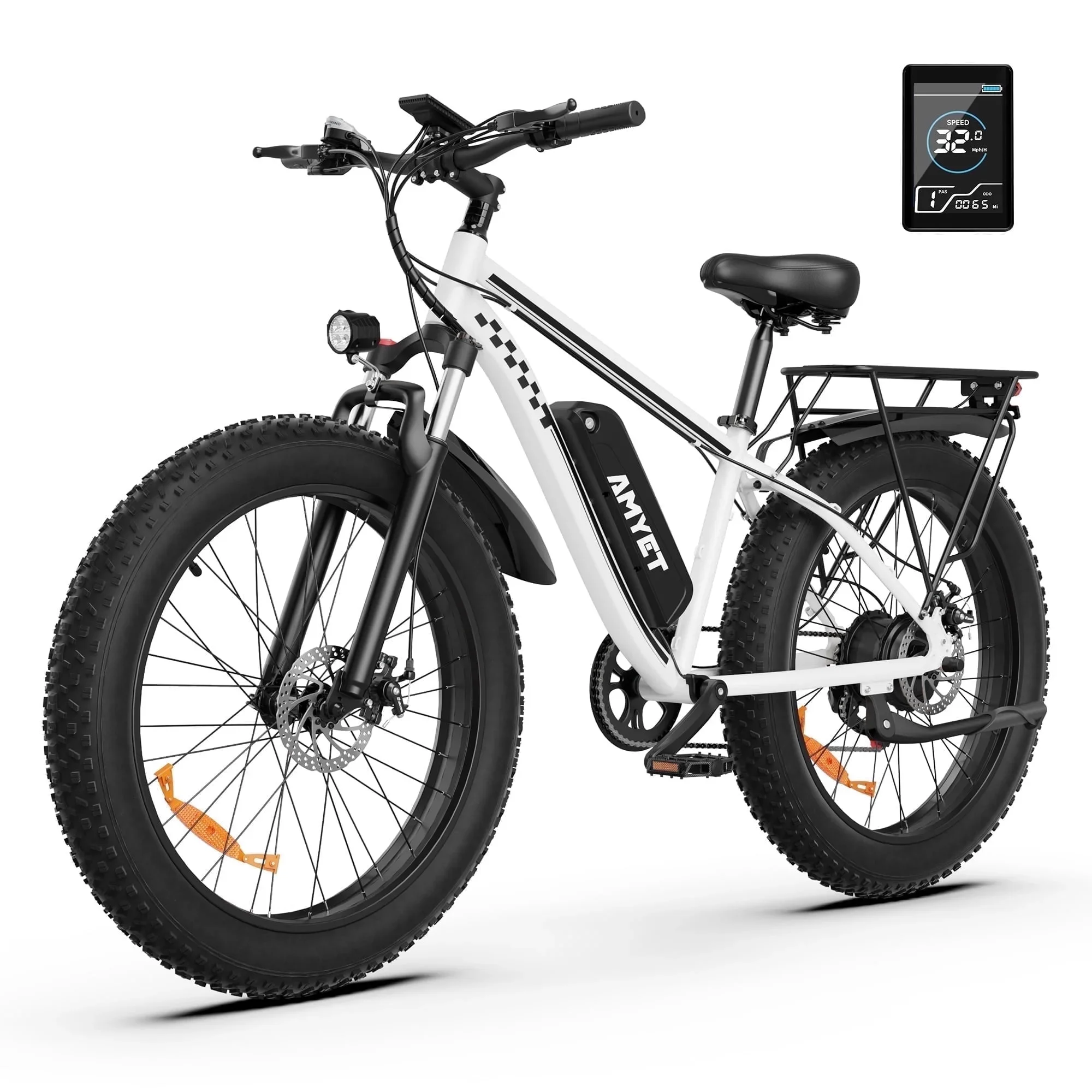
At €502.84, the EB26 is the lowest-priced entry here. Its listed 48 V 15 Ah battery calculates to 720 Wh, while the description identifies 26-inch wheels and a 1,500 W motor claim. Its quoted top speed converts to roughly 50 km/h. Those figures put it in a different buying conversation from a conventional low-speed commuter.
The price and nominal energy are attractive on paper, but neither establishes road eligibility or product quality. Ask whether the power figure is rated or peak, what configuration will be supplied, and which rules apply to that exact machine where you plan to ride. Do not buy it for a European cycle-path commute based only on the presence of pedals.
The checked specification does not provide enough information to judge complete weight, gearing range or braking performance against the other models. Those omissions matter if the plan includes hills, stairs or regular servicing. A low purchase price should leave room for questions, rather than encourage assumptions that missing details must be favourable.
Best fit: a shopper investigating a broad-tire leisure machine for a confirmed permitted use. Tradeoff: more homework is required before making it a practical recommendation. It is not the default winner for ordinary commuting simply because it is cheapest or has a larger battery.
5. Moveloop S800: an off-road-style option with an important data gap
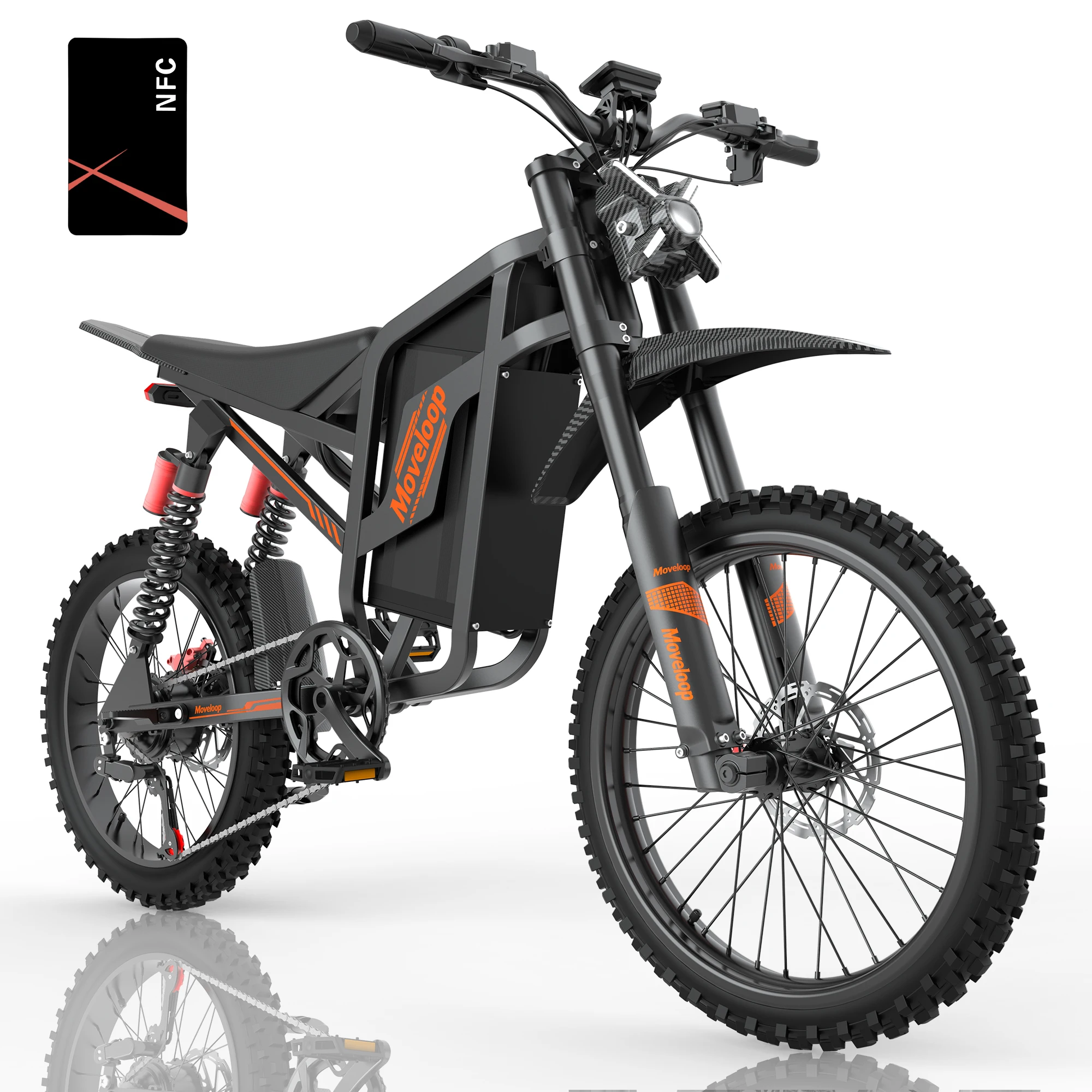
The S800 is €812.80 and is listed with a 3,000 W motor claim, hydraulic brakes and a 22.4 Ah battery. Its shape and specification make it relevant to a shopper considering powered off-road leisure. It should be evaluated separately from the full-size cycling options at the top of this group.
The missing nominal battery voltage is especially important. Amp-hours alone cannot establish stored energy, so this comparison does not invent a watt-hour figure or rank it as the biggest battery. Ask for voltage, rated capacity and the exact supplied battery model before comparing energy or replacement cost.
The advertised distance converts to approximately 72–161 km, but the wide claim does not explain the riding conditions sufficiently to support a planning recommendation. Likewise, a 3,000 W label without a clear rating basis cannot establish sustained output. Clarify both before using them to justify a purchase.
Best fit: a shopper specifically seeking this riding format, with suitable access and transport already arranged. Tradeoff: its specifications leave significant questions about battery energy, rating basis and practical ownership. Hydraulic brakes are a useful feature description, not proof of measured stopping performance or suitability for every rider.
Which one deserves a place on your shortlist?
For a normal pedalling commute: start with the BK15 Pro and compare the C5 if its geometry and load information suit you better. Their nominal battery capacities are close enough that fit, equipment and service should decide between them. Verify the supplied configuration and local requirements for either model.
For storage that demands folding: investigate the BK6S L1 first. The additional cost can be worthwhile if its folded dimensions solve a real constraint. If you never need to fold it, the premium should be justified by other concrete benefits rather than by the feature’s presence alone.
For powered leisure riding away from ordinary bicycle routes: investigate the EB26 and S800 only after confirming a suitable riding area. The lowest price and largest power label are poor substitutes for proper fit, accessible spare parts and clear documentation.
For daily stairs: none earns an automatic recommendation from this information. One stated heavy weight and several missing ones do not support an honest portability ranking. Ask for comparable complete-bike weights and try a realistic lift before buying.
Make the €1,000 budget cover the actual purchase
Separate the bike price from the total amount available. A €900 bike can be affordable when equipment is already owned, but restrictive when the same budget must cover a lock, helmet, pump, delivery and initial setup. Obtain actual quotes for those items rather than applying a made-up universal allowance.
Ask about replacement tyres, brake consumables, a compatible charger and battery support. The spare-parts checklist helps turn a vague promise of support into specific questions. A product should remain maintainable after the initial excitement has passed.
For tyre setup, follow the fitted tyre and bicycle limits. Schwalbe explains how pressure depends on load and tyre dimensions; one pressure recommendation should not be copied across this varied group. Standard inch tyre designations are retained above to make parts identification easier.
For range, use nominal energy as a starting point and then consider conditions. Trek’s range explanation identifies factors such as assistance, load, terrain and weather. It does not validate any of the distance claims in this list. No winner for measured range can be named without a comparable test.
For European road use, the European Commission’s cycle-categorisation diagram provides background on why power and control configuration matter. Check current national requirements and the supplied model’s documentation. A euro price, pedals or an adjustable speed setting is not proof of legal approval.
Frequently asked questions
Q1. Which is the best starting point for everyday cycling?
The HITWAY BK15 Pro is the first shortlist entry here for conventional assisted cycling, with the C5 another full-size option. That recommendation is based on format, price and listed specifications. Fit, equipment, supplied configuration and local service can change the final choice.
Q2. Which has the most battery energy?
Among the models with both voltage and capacity stated, the AMYET EB26 has the highest calculated figure at 720 Wh. The S800 cannot be ranked because its nominal voltage is missing. Battery energy alone does not establish range, quality or suitability.
Q3. Is the most powerful model the best value?
No. Power claims need a rating basis, and a more powerful machine may not suit your route or permitted use. A useful purchase must also fit the rider, storage plan, service arrangements and total budget. Those factors are more important than winning a specification column.
Q4. Does folding make the BK6S L1 easy to carry?
Folding changes the shape, not automatically the lifting effort. Confirm its complete weight and folded dimensions, then compare them with your actual doorway, staircase or boot. Without those checks, it can only be shortlisted for storage potential, not guaranteed portability.
Q5. Are all five suitable for European cycle paths?
No such claim is made. The higher-power listings especially need careful configuration and classification checks. Confirm current local rules, permitted routes and the documentation for the exact model supplied before purchasing for a public-road or cycle-path journey.


