
Electric Bike & Scooter Blog
5 E-Bikes Compared: Commuter, Folding and Dirt Formats

Comparing five electric bikes by price alone produces a confusing shortlist. A folding bicycle, a belt-drive commuter and an electric dirt bike may cost similar amounts while solving completely different problems. The right comparison starts with where you will ride and how you will live with the machine.
This side-by-side review covers the HITWAY BK15 Pro, HITWAY BK18 Pro, DYU T1, Moveloop S800 and AMYET VT300. It compares their documented equipment, current prices and ownership tradeoffs. It is a specification-based assessment, not a claim of controlled hands-on testing or a ranked list of interchangeable road-legal bicycles.
The most useful conclusions are specific: the BK15 Pro is the first full-size value candidate, the BK18 Pro deserves attention for its belt-drive package, and the T1 is the folding option. The S800 and VT300 belong in a separate high-power discussion that starts with permitted use, rider fit and transport.
Quick Comparison: Five Bikes, Different Jobs
| Model | Current price | Standout documented feature | Main tradeoff | First question |
|---|---|---|---|---|
| HITWAY BK15 Pro | €749.99 | 250 W, 36 V 13 Ah, 27.5-inch wheels | Full-size storage footprint | Does it fit the rider and parking space? |
| HITWAY BK18 Pro | €1,149.99 | Belt drive, torque sensor, hydraulic discs | Highest price in this group | Will those features improve your routine? |
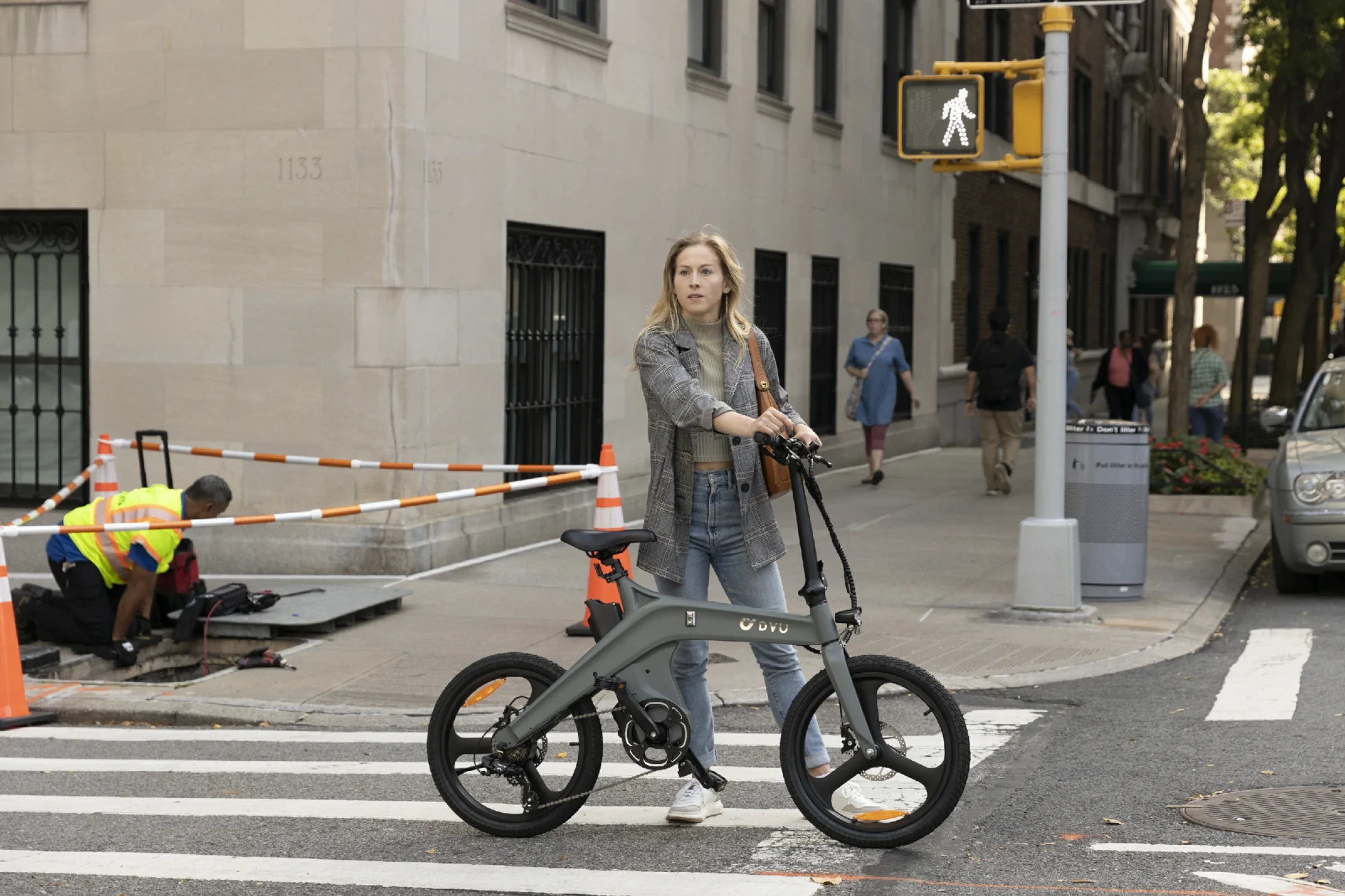
| DYU T1 | €749 | Folding format, 250 W, listed 22.5 kg | Folding does not mean effortless carrying | Can you manage it folded and unfolded? |
| Moveloop S800 | €812.80 | 3,000 W listing, 22.4 Ah battery, hydraulic brakes | Power rating and battery voltage need clarification | Where may the supplied configuration be used? |
| AMYET VT300 | €945.55 | Dirt-bike format, 23.4 Ah battery, hydraulic brakes | Different purpose from a daily pedal commuter | Do you have suitable riding access and transport? |
Prices were checked on 17 September 2026 and the five selected listings were available at that time. Final totals can change with destination, selected configuration and checkout conditions. The recommendations below follow documented fit and equipment rather than the largest advertised wattage.
The Criteria Behind the Recommendations
For everyday journeys, prioritise a suitable riding position, predictable controls, storage and a service plan. For a folding bicycle, add the actual folded envelope and carrying routine. For a dirt-oriented machine, start with permitted riding access, protective equipment and a practical loading arrangement.
A common European pedelec category involves pedal assistance, a maximum continuous rated motor output of 250 W and assistance ending at the specified 25 km/h boundary. The European Commission’s categorisation explanation sets out those distinctions. A product name or a speed setting is not enough to establish that a particular bike qualifies.
Accordingly, the higher-power entries should not be treated as automatic substitutes for compliant city pedelecs. Confirm the supplied configuration, approval documentation and local rules before choosing any machine for public-road use. Peak and continuous motor ratings must also be distinguished.
No star score can resolve a mismatch in intended use. A folding bike may be the most useful choice in a small home while a full-size bicycle is more comfortable for a particular rider. The purpose of this comparison is to identify those tradeoffs before a discount or dramatic specification distracts you.
HITWAY BK15 Pro: The Full-Size Value Candidate
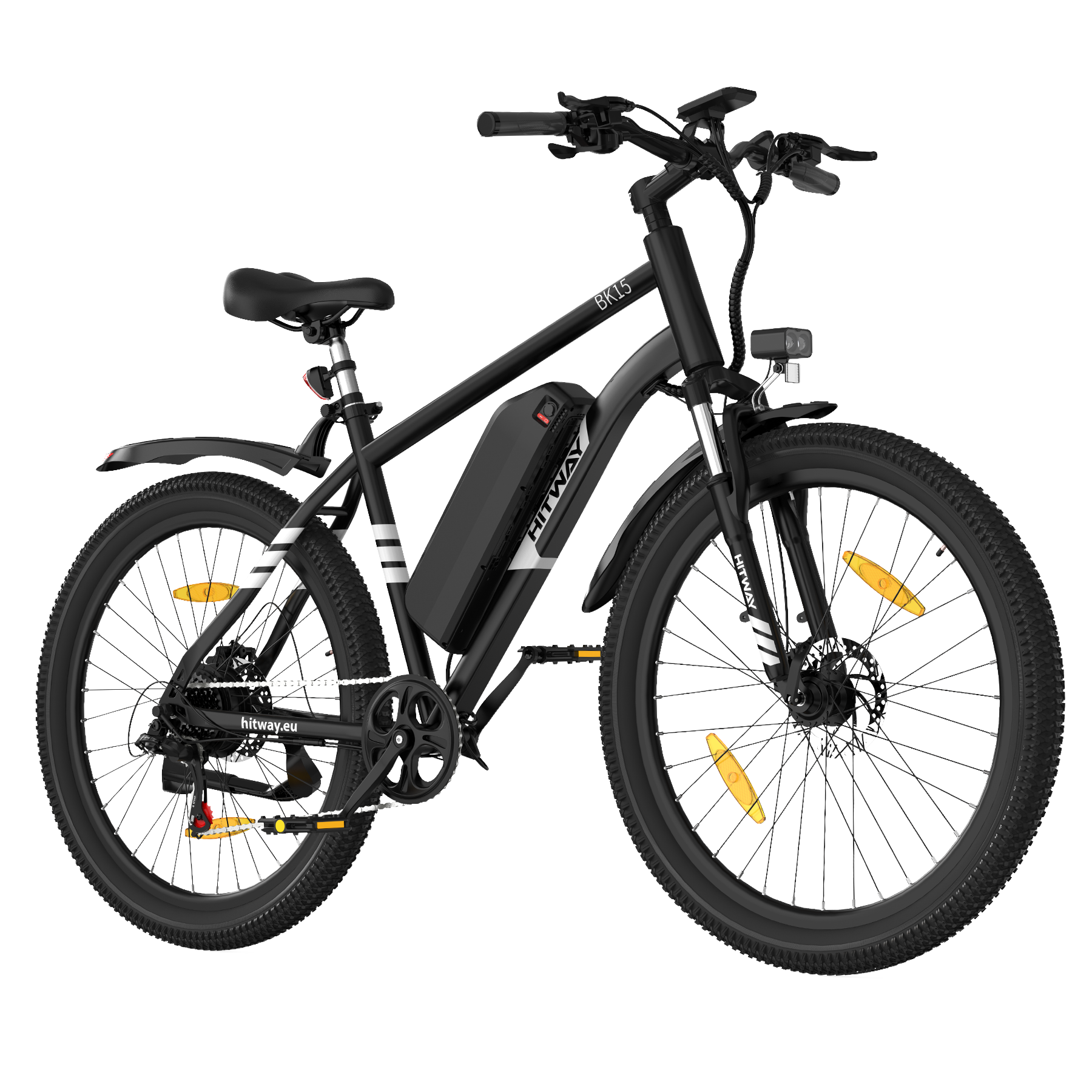
At €749.99, the HITWAY BK15 Pro is the first model I would examine for a conventional everyday bicycle in this group. Its listing identifies a 250 W motor, a 36 V 13 Ah battery, 27.5-inch wheels and Shimano seven-speed gearing.
The nominal battery calculation is 468 Wh. That gives a more useful comparison point than its advertised 60–100 km range, which is not a result from a common test with the other models. A commuting plan should leave reserve for hills, weather and assistance choices.
The attraction is a straightforward full-size format at a price close to the folding T1. If your bike can roll into ground-floor storage and the frame fits comfortably, you may have little reason to pay for folding. A conventional gear range also gives you a mechanical way to adjust pedalling effort.
The limitation is that the available specification does not answer every ownership question. Confirm complete weight, frame sizing and the exact brake equipment supplied. Do not assume it has the BK18 Pro’s belt, torque sensor or hydraulic brakes just because both names begin with HITWAY.
Best for: a buyer seeking a full-size everyday candidate at roughly €750 who can verify fit and road-use configuration. Skip if: your storage requires a compact fold or the final weight and dimensions make daily handling impractical.
HITWAY BK18 Pro: Pay More for the Drivetrain Package
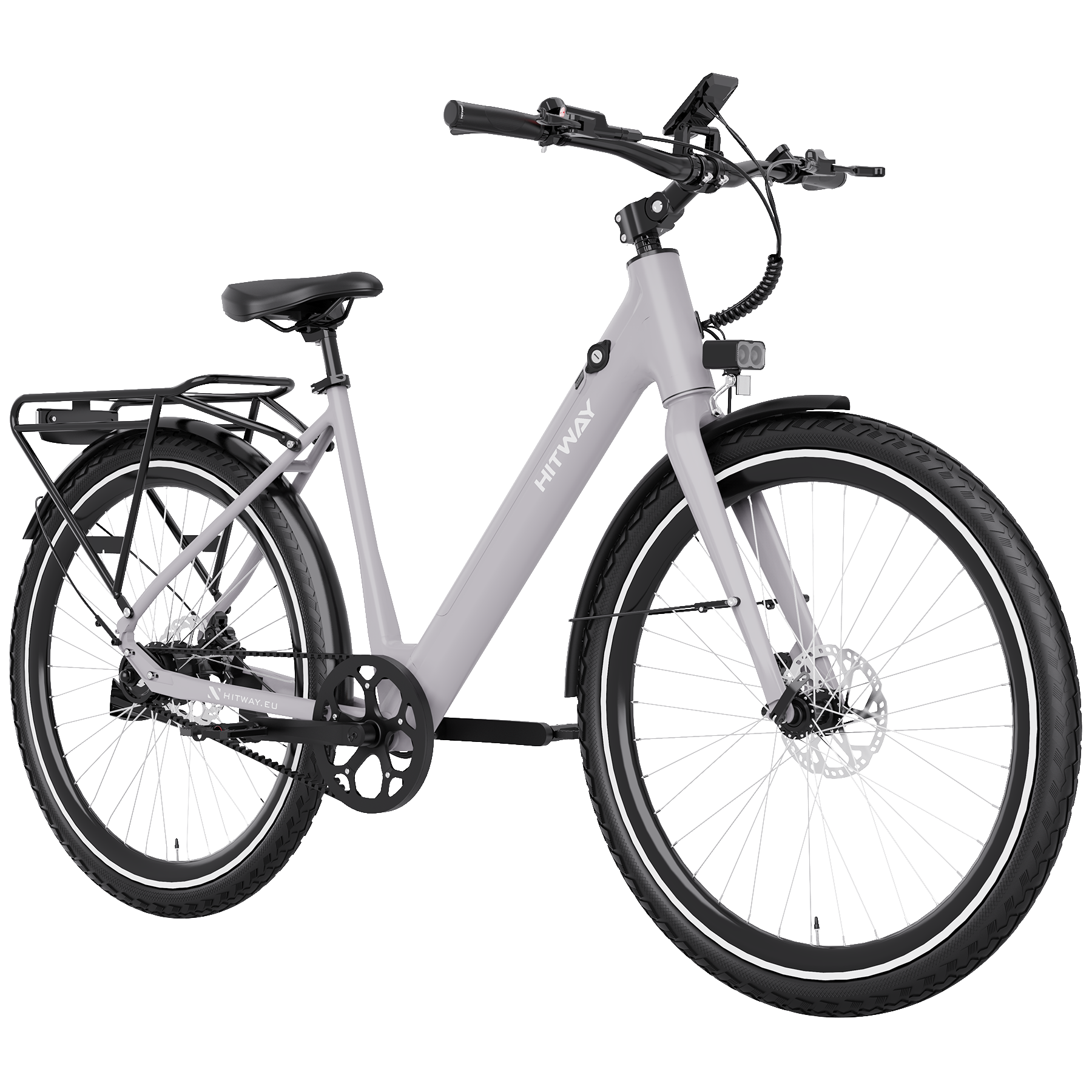
The HITWAY BK18 Pro costs €1,149.99, a €400 premium over the BK15 Pro at the checked prices. Its clear reasons for consideration are the listed belt drive, torque sensor and hydraulic disc brakes.
A torque sensor measures rider input as part of assistance control, but its presence alone cannot establish how natural the complete system feels. Ask for a demonstration that includes starting, gentle acceleration and a normal stop. Good control depends on tuning and the rider’s preferences as well as the sensor type.
A belt may appeal to someone who dislikes routine chain lubrication. It does not make the entire bike maintenance-free. The belt specification, tension procedure, compatible replacement parts and local service capability still matter; do not apply a chain-care procedure to it.
The battery is listed as 36 V 10.4 Ah, giving approximately 374.4 Wh nominal energy. That is less than the BK15 Pro’s calculated capacity despite the higher purchase price. You are considering the BK18 Pro for its component package, not buying the largest battery in this group.
Best for: buyers who value the listed drivetrain and control features enough to pay for them. Skip if: your main objective is maximum nominal battery capacity per euro or you cannot identify a practical source for model-specific service parts.
DYU T1: The Folding Option, with a Real Carrying Caveat

The DYU T1 is listed at €749, almost the same price as the BK15 Pro. The distinction is the folding 20-inch format, not a meaningful price advantage. It deserves attention when a full-size parked bicycle will not fit your routine.
The listed specification includes a 250 W motor, 36 V 10 Ah battery, 55 km claimed range and 22.5 kg weight. Its nominal battery energy is approximately 360 Wh. Compared with the BK15 Pro, it offers a different storage solution with a smaller stated battery.
Try the full handling sequence before buying: unfold, secure the mechanisms according to the manual, move the bike through your doorway and practise an approved lift if carrying is unavoidable. A folded object can be shorter while remaining heavy and awkward to hold.
There is no need to turn that limitation into a criticism of folding itself. For a car boot or a suitable indoor parking area, reducing the stored dimensions can be exactly the feature that makes ownership possible. It is simply separate from the question of carrying up several flights of stairs.
Best for: a buyer whose measured storage or transport space rewards folding. Skip if: you need an effortlessly portable bicycle or would trade away battery capacity for a fold you never actually use.
Moveloop S800: A High-Power Claim Needs Better Questions
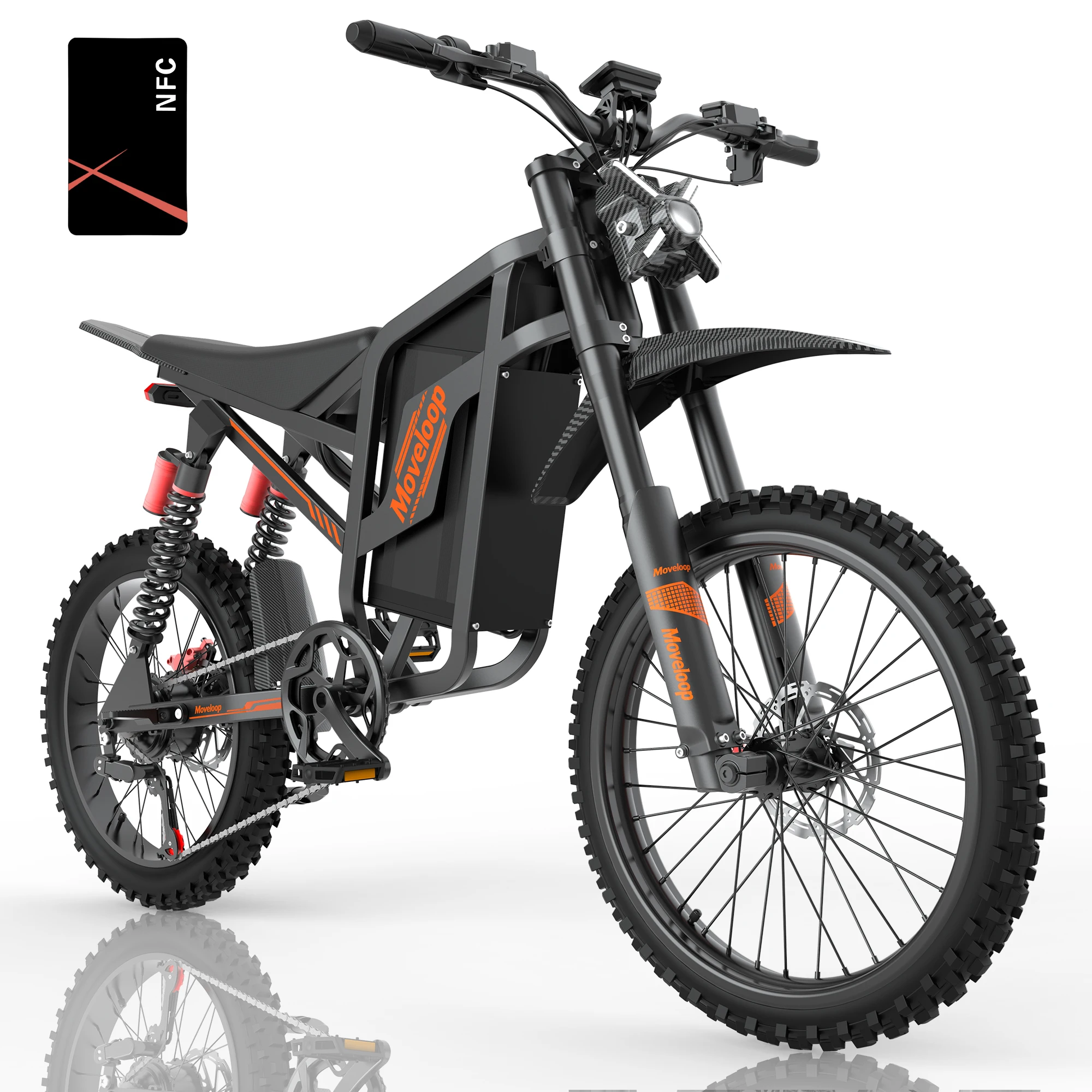
At €812.80, the Moveloop S800 can look striking beside the lower-wattage bicycles. Its description lists 3,000 W, a 22.4 Ah battery and hydraulic brakes. Those numbers make it a candidate for further investigation, not an automatic commuting winner.
The checked description does not establish whether the headline wattage is peak or continuous, nor does it provide the battery voltage needed to calculate watt-hours. Without those details, a direct power or energy ranking would imply knowledge that is not available.
The advertised range converts to roughly 72–161 km, but the wide interval and differing conditions make it unsuitable for scoring against the other bikes. Obtain the exact electrical specification, rider/load limits and use approval before treating the range as relevant to your plans.
A buyer with suitable private-land use in mind may find the format interesting. That buyer still needs frame dimensions, ready-to-ride weight, replacement-part information and a demonstration of the controls. The relatively low listed price does not answer any of those questions.
Best for: an experienced buyer evaluating a higher-power format for an appropriate permitted setting after receiving complete documentation. Skip if: you want an uncomplicated city-pedelec purchase based only on a product title and a low price.
AMYET VT300: A Dirt-Bike Purchase, Not a Commuter Upgrade
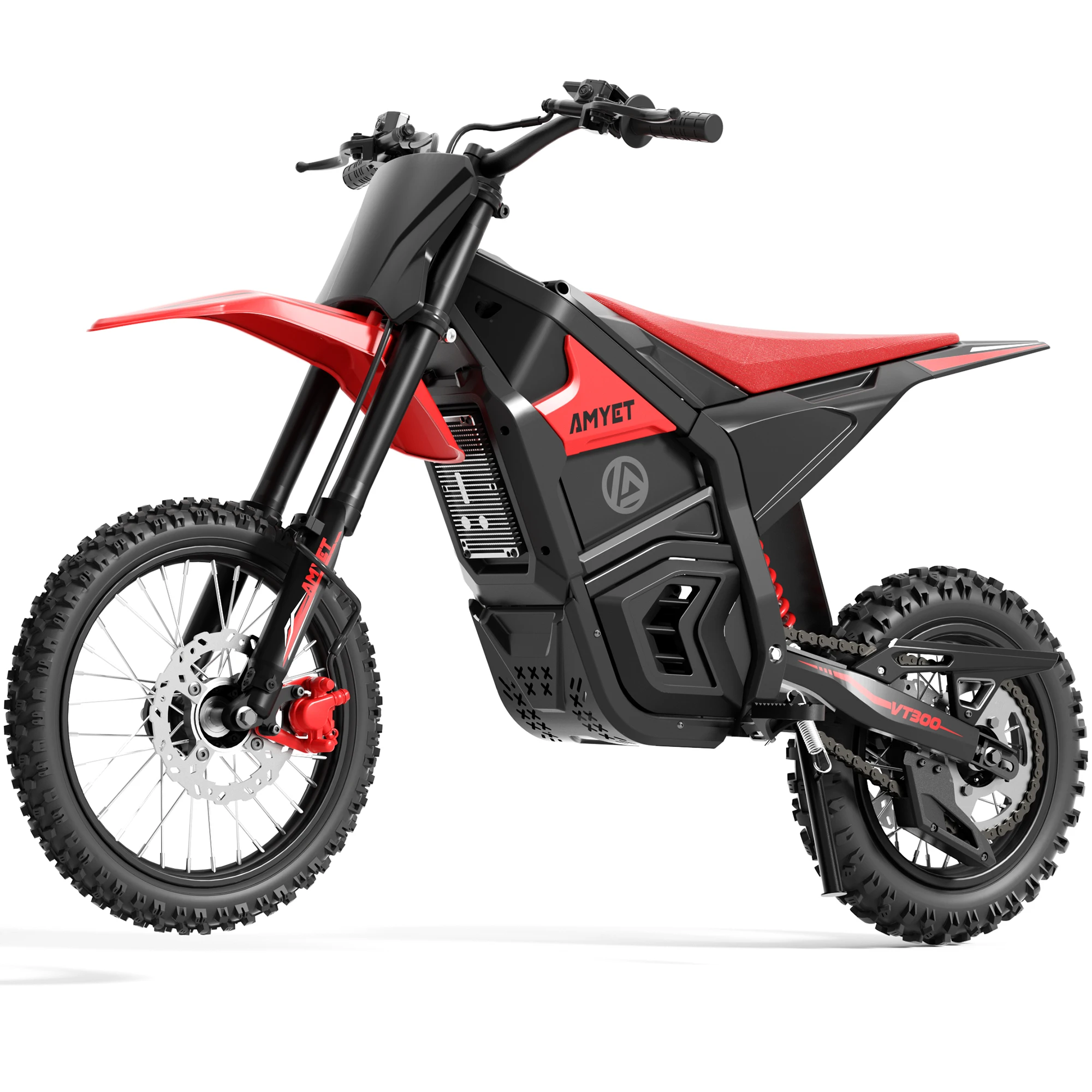
The AMYET VT300 costs €945.55. Its listing describes a 3,000 W electric dirt bike with a 23.4 Ah battery, hydraulic brakes and a suspension-equipped frame. Its physical format puts it in a different conversation from the two HITWAY city-oriented entries.
As with the S800, the available information does not confirm a directly comparable continuous power rating or provide enough battery information for a watt-hour calculation. The slightly larger amp-hour number alone cannot establish that it carries more energy than the S800.
Start with rider fit and the riding area. Obtain dimensions, complete mass, load limits and the exact supplied manual. A motorcycle-like silhouette does not establish suitability for jumps, racing or any particular level of rider experience.
Transport deserves attention early. If you must drive to permitted riding land, include the loading equipment and vehicle arrangement in the budget. A compelling purchase price is less useful when you cannot safely move the machine to the place where it may be ridden.
Best for: buyers deliberately shopping for a dirt-bike format with suitable access, equipment and support. Skip if: you need a substitute for an ordinary pedal-assist city bike, a train-compatible folding bicycle or a vehicle with assumed public-road approval.
Battery Comparison: Three Calculations and Two Unknowns
| Model | Documented battery information | Nominal energy comparison |
|---|---|---|
| HITWAY BK15 Pro | 36 V 13 Ah | 468 Wh calculated |
| HITWAY BK18 Pro | 36 V 10.4 Ah | 374.4 Wh calculated |
| DYU T1 | 36 V 10 Ah | 360 Wh calculated |
| Moveloop S800 | 22.4 Ah; voltage not confirmed here | Cannot calculate reliably |
| AMYET VT300 | 23.4 Ah; voltage not confirmed here | Cannot calculate reliably |
The BK15 Pro leads the three entries with sufficient voltage and capacity information for this calculation. That is a narrow, useful finding. It is not a declaration that it has the largest battery of all five or will go farthest under every condition.
For actual trip planning, consider the whole system and your use. Trek’s range guidance explains why wind, terrain, load and assistance level change the result. Comparing one maker’s optimistic distance with another’s conservative estimate can reward the marketing method instead of the machine.
Ownership: What the Price Tag Leaves Out
A useful budget includes the equipment needed for your route and the service you can realistically obtain. Ask about tyre and brake-pad availability, battery replacement, charger compatibility and who diagnoses an electrical fault. These questions apply to every price level.
The maintenance discussion from Rad Power Bikes explains how riding frequency and conditions affect wear. Its intervals are brand-specific, but the wider lesson is relevant: a bike used hard in poor conditions needs attention regardless of whether the initial price was low.
Do not infer a warranty from an image overlay or from a different regional seller. Get the terms for your order and confirm whether labour, collection and shipping are covered. Keep model identifiers and a written specification so later replacement requests refer to the same version.
For the belt-driven BK18 Pro, identify the exact belt and service route. For a folding bike, understand hinge inspection and secure locking. For the higher-power machines, establish transport, use permissions and component support before spending on decorative accessories.
The Recommendations, by Actual Use
Start with the BK15 Pro for full-size everyday value. Its combination of price and documented battery capacity is persuasive when the fit, equipment and supplied legal configuration check out. Its advantage is practical value, not an invented ride-test victory.
Consider the BK18 Pro for a specific equipment preference. The belt, torque sensor and hydraulic brakes give the premium a clear purpose. Buyers who do not value those features should recognise that the higher price buys a smaller calculated battery than the BK15 Pro.
Choose the T1 when folding solves a measured space problem. Its storage format is the reason to shortlist it. Make sure the carrying task is manageable rather than assuming the word “folding” means light.
Keep the S800 and VT300 in a separate high-power shortlist. Their quoted specifications are not sufficient for a confident performance winner between them. Obtain voltage, rating definitions, dimensions and use documentation, then compare the exact offered versions.
Before ordering, write down the two or three jobs the bike must perform every week. Reject any option that cannot do those jobs comfortably and appropriately. That produces a more reliable decision than a single winner selected from five very different formats.
Frequently asked questions
Q1. Which of these bikes offers the best everyday value?
The HITWAY BK15 Pro is the first full-size value candidate at the checked price, subject to fit and supplied configuration. The best choice changes if folding or a belt drivetrain is essential.
Q2. Is the most powerful electric bike always the best?
No. Intended use, legal category, control, fit and service matter, and headline power may not be measured on the same basis between models.
Q3. Which model has the largest battery?
The BK15 Pro has the highest calculated nominal energy among the three models with confirmed voltage and amp-hours. The S800 and VT300 cannot be ranked reliably without their battery voltage.
Q4. Is the DYU T1 easy to carry?
Its folding format can help storage, but its listed 22.5 kg weight remains substantial. Try the actual handling routine and use an appropriate lifting method.
Q5. Can all five be used as ordinary city pedelecs?
No such conclusion follows from the listings. Confirm the exact assistance configuration, approvals and local rules, particularly for the higher-power entries.


