
Electric Bike & Scooter Blog
HITWAY BK18 Pro vs BK15 Pro: Belt or Chain Commuter?


The HITWAY BK18 Pro vs BK15 Pro choice is really a decision between two commuting philosophies. The BK18 Pro is a low-maintenance step-through with a belt drive, torque sensor and hydraulic brakes. The BK15 Pro costs less, carries a larger stated battery and adds front suspension plus a conventional seven-speed chain drivetrain.
Neither layout is universally better. The right bike depends on whether your week is dominated by clean urban trips, broken surfaces, hills, storage constraints or a limited purchase budget. This comparison uses current DylanBikes listings and manufacturer specifications, with claimed range treated as an estimate rather than a promise.
HITWAY BK18 Pro vs BK15 Pro: Quick Comparison
| Feature | HITWAY BK18 Pro | HITWAY BK15 Pro |
|---|---|---|
| Current price | €1,149.99 | €749.99 |
| Frame | Step-through city frame | Step-over trekking frame |
| Motor | 250 W rear hub | 250 W rear hub |
| Battery | 36 V 10.4 Ah, 374.4 Wh | 36 V 13 Ah, 468 Wh |
| Claimed range | 40 to 80 km | 60 to 100 km |
| Sensor | Torque sensor | Cadence-based assistance |
| Drivetrain | Single-speed belt drive | Seven-speed chain drive |
| Brakes | Hydraulic discs | Mechanical discs |
| Fork | Rigid | Front suspension |
| Tyres | 700 x 42c | 27.5 x 2.35 inches |
| Listed weight | 20.5 kg | Check current listing |
At current prices, the BK18 Pro asks roughly €400 more. That premium buys a cleaner drivetrain, more responsive assistance, hydraulic braking and an integrated commuter package. The BK15 Pro directs the budget toward battery capacity, gears and suspension.
The Biggest Difference: Belt Drive or Chain and Gears
The BK18 Pro’s belt replaces the metal chain. It does not need chain oil, stays cleaner around trouser legs and typically runs quietly. A single-speed layout also removes derailleur adjustment. For riders who want a simple daily machine and have moderate hills, that reduced maintenance can be valuable.
The tradeoff is the lack of gear choice. A geared chain lets the BK15 Pro rider select an easier ratio for a climb or a harder one for faster pedalling. Chains and derailleurs are familiar to most workshops, but they need cleaning, lubrication and adjustment. Gates’ belt handling and tension guidance shows that a belt is low-maintenance, not maintenance-free: alignment, tension and correct handling still matter.
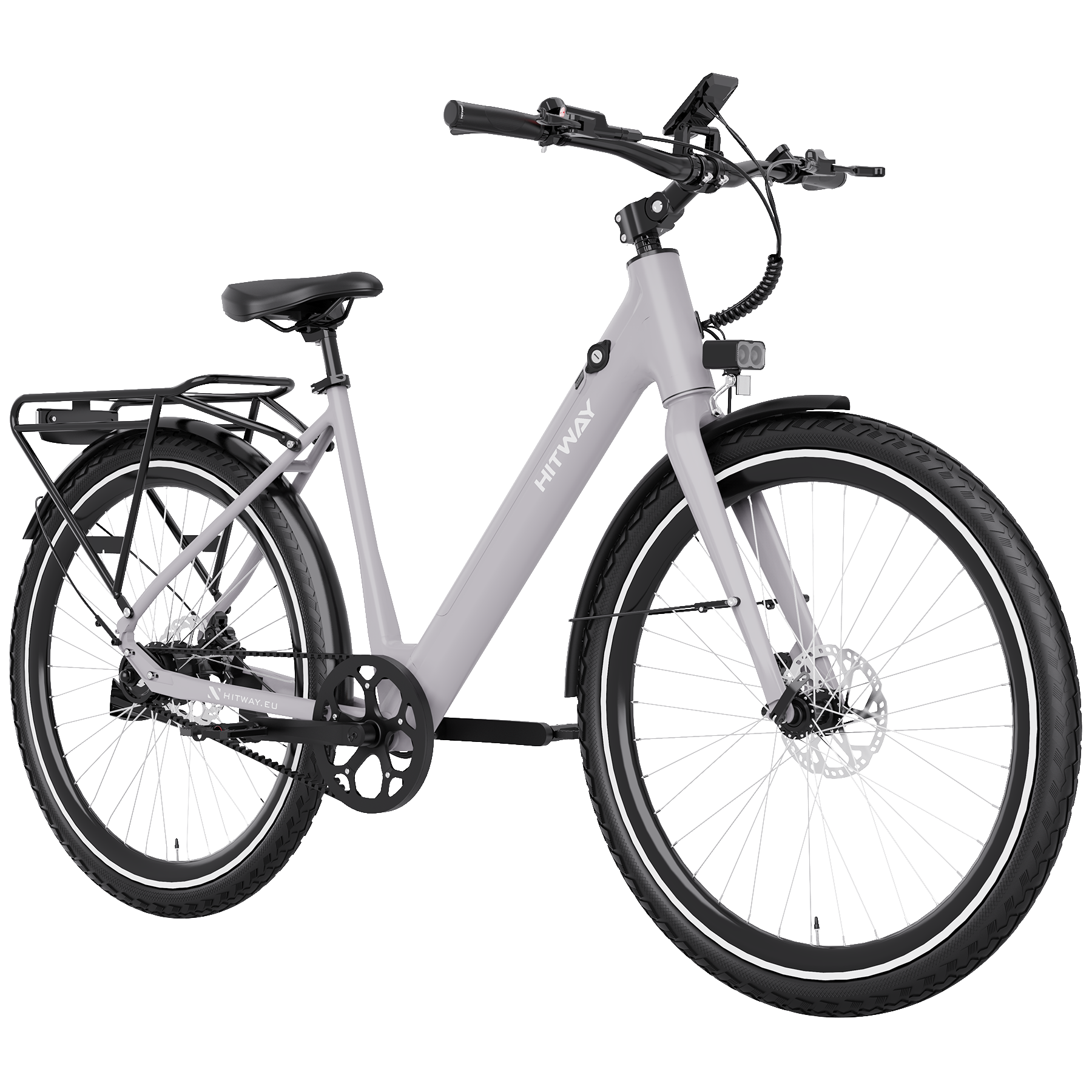
HITWAY BK18 Pro: Clean, Calm Urban Commuting
The HITWAY BK18 Pro is currently listed at €1,149.99. Its low-step frame makes repeated stops easier, while the standard rear rack and full mudguards support practical city use. The rigid fork and 700 x 42c tyres favour efficient paved riding rather than rough shortcuts.
HITWAY’s official BK18 Pro specification page lists a 250 W hub motor, 36 V 10.4 Ah battery, torque sensor and 20.5 kg net weight. The claimed 40 to 80 km range will vary with assist level, wind, temperature, hills and rider load.
BK18 Pro strengths
- Belt drive avoids regular chain lubrication and keeps clothing cleaner.
- Torque sensor responds to pedalling effort for a more natural start.
- Hydraulic disc brakes generally need less lever force.
- Step-through frame, rack, lights and mudguards suit daily errands.
- Listed 20.5 kg weight is manageable by e-bike standards.
BK18 Pro tradeoffs
- Single-speed gearing offers no lower mechanical ratio for steep climbs.
- Rigid fork passes more sharp surface impact to the rider.
- The smaller battery has less nominal energy than the BK15 Pro.
- Current purchase price is substantially higher.

HITWAY BK15 Pro: More Battery and Terrain Flexibility
The HITWAY BK15 Pro is currently listed at €749.99. It uses a traditional step-over frame, 27.5 x 2.35-inch tyres, a suspension fork and a seven-speed drivetrain. That package is more adaptable when a commute includes cracked lanes, towpaths or repeated gradients.
The official BK15 Pro product page states a 250 W motor, 36 V 13 Ah removable battery and a claimed 60 to 100 km range. Its 468 Wh nominal capacity is about 25 percent larger than the BK18 Pro’s 374.4 Wh pack.
BK15 Pro strengths
- Larger nominal battery capacity supports a bigger theoretical range buffer.
- Seven gears let the rider adapt cadence to hills and wind.
- Front suspension and wider tyres improve comfort on broken surfaces.
- Lower price leaves room in the budget for a lock, helmet and luggage.
- Conventional chain components are widely understood by bicycle workshops.
BK15 Pro tradeoffs
- Chain and derailleur need cleaning, lubrication and periodic adjustment.
- Mechanical disc brakes may require more lever force and cable adjustment.
- Cadence assistance can feel less proportional than a torque sensor.
- The high top tube is less convenient for riders with limited hip mobility.
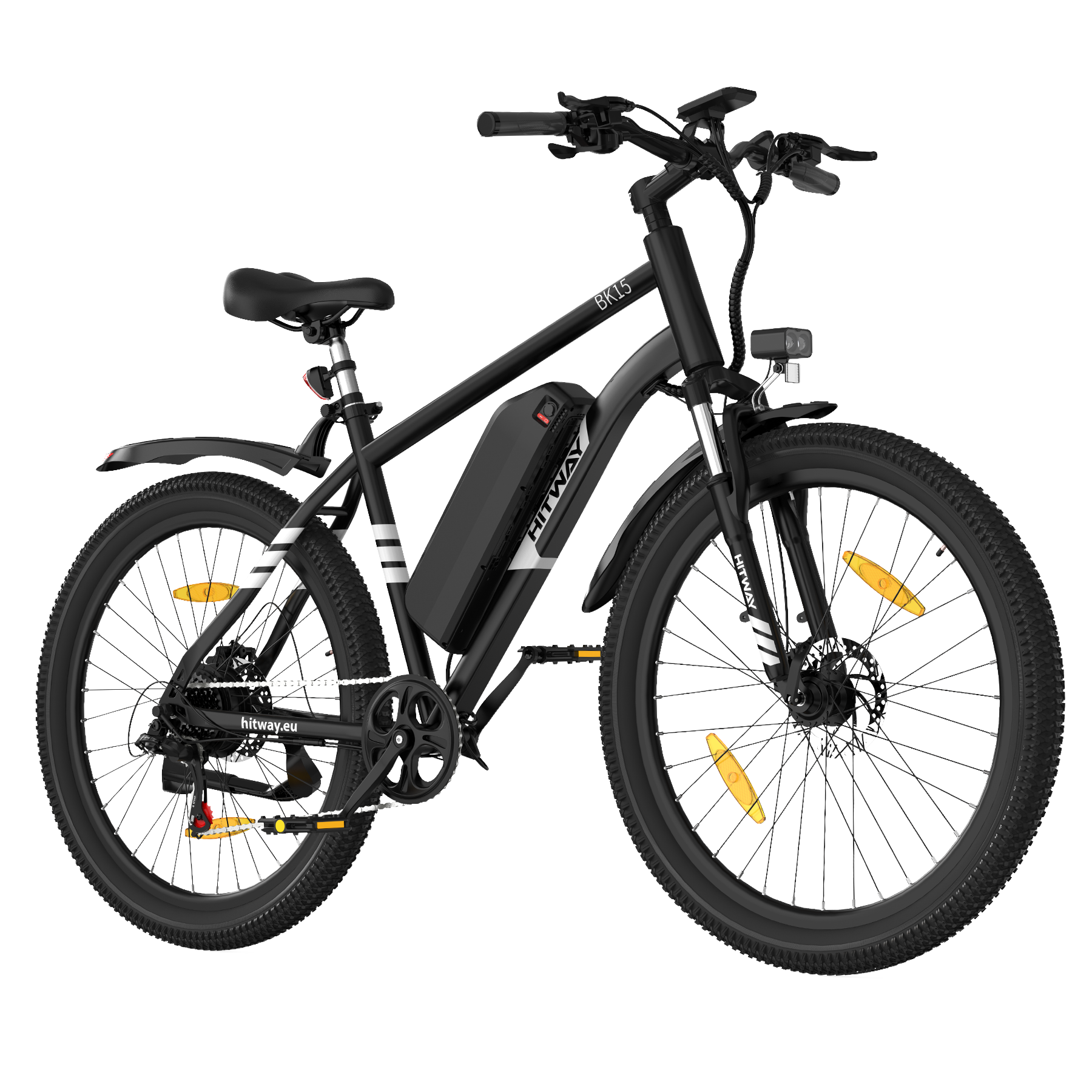
Torque Sensor vs Cadence Assistance
The BK18 Pro’s torque sensor measures how firmly you press the pedals, then varies assistance in response. It tends to produce a smoother start and makes low-speed manoeuvres easier to meter. The BK15 Pro’s cadence system detects crank rotation and applies one of its assistance levels, which can feel more like a set amount of support.
Neither approach is automatically faster. The difference is control feel. Read the practical examples in this torque sensor vs cadence sensor guide, then test how each bike starts on a slope and moves through slow traffic.
Battery Capacity and Real-World Range
Battery energy is calculated by multiplying voltage by amp-hours. That gives the BK18 Pro about 374.4 Wh and the BK15 Pro about 468 Wh. On equal routes and under similar conditions, the larger pack should provide more energy. The manufacturers’ claimed range bands still overlap because riding conditions and test methods vary.
Do not compare only the top kilometre figure. Check your round-trip distance, add a weather and ageing margin, and confirm where the charger will live. A rider completing 18 km a day may prefer the lighter, simpler BK18 Pro even if the BK15 Pro offers a larger theoretical reserve. This e-bike battery size guide turns watt-hours into a more useful route estimate.
Comfort: Rigid Efficiency or Suspension Cushion
The BK18 Pro’s 700 x 42c tyres and rigid fork make sense on maintained cycle lanes and city streets. Correct tyre pressure and a suitable saddle position can provide plenty of comfort without the weight and service needs of a suspension fork.
The BK15 Pro’s wider tyres and front suspension have more capacity to soften broken asphalt and light gravel. Suspension does not make the bike a downhill mountain bike, and it still needs inspection. It simply broadens the range of surfaces that can feel tolerable on a daily commute.

Brakes, Service and Long-Term Ownership
Hydraulic discs give the BK18 Pro a braking advantage on paper, particularly for riders who want light, consistent lever effort. The BK15 Pro’s mechanical discs use cables that are straightforward to inspect but can need adjustment as pads and cables settle.
Ownership cost also includes the drivetrain. A belt avoids oil and most chain-cleaning work, but replacement parts and tension service may be less common at a small workshop. A chain is messier and wears with the cassette, yet parts are widely available. Use an e-bike maintenance schedule to compare the real chores rather than assuming either bike needs no attention.
Fit, Storage and Daily Practicality
The BK18 Pro is the easier bike to mount, particularly with a rear bag or limited hip movement. Its rear rack is already part of the commuter package. The BK15 Pro’s top tube gives a familiar shape and a useful handhold, but requires a higher leg swing.
Before buying, measure the storage door, lift, stair turn and rack spacing. Compare standover, reach and saddle range using this e-bike frame-size guide. A comfortable test ride is more valuable than choosing from rider-height labels alone.
Which Bike Should You Buy?
| Your priority | Better fit | Reason |
|---|---|---|
| Low drivetrain maintenance | BK18 Pro | Belt drive and single-speed simplicity |
| Lower purchase price | BK15 Pro | About €400 less at current listing prices |
| Natural assistance feel | BK18 Pro | Torque sensor responds to pedal pressure |
| Hills and variable cadence | BK15 Pro | Seven mechanical gears |
| Broken paths and light gravel | BK15 Pro | Suspension fork and wider tyres |
| Frequent stops and easy mounting | BK18 Pro | Step-through frame |
| Larger battery reserve | BK15 Pro | 468 Wh versus 374.4 Wh |
Choose the BK18 Pro if you value clean clothing, a smooth torque-sensor response, hydraulic brakes and an uncomplicated urban routine. Its premium makes the most sense for frequent commuting where those details are used every day.
Choose the BK15 Pro if budget, battery capacity, gears and rough-surface comfort matter more than drivetrain cleanliness. It is the stronger value choice for mixed routes, provided you are comfortable maintaining a chain and adjusting mechanical brakes.
Prices and availability can change, so check both current listings, confirm warranty and local service arrangements, and test fit before ordering. The better commuter is the one that matches the surfaces, storage and maintenance you will actually live with.
FAQs
Q1. What is the main difference between HITWAY BK18 Pro and BK15 Pro?
The BK18 Pro uses a belt drive, torque sensor, hydraulic brakes and step-through frame. The BK15 Pro uses a seven-speed chain drivetrain, cadence assistance, mechanical brakes and front suspension.
Q2. Which bike has the larger battery?
The BK15 Pro has the larger nominal battery at 468 Wh. The BK18 Pro battery is 374.4 Wh. Real range still depends on route, weather, assist level and rider load.
Q3. Is a belt drive better than a chain?
A belt is cleaner, quiet and low-maintenance, while a geared chain offers more ratios and easier access to common replacement parts. The better choice depends on hills and maintenance preference.
Q4. Which model is better for rough roads?
The BK15 Pro has the advantage because it combines a suspension fork with wider 27.5 x 2.35-inch tyres. The BK18 Pro is better suited to maintained urban surfaces.
Q5. Is the BK18 Pro worth the higher price?
It can be for a frequent city commuter who will benefit from the torque sensor, belt drive, hydraulic brakes and step-through access. Occasional riders may find the BK15 Pro better value.


