
Electric Bike & Scooter Blog
5 Long-Range E-Bikes Compared for Weekend Touring


Long-range figures look reassuring on a product page. The difficult part is deciding which bike still fits after you add hills, luggage, headwind, temperature and the return journey. This comparison looks at five long-range e-bikes for weekend touring that were in stock at the time of writing, with current euro prices and the tradeoffs hidden behind the headline distance.
The five models cover very different needs: mid-drive climbing, large-wheel comfort, lower-cost power, compact storage and folding versatility. None can promise its maximum range on every ride, so the useful question is not “Which number is biggest?” It is “Which complete bike gives me the best margin for my route?”
Quick Picks: Five Long-Range E-Bikes Compared
| Model | Current price | Listed range | Best fit | Main caution |
|---|---|---|---|---|
| HITWAY BK-U1 | €1,049.99 | 120–150 km | Hilly touring and natural mid-drive response | Confirm fit, weight and service support |
| HITWAY BK15 Plus | €949.99 | 80–150 km | Big-wheel road and cycle-path touring | 29-inch package needs storage space |
| Cybervelo EK2 | €612.91 | 80 miles (about 129 km) | Budget-focused power and distance | 1000W listing may not meet public-road rules |
| Moveloop S800 | €812.80 | 45–100 miles (72–161 km) | Private-land distance and power | 3000W listing needs a clear legal-use plan |
| HITWAY BK6S L1 | €899.99 | 70–150 km | Folding storage and mixed urban-weekend use | 20-inch wheels feel different on long rough routes |
The numbers above are manufacturer listings, not guaranteed touring results. BikeRadar’s e-bike range guide explains how assistance level, rider weight, terrain, weather and tyre choice change real distance. Plan the first rides conservatively and build your own repeatable record.
How to Judge Long-Range Claims Before Buying
Battery energy is a better starting point than a range headline, although it is still not the whole answer. Watt-hours describe stored energy. Motor efficiency, speed, tyre pressure, total mass and rider effort decide how quickly that energy is used.
Use a route-based check:
- Measure the full outbound and return distance.
- Add elevation, expected wind and the weight of luggage.
- Reserve at least 20–30% for detours and changing conditions.
- Confirm where the battery can legally and safely be charged.
- Check local rules for motor output and assisted speed.
BikeRadar’s e-bike FAQ highlights the same variables buyers should test: riding mode, speed, total weight, hills, luggage and rider effort all matter. A product claiming 150 km may deliver far less when the route includes high assistance and steep climbs.
Battery size also affects weight and replacement cost. This guide to e-bike range claims explains why advertised distance needs context, while the e-bike weight guide helps with stairs, racks and transport.
Touring Fit Matters as Much as Battery Range
A long-range bike can still be a poor touring bike if the rider cannot stay comfortable. Check saddle-height range, handlebar reach, grip shape and brake-lever position. A test ride should last long enough to reveal pressure points, numb hands or a cramped knee angle, not only confirm that the motor switches on.
Luggage changes fit and handling. Confirm the rack’s own load rating, pannier heel clearance and whether a bag blocks the rear light. A battery that covers 120 km is not useful if the rack cannot safely carry water, tools, a lock and weather layers.
| Touring check | What to confirm | Why it matters after 50 km |
|---|---|---|
| Rider fit | Saddle range, reach and control access | Small discomfort becomes persistent fatigue |
| Luggage | Rack rating and secure pannier clearance | Loose weight changes steering and braking |
| Tyres | Approved pressure and puncture protection | Rolling loss and punctures affect the return |
| Brakes | Progressive feel and local service parts | Long descents can expose weak setup |
| Charging | Charger compatibility and safe indoor point | A café socket is not a guaranteed plan |
Charging deserves a complete plan. Ask whether the battery is removable, how long a normal charge takes, whether the charger is approved for the destination and where charging is permitted. Do not leave a charging battery unattended in a hotel corridor, shared stairwell or other escape route.
For an overnight route, carry the original charger securely and protect it from water and impact. If the trip crosses a border, verify plug compatibility and transport rules in advance. A cheap adapter is not a substitute for the voltage and charger instructions supplied with the bike.
Service support is the final part of range confidence. A 150 km claim does not help when a proprietary display, battery lock or brake component cannot be replaced locally. Before ordering, ask who handles warranty work, what proof is required and which consumable parts are standard bicycle items.
1. HITWAY BK-U1: Best for Mid-Drive Climbing
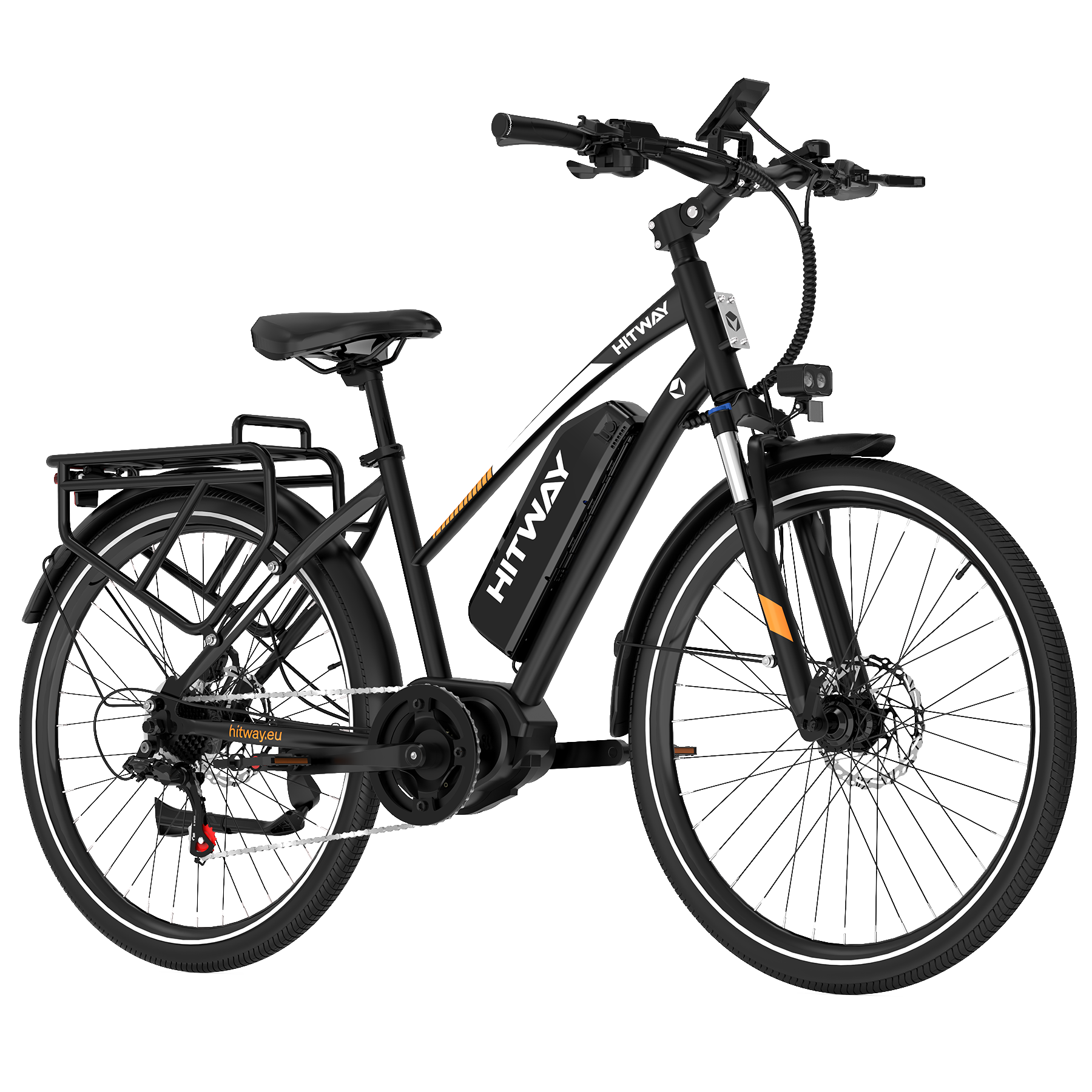
The HITWAY BK-U1 Mid-Drive Electric Bike is the strongest technical fit for riders whose weekend routes include repeated hills. Its current listing combines an Ananda M60 mid-drive, 100 Nm of torque, a 36V 13Ah battery, ZOOM hydraulic disc brakes and a claimed 120–150 km range.
Mid-drive placement can use the bicycle gears to keep the motor in a more useful cadence on climbs. That does not make every hill easy, and poor gear choice can increase drivetrain wear, but the configuration is appealing for varied elevation.
Best for: riders prioritising climbing response and a natural pedalling feel. Skip if: local mid-drive service, replacement parts or the published fit information cannot be confirmed before purchase.
At €1,049.99, it sits above the two sub-€1,000 HITWAY options in this group. The extra cost makes sense only if the mid-drive and torque match the route rather than serving as specification decoration.
2. HITWAY BK15 Plus: Best Big-Wheel Value
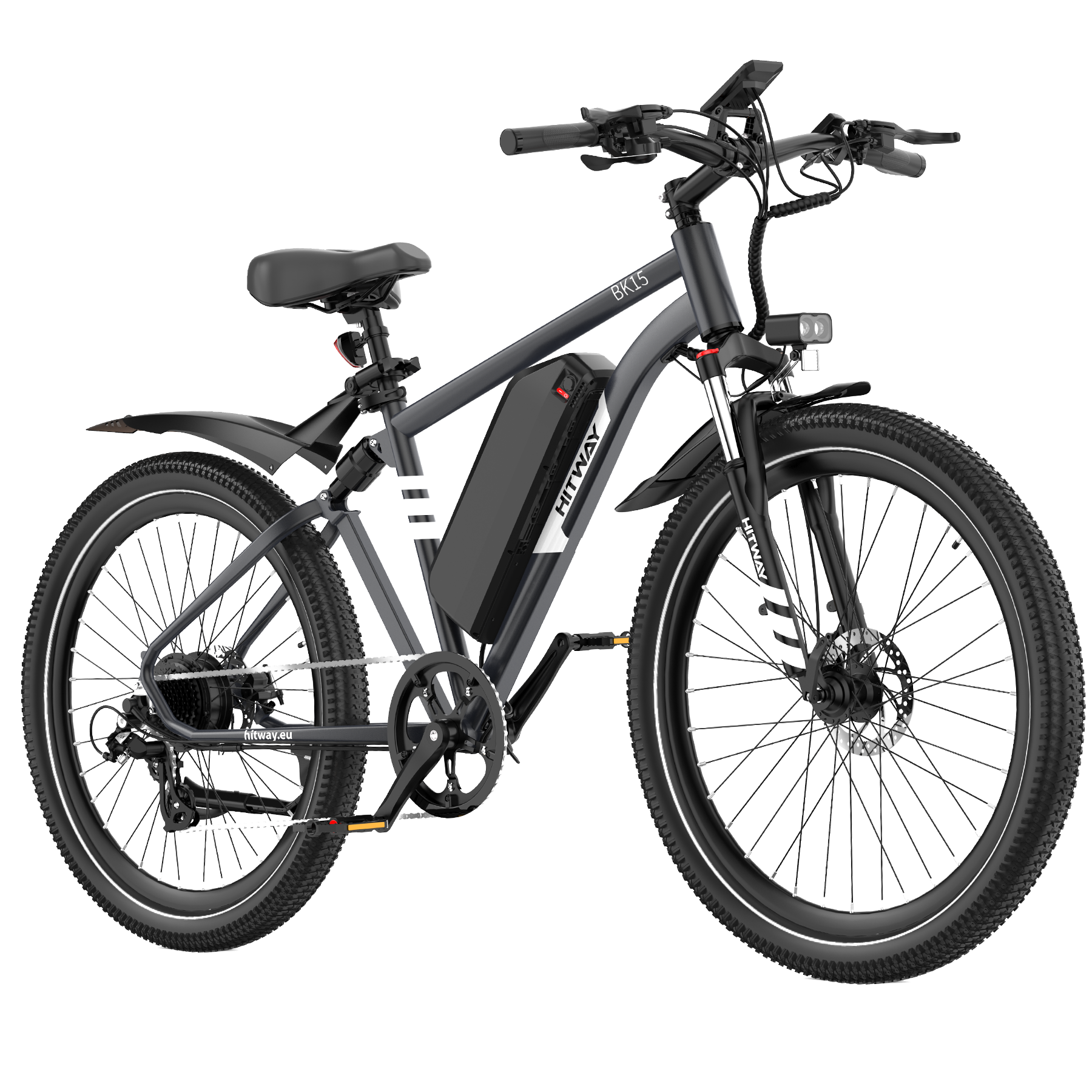
The HITWAY BK15 Plus pairs a 250W motor with a large 48V 15.6Ah, 748.8Wh battery. Its current listing claims 80–150 km, identifies 70 Nm of torque and uses 29 x 2.125-inch tyres.
That combination suits long paved routes, cycleways and light gravel where large wheels can roll smoothly over small surface changes. The 748.8Wh figure is also one of the clearest battery specifications in this group, giving shoppers a more useful comparison point than range alone.
Best for: riders who want large-wheel stability and a substantial battery below €1,000. Skip if: storage is tight, transport requires a compact bike or the 29-inch fit feels too tall.
The current price is €949.99. Before ordering, verify total weight, rider-height range, rack compatibility and whether the charger suits the countries on your route.
3. Cybervelo EK2: Best for Low Purchase Price
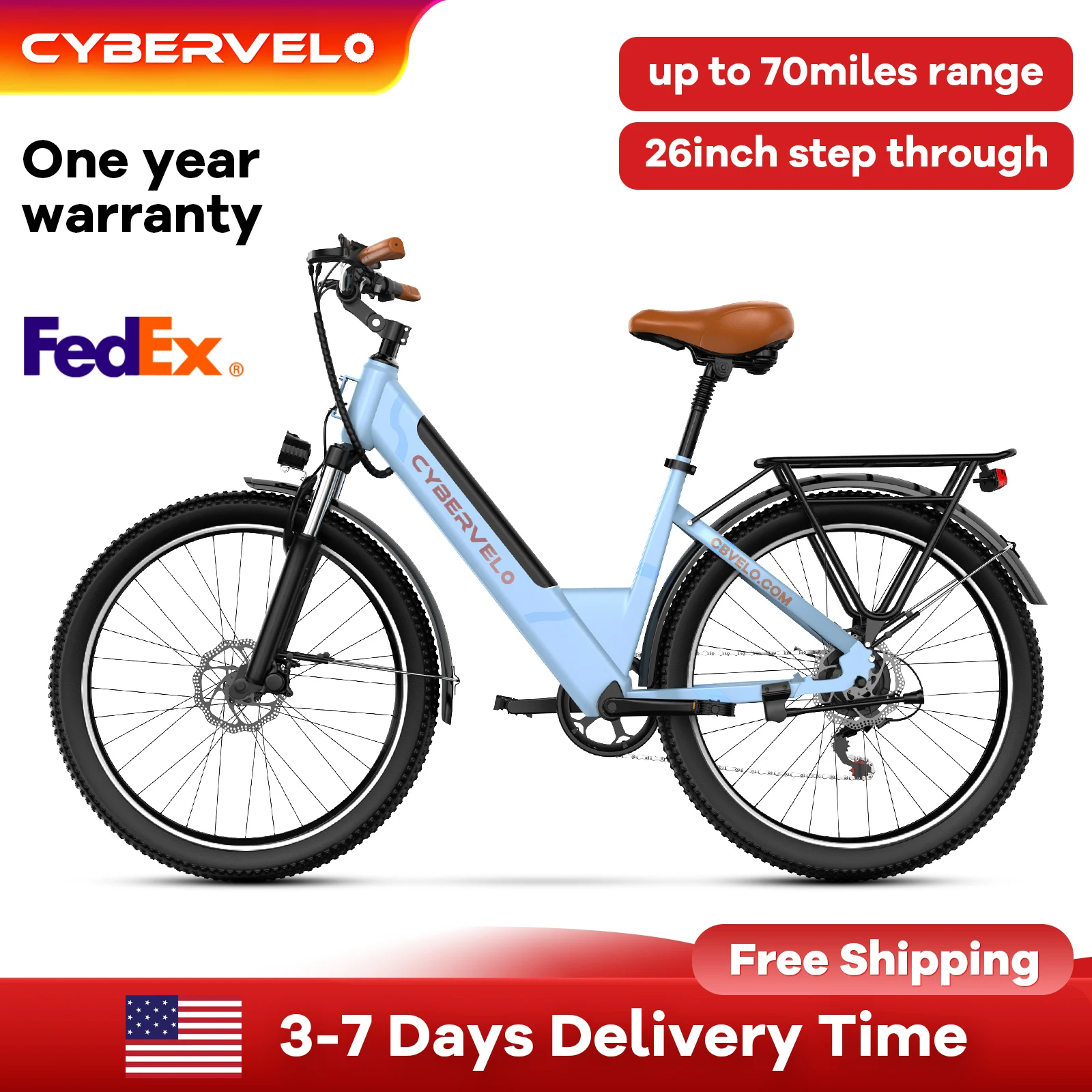
The Cybervelo EK2 has the lowest current price in the group at €612.91. The listing describes a 1000W motor, 14Ah battery, 26-inch wheels and an 80-mile range, equivalent to roughly 129 km.
The value case is obvious, but so is the legal question. A 1000W rating may place the bike outside ordinary public-road e-bike rules in many European countries. Buyers should confirm assisted speed, throttle operation, certification, insurance and where the machine may be ridden before treating it as a touring bargain.
Best for: budget-conscious buyers with a legal private-land or permitted-use plan. Skip if: the route depends on standard public-road pedelec treatment and the seller cannot document compliance.
Low price should not reduce the pre-purchase checks. Ask about battery energy in watt-hours, brake specification, total weight, warranty handling and replacement components. The e-bike warranty checklist gives those questions a useful structure.
4. Moveloop S800: Best for Private-Land Distance
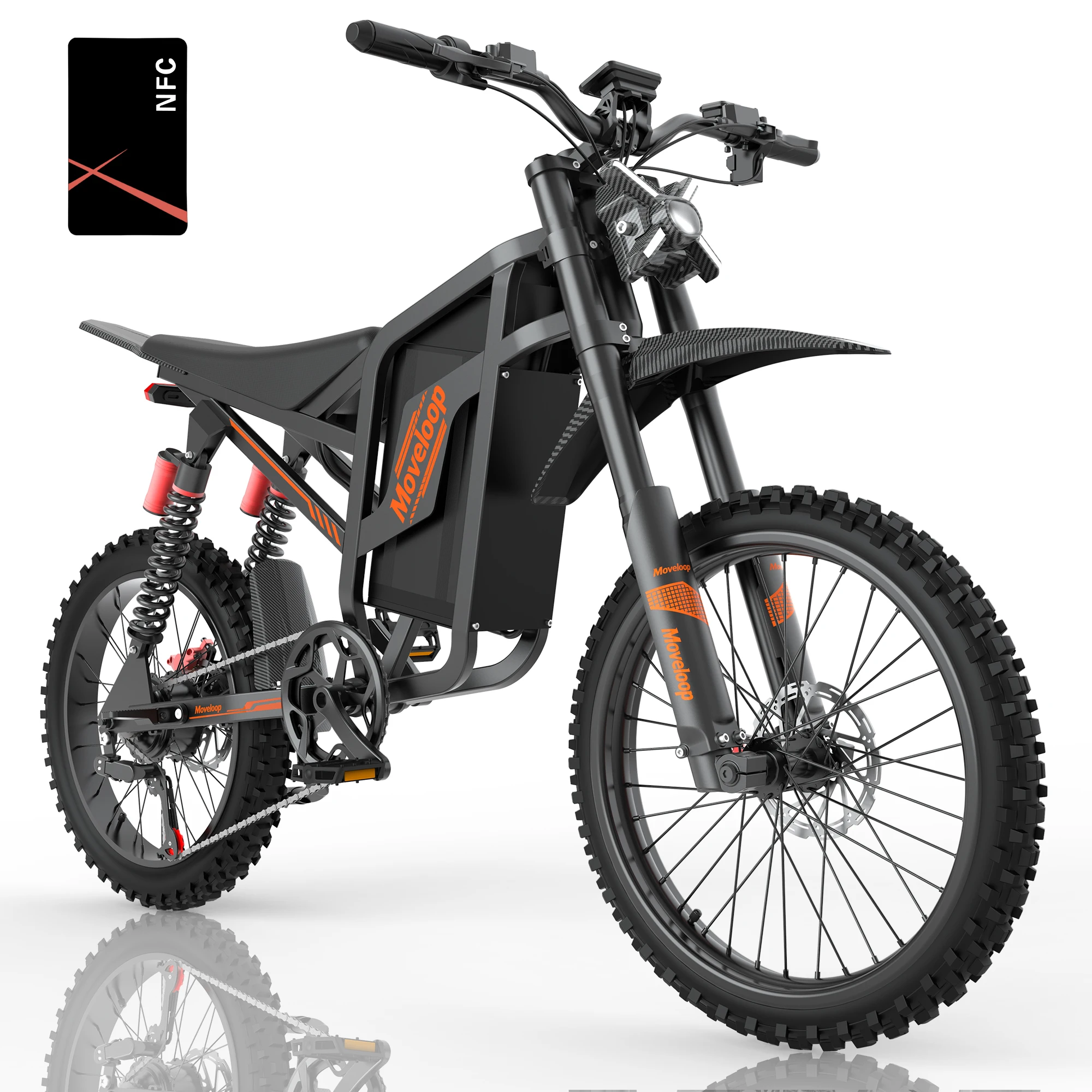
The Moveloop S800 is the most powerful and most legally specialised option in this group. Its current catalog record lists a 3000W motor, 22.4Ah battery, hydraulic brakes and a claimed 45–100 mile range, equivalent to roughly 72–161 km.
The battery figure and upper distance claim stand out at €812.80. So does the motor rating. This is not a model to assume will receive ordinary European pedelec treatment. The buyer needs a permitted private-land, off-road or correctly classified use case before range and price become meaningful advantages.
Best for: riders with a lawful high-power use case who prioritise battery capacity and distance. Skip if: the weekend route relies on normal cycle lanes, public-road pedelec rules or easy multi-modal transport.
The 45–100 mile spread is especially wide. Treat the lower figure as the safer planning reference until real rides show otherwise. High motor output, soft surfaces and repeated acceleration can consume a large battery quickly.
5. HITWAY BK6S L1: Best Folding Alternative
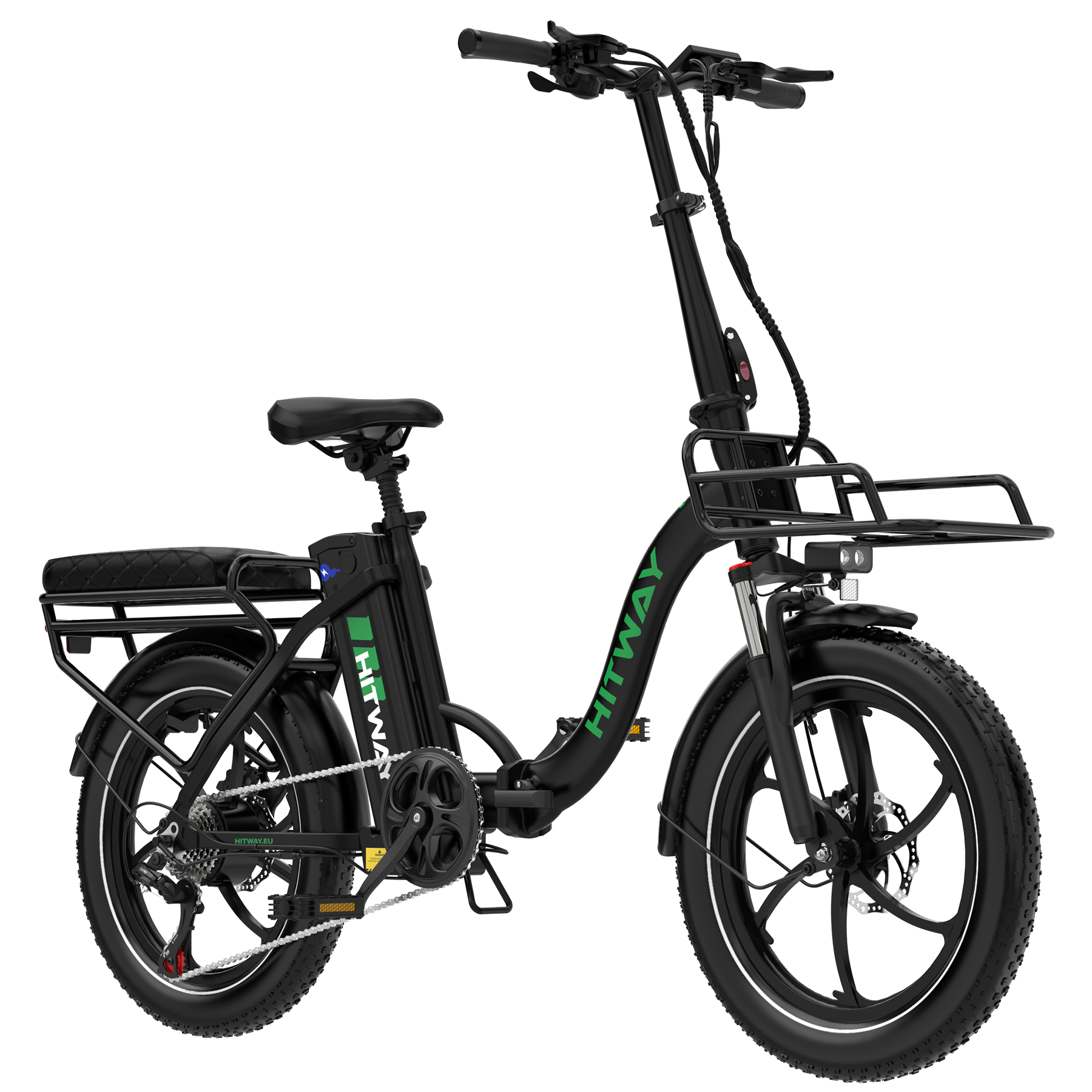
The HITWAY BK6S L1 is another folding choice, currently listed with a 250W motor, 36V 15.6Ah battery, 55 Nm of torque, 20 x 3.0-inch tyres and a claimed 70–150 km range.
Its €899.99 price undercuts the C9 and BK-U1. The tradeoff is that the current catalog information does not give every touring detail a careful buyer should want. Confirm weight, folded dimensions, braking system, luggage mounting and battery removal before choosing it for train-assisted weekends.
Best for: mixed city and leisure use where folding storage matters. Skip if: the route is dominated by rough long-distance surfaces and a large-wheel bike fits the rider and storage space better.
Folding hinges and telescoping parts also add inspection points. Confirm the locking sequence, check for movement before each long ride and follow the maker’s service guidance rather than adjusting a latch by feel.
Which Long-Range E-Bike Should You Choose?
- Choose the BK-U1 when climbing response and mid-drive feel justify the higher price.
- Choose the BK15 Plus for the clearest large-battery, large-wheel touring package below €1,000.
- Choose the Cybervelo EK2 only after confirming where its 1000W system can legally be used.
- Choose the Moveloop S800 only for a clearly permitted high-power use case where its battery and distance matter.
- Choose the BK6S L1 when purchase price and folding convenience matter more than complete touring detail.
For many European weekend riders, the BK15 Plus is the easiest value recommendation on the available facts. The BK-U1 makes more sense for sustained hills, while the BK6S L1 solves a storage problem. Both the Cybervelo and Moveloop prices are attractive, but legal fit must be resolved first.
Cycling Electric’s test-ride advice reinforces the final step: try the assistance levels, controls and fit when possible. A bike that reaches a large theoretical distance but leaves the rider uncomfortable after 30 km is not the right touring choice.
FAQs
Q1. Is a 150 km e-bike range realistic?
It can be possible under favourable low-assist conditions, but it is not a guarantee. Terrain, speed, rider effort, temperature, wind, tyre pressure and luggage can reduce real range substantially.
Q2. How much battery capacity do I need for a 100 km ride?
There is no universal number. Start with watt-hours, then account for elevation, total mass, surface, assistance level and a 20–30% reserve.
Q3. Are folding e-bikes suitable for weekend touring?
Yes, when the rider fit, battery, brakes, luggage mounting and tyre setup suit the route. Folding reduces storage size but does not automatically make a heavy bike easy to carry.
Q4. Can a 1000W e-bike be used on public roads in Europe?
Rules vary by country and vehicle configuration. A 1000W listing may fall outside ordinary pedelec treatment, so verify local classification, registration, insurance and permitted-use rules.
Q5. Which long-range e-bike is best for hills?
Among these five, the HITWAY BK-U1 has the clearest hill-focused setup because it lists an Ananda M60 mid-drive and 100 Nm of torque. Rider fit, gearing and service support still matter.


