
Electric Bike & Scooter Blog
Hub Gears vs Derailleur E-Bikes: A Buyer Guide


Hub gears vs derailleur e-bikes is a buying decision about the journey after the showroom: pulling away from junctions, finding a comfortable climbing gear, cleaning the bike and getting it serviced. The number of gears alone cannot answer it. Nor can a belt-drive label, because the belt and the transmission perform different jobs.
Start with the steepest regular climb and the busiest part of your commute. Then consider how much attention you want to give the drivetrain between rides. This guide explains the tradeoffs, the specification gaps worth questioning and a practical way to judge the complete bike.
Hub Gears vs Derailleur E-Bikes: What Changes?
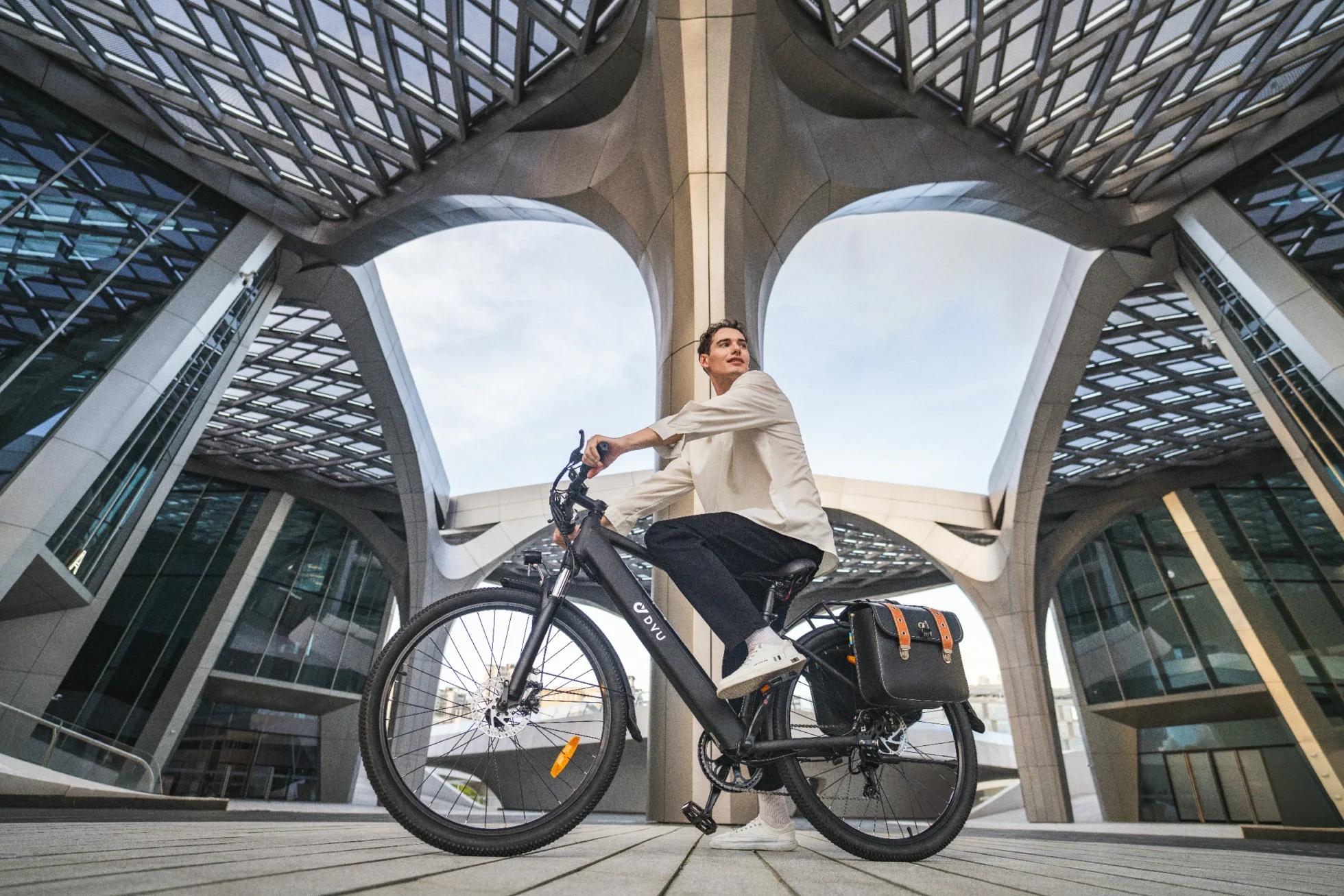
A derailleur moves the chain between external sprockets to select a ratio. An internal geared hub puts its changing mechanism inside the rear hub. A continuously variable hub uses a different internal mechanism to offer a gradual ratio change rather than a set of numbered steps.
Motor location is a separate question. A hub motor provides electrical propulsion; an internal geared hub changes the relationship between pedalling and wheel rotation. The word “hub” in an e-bike description does not establish which transmission is fitted.
| Buying question | Internal hub transmission | External derailleur |
|---|---|---|
| How are ratios selected? | Inside the hub, with stepped or continuously variable designs | By moving a chain across external sprockets |
| What needs cleaning? | The external chain or belt still needs appropriate care | Chain, sprockets and derailleur are exposed |
| Can it shift while stopped? | Often possible, subject to the particular system | Conventional systems normally require chain movement |
| Does it work with a belt? | Some complete bike designs support this combination | A conventional derailleur transmission uses a chain |
| What determines climbing fit? | Hub range, fitted sprockets, wheel size and motor integration | Chainring, cassette range, wheel size and motor integration |
| What should a buyer verify? | Exact hub model, servicing and compatible parts | Exact derailleur, cassette and replacement-part compatibility |
These are broad architecture differences, not a ranking of every available system. A well-chosen derailleur bike can be excellent for daily commuting. A hub transmission can be equally useful, but its specific ratios and support arrangements still need to match the rider.
Gear Count Is Not the Same as Gear Range
Five, seven or eleven gears tells you how many selectable steps a transmission has. It does not tell you whether the easiest gear is low enough for a loaded climb, or whether the highest gear suits your comfortable pedalling speed. Compare actual ratios when the decision depends on hills.
As one concrete example, Shimano’s NEXUS INTER-5E information describes an e-bike-specific five-speed hub with a 263% range. That figure is a property of that system, not a promise for every five-speed bike. The sprocket choices and wheel size still affect the gearing you experience on the road.
A 400% transmission range means the highest ratio is four times the lowest. It does not mean four times the road speed in real riding, and it does not prove that the lowest gear is especially easy. A broad range can still be positioned too high for a particular rider’s steepest climb.
For a useful buying request, describe a familiar route: perhaps an 8 km commute with a short steep bridge and a weekly loaded shopping trip. Ask the shop which lowest ratio is fitted and arrange a suitable demonstration if possible. This provides more useful evidence than choosing whichever specification lists the most gears.
Think About Stops, Starts and Shifting Habits
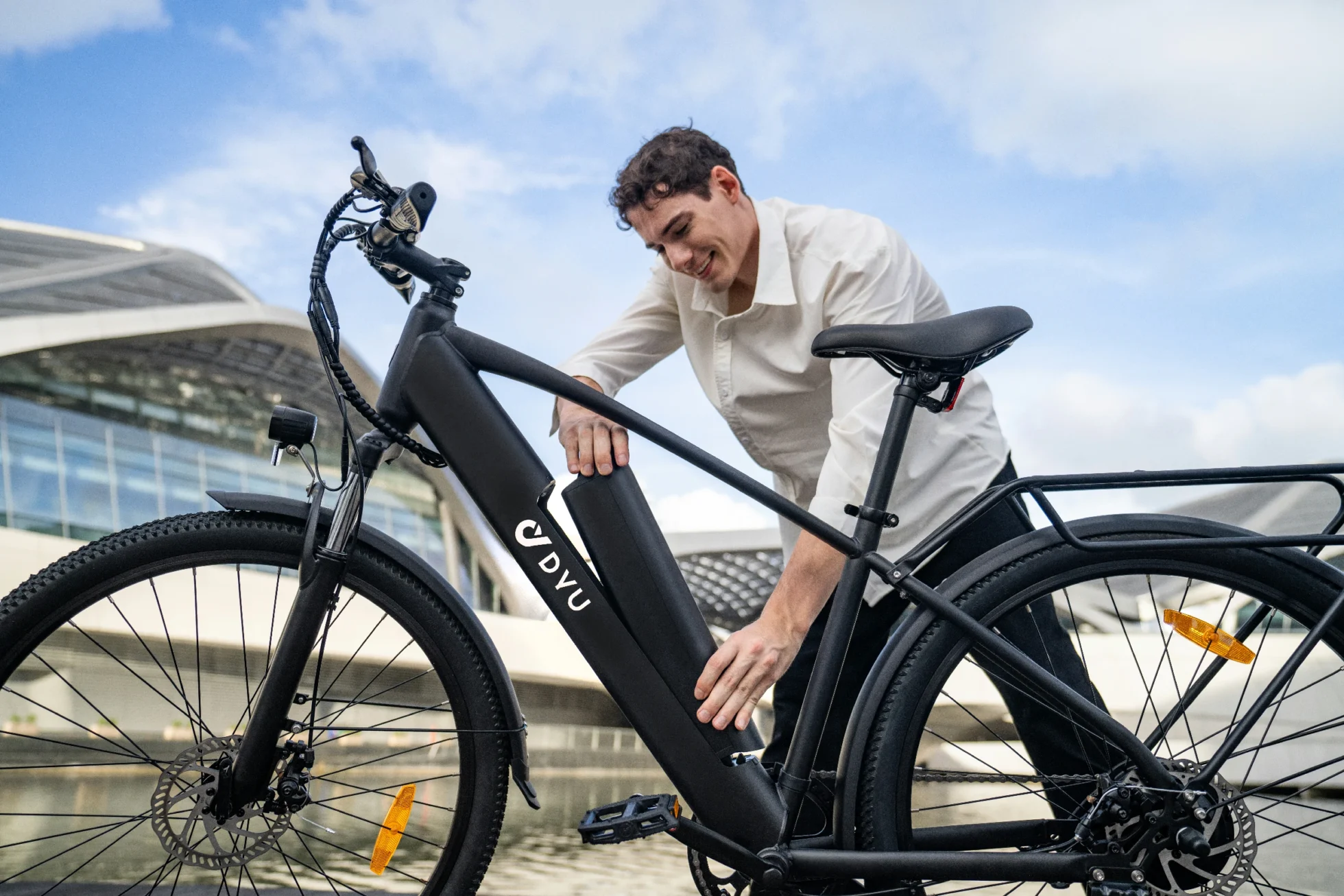
Urban riding often includes sudden stops that leave the bike in a harder gear than intended. Some internal hub systems allow a different ratio to be selected while stationary. That can be convenient, but the permitted shifting method is model-specific and may involve easing pedal pressure or moving the bike slightly.
The Rohloff operating handbook describes how its own transmission should be shifted. It is a useful reminder to read the procedure for the actual hub. Instructions about load, timing and lever movement cannot safely be transferred to every internally geared system.
For a conventional derailleur, prepare for a stop by shifting to a suitable starting gear while the chain is moving. Shift smoothly and follow the bike maker’s advice on pedal load. Electronic systems can add functions that change this experience, so ask what the complete bike supports rather than assuming that every electronic shifter is automatic.
During a demonstration, include several ordinary starts and controlled stops in a safe area. Notice whether the shifter is easy to use with gloves and whether the step between ratios feels comfortable. A transmission that encourages calm, consistent habits is more useful than a feature you find awkward on every journey.
Separate Belt Drive, Motor Assist and Transmission
A belt transfers pedalling force. It does not automatically provide multiple gears, and a belt-drive e-bike may have a single ratio or an internal transmission. Ask the seller to name both the drive medium and the ratio-changing mechanism.
The same separation applies to a torque sensor. It affects how assistance responds to rider input; it does not establish the number of gears. Battery capacity and listed range are another pair of independent details. A large battery cannot correct gearing that leaves you struggling to pedal comfortably on the route.
Enviolo’s transmission information describes manual and automatic options for its stepless systems. If such a system interests you, confirm the exact hub, interface and motor compatibility on the complete bike. A manufacturer offering an automatic option does not mean every bicycle with that manufacturer’s hub includes it.
For an online purchase, ask for a clear drivetrain photograph and the exact component names. If the description says only “belt drive” or “seven speed,” there is still useful information missing. Getting it clarified before ordering is easier than discovering that your assumed shifting feature was never included.
Compare Maintenance Tasks and Local Service Access

An enclosed transmission keeps its internal mechanism away from direct road dirt, but the rest of the bicycle still needs care. Tyres, brakes, bearings and the external drive remain part of ownership. “Low maintenance” is not a substitute for the service schedule of the exact hub or complete bike.
With a derailleur, the chain and sprockets are accessible for routine inspection and cleaning. That accessibility also leaves them exposed to contamination and impact. Ask about replacement chains, cassettes, hangers and labour availability where you live, especially if the bike will be your regular transport.
For an internal hub, confirm who can perform its specified service and how the rear wheel is removed for a puncture. Different cable, brake and axle arrangements can change the work involved. A local mechanic familiar with the system can be a stronger ownership advantage than a small difference in purchase price.
Estimate downtime as well as parts cost. A rider with another bicycle available can tolerate a longer service appointment than someone whose e-bike is the only way to reach work. Before paying extra for reduced routine attention, verify that the required specialist support is realistically accessible.
Three Shopping Examples and the Questions Still to Ask
Current listings show why it helps to separate confirmed features from unanswered transmission questions. The following examples provide different starting points for a budget conversation. They are not presented as confirmed examples of an internal geared hub.
| Model | Current price | Confirmed starting point | Transmission question before buying |
|---|---|---|---|
| HITWAY BK18 Pro | €1,149.99 | Belt drive and torque sensor | Which ratio system is fitted, and what is the lowest usable ratio? |
| HITWAY BK6S L1 | €899.99 | Folding layout and 36 V 15.6 Ah battery | What exact gearing and shifter are supplied on the delivered version? |
| HITWAY BK15 Plus | €949.99 | 48 V 15.6 Ah battery and larger wheel format | Which chainring and rear ratios determine loaded climbing comfort? |
Prices were checked on 9 September 2026 and may change. The belt-equipped option is a relevant starting point for someone who prioritises a cleaner external drive, but a buyer wanting selectable internal gears must confirm those separately. The folding and larger-wheel examples raise different transport and route questions before a transmission preference becomes decisive.
A useful shortlist contains bikes you can describe accurately, including their limitations. If a seller cannot clarify the gearing that matters to your route, keep looking or delay the decision. An incomplete specification is a reason to ask a precise question, not a reason to fill the gap with an assumption.
Which Type Is the Better Fit for Your Commute?
Consider an internal hub system when stop-start convenience and the way it handles routine exposure suit your priorities, and when its gearing and local support are confirmed. Avoid choosing it solely because the mechanism is hidden. Check service requirements, wheel-removal procedures and the complete bike’s weight as carefully as the shifting.
Consider a derailleur when its available gearing, straightforward inspection and local parts support fit your route and ownership routine. Be ready to look after the exposed chain and sprockets. If the bike will be stored or transported in crowded spaces, also consider how the rear mechanism will be protected from knocks.
Before choosing, make a short written comparison: lowest gear, comfortable shifts, service provider, replacement parts and total purchase cost. Keep motor response, battery size and frame fit in separate rows. This makes it easier to see whether the transmission is solving your actual commuting problem.
For a flat 5 km trip, simple and well-supported gearing may be enough. For repeated steep starts with luggage, the exact low ratio deserves more attention. Hub gears vs derailleur e-bikes has no universal winner; the useful choice is the system that makes your normal ride manageable and its maintenance predictable.
FAQs
Q1. Are hub gears better than derailleurs on e-bikes?
They can suit different priorities. Compare the exact gearing, shifting behaviour, service needs and local support. Neither architecture makes the complete bike automatically better for every rider.
Q2. Can you change hub gears while stationary?
Many systems permit stationary shifting, but the procedure and available range depend on the model. Read its operating instructions. Do not force a shifter when the mechanism is not accepting the change.
Q3. Does a belt-drive e-bike have hub gears?
Not necessarily. A belt is the drive medium, while an internal transmission or single ratio determines the gearing. Ask for the exact transmission specification before assuming that a belt-equipped bike offers multiple gears.
Q4. Are internal gear hubs maintenance-free?
Service requirements differ between systems. Follow the exact hub’s schedule, and remember that the bicycle’s brakes, tyres and external drive still need attention. Reduced cleaning around the gears is not the same as no maintenance.
Q5. Is a hub motor the same as a hub gear?
No. A hub motor supplies electrical propulsion, while a hub transmission changes pedalling ratios. Read both the motor and drivetrain specifications to understand how the complete e-bike works.


